TailVille
At a glance
Rough ranges for supplies, food and electricity in Korea (USD is approximate). Purchase or adoption fees are not included.
Experienced bird keepers who are home a lot and ready to devote decades to a demanding, brilliant companion.
First-time bird owners, people out all day, or busy households with young children.
1. Overview
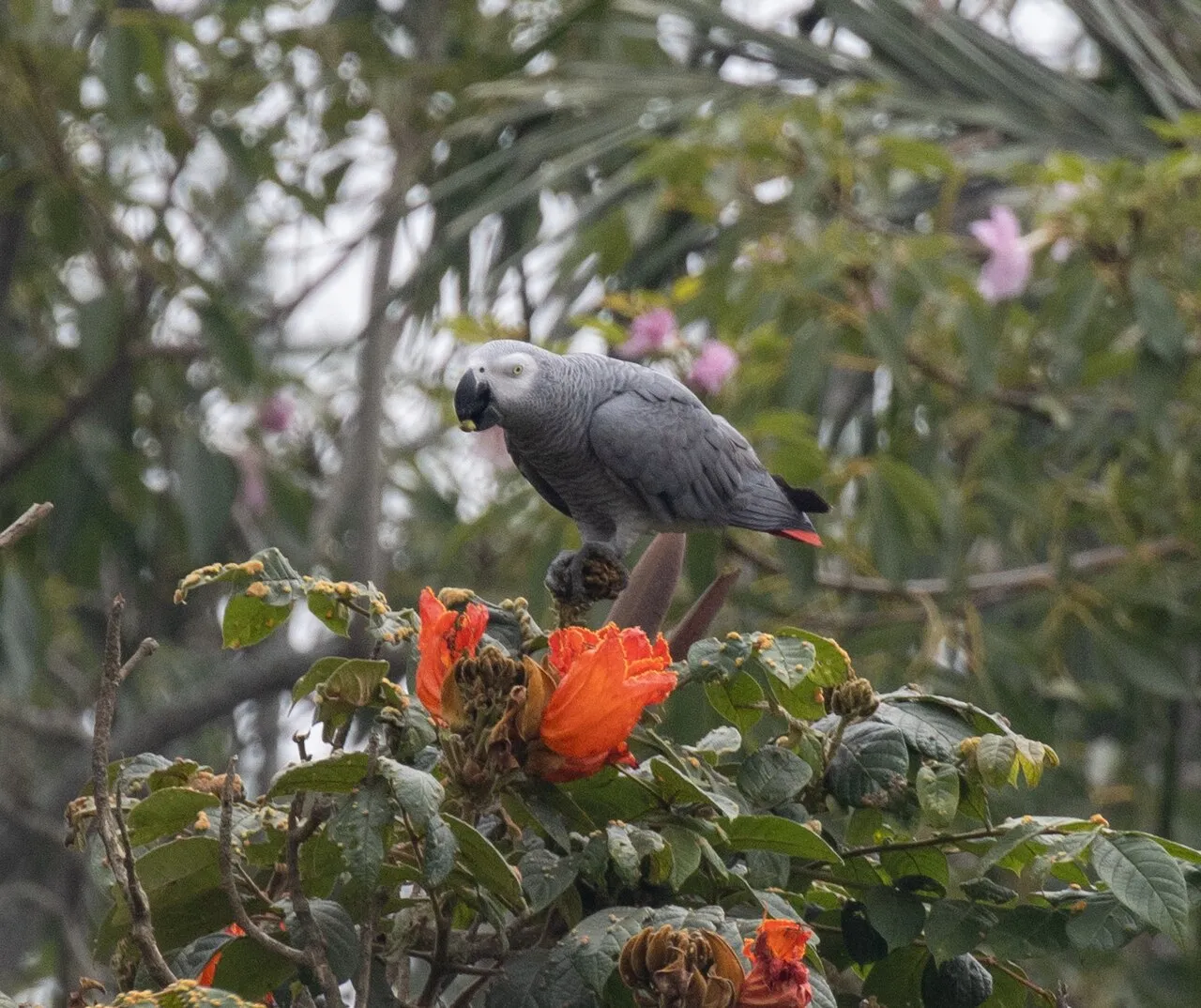
The African grey is a large parrot from the rainforests of West and Central Africa, with ash-grey plumage, scalloped like a pigeon's, and a striking scarlet tail. Next to a macaw or cockatoo it looks understated, but its uncanny ability to reproduce human speech and grasp concepts has earned it a reputation as the brainiest of parrots.
That brilliance comes with heavy demands. A grey needs hours of interaction and mental challenge every day, is sensitive to change and stress, and is notorious for feather plucking when its needs are not met. With a lifespan of 40 to 60 years, it may share most of its owner's adult life, or outlive them.
The species also has a special legal status. Decades of mass trapping for the pet trade devastated wild populations, and since 2017 the African grey has been listed on CITES Appendix I, effectively banning international commercial trade in wild birds. Owners in Korea and many other countries must observe registration and reporting rules. This article covers classification, history, physical traits, intelligence and behaviour, housing, diet, health, costs and the law.
2. Name and classification
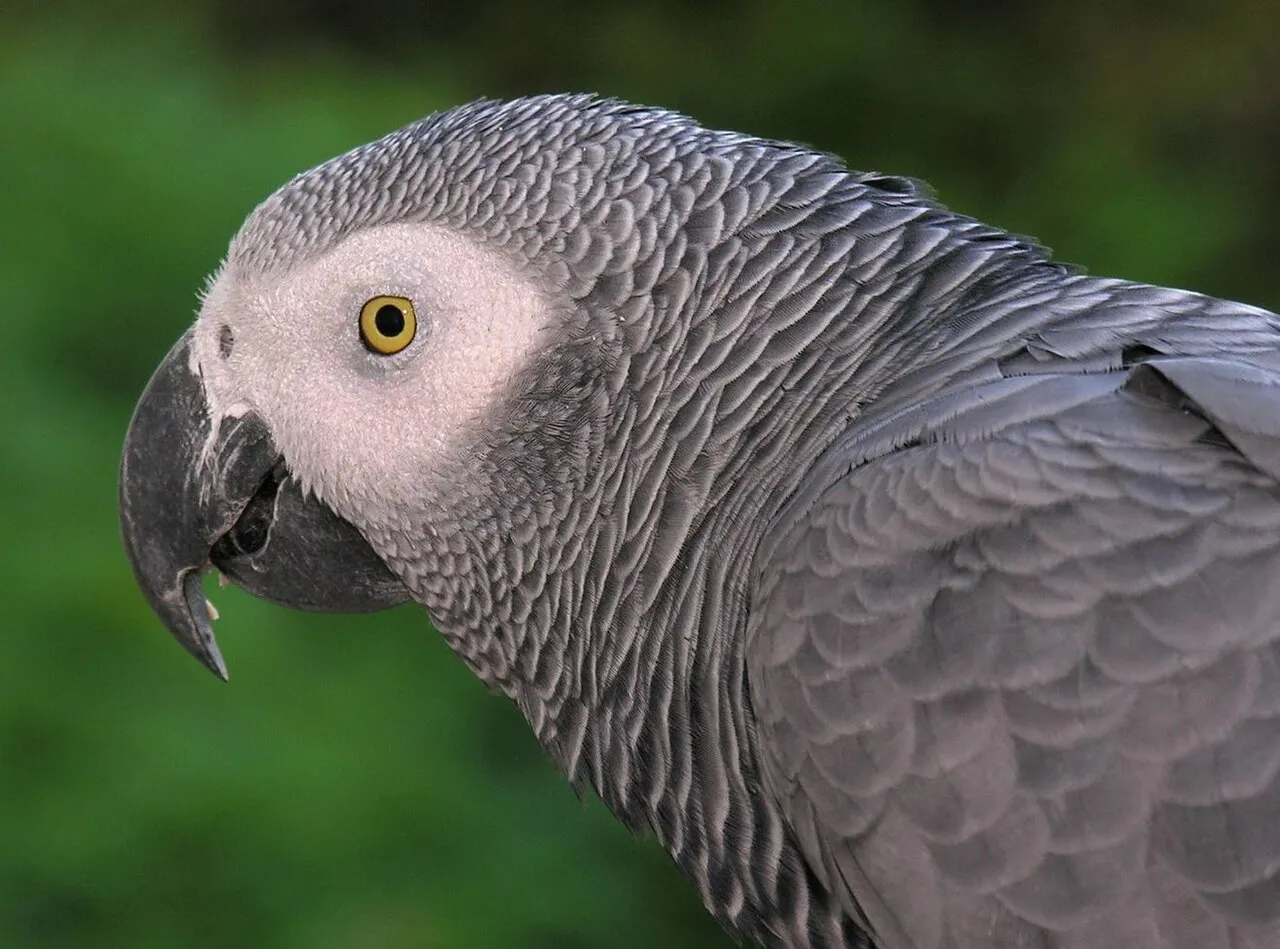
L.Miguel Bugallo Sánchez (http://commons.wikimedia.org/wiki/User:Lmbuga) · CC BY-SA 3.0
2.1. Scientific name and etymology
The scientific name is Psittacus erithacus. Psittacus is the classical Latin and Greek word for parrot, and the root of Psittaciformes, the name of the entire parrot order. Erithacus is borrowed from a bird name in ancient Greek writings, though which bird it originally meant is uncertain.
2.2. Congo and Timneh greys
Pet greys come in two kinds. The Congo African grey, Psittacus erithacus, is larger and paler grey with a bright red tail. The Timneh grey, Psittacus timneh, from the far west of the range around Sierra Leone and Liberia, is smaller and darker, with a maroon tail and a pale horn-coloured patch on the upper beak.
The Timneh was long treated as a subspecies, but since the 2010s most authorities recognise it as a separate species. Both are listed as Endangered by the IUCN and both are on CITES Appendix I. Timnehs are sometimes said to adapt to new situations more readily, but individual variation outweighs any species difference.
2.3. Korean and English names
In English it is the African grey, grey parrot or simply 'grey', and keepers abbreviate Congo and Timneh greys to CAG and TAG. In Korean it is hoesaek-aengmu, literally grey parrot.
3. History
3.1. A talking bird through the ages
Greys have lived with people for a very long time. Talking parrots were prized in ancient Egypt, Greece and Rome, and from the age of sail onward European sailors and merchants brought greys from West Africa, where they became fashionable among the wealthy. Stories that Henry VIII of England kept one circulate widely, though they are hard to verify.
In the late twentieth century demand exploded, and the grey became one of the most heavily traded wild parrots in the world. Over the decades, well over a million birds are estimated to have been taken from the wild, with high mortality during capture and transport.
3.2. The move to CITES Appendix I
For decades the grey was on CITES Appendix II, which allowed licensed international trade. Surveys then revealed population collapses, including declines reported at over 90% in parts of Ghana, and at the 17th Conference of the Parties in Johannesburg in 2016 the species was moved to Appendix I, effective January 2017. Around the same time the IUCN assessed it as Endangered. International commercial trade in wild birds is now effectively banned, and captive-bred birds require strict documentation.
3.3. African greys in Korea
In Korea greys became known through parrot clubs and specialist breeders from the 2000s and gained fame as talking birds on television and social media. Since the Appendix I listing, only properly documented captive-bred birds can be traded, prices have risen, and checking paperwork has become essential.
4. Physical characteristics
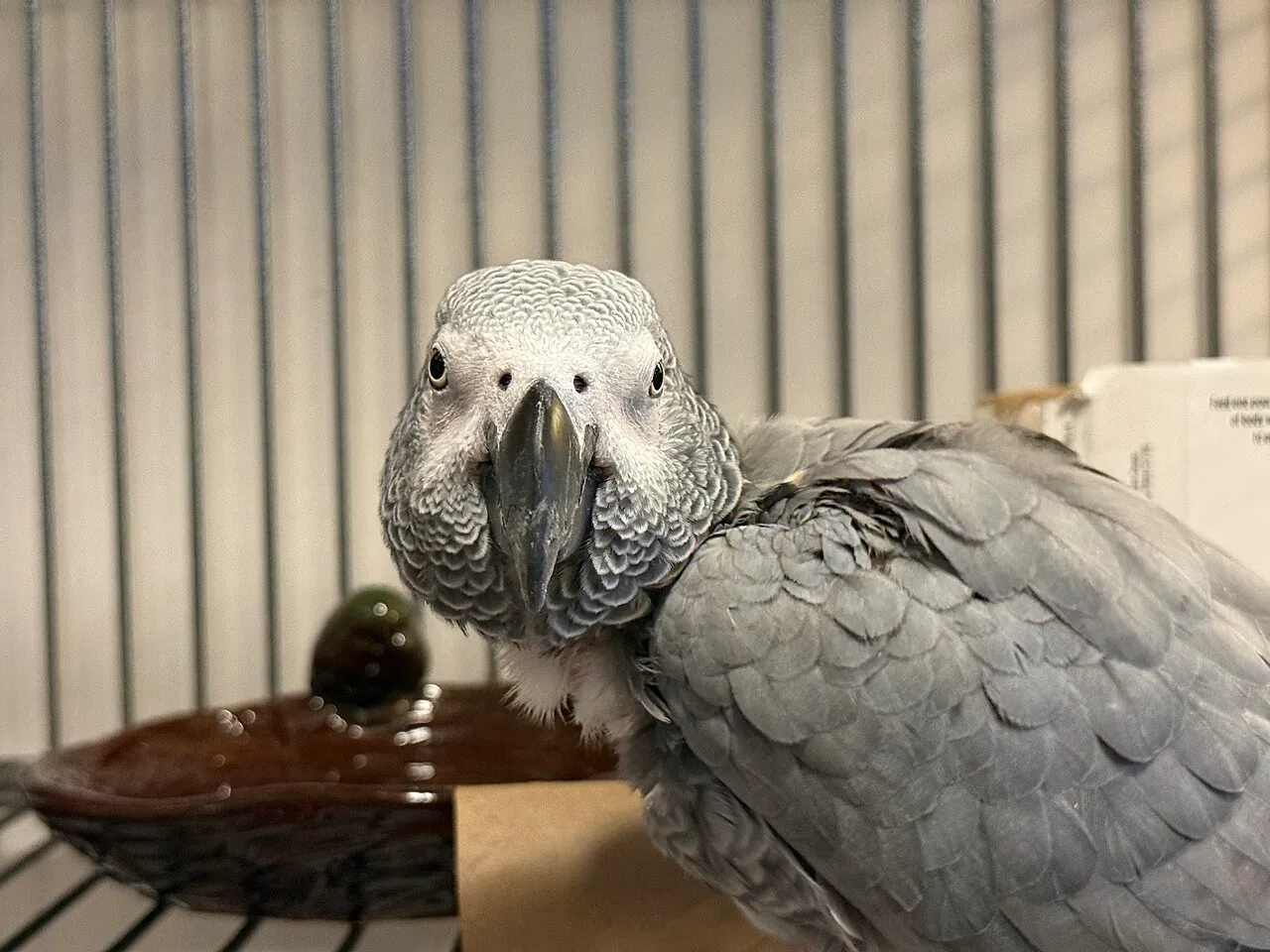
Bloopityboop · CC BY-SA 4.0
4.1. Size and build
| Measure | Congo grey | Timneh grey |
|---|---|---|
| Length | about 33 cm | about 28–30 cm |
| Weight | around 400–550 g | around 275–375 g |
| Tail | Bright red | Dark maroon |
| Beak | All black | Upper beak partly horn-coloured |
| Body | Light grey | Charcoal grey |
Greys are stocky and short-tailed with a powerful black beak that cracks hard nuts with ease. A patch of bare white skin surrounds each eye, and pale feather edges create a scalloped pattern.
4.2. Eye colour and age
Young greys have dark grey to almost black irises, which gradually lighten to pale yellow or silvery white. Most of the change happens within about the first year, with full lightening taking a few years. Very dark eyes therefore suggest a young bird, a useful clue when buying, but eye colour cannot reveal the exact age of an adult.
4.3. Powder down and feathers
Like cockatoos and cockatiels, greys produce abundant powder down, special feathers that crumble into a fine white dust which waterproofs and conditions the plumage. That dust settles on furniture and can trouble people with allergies or asthma. A healthy grey's beak often looks slightly dusty; an unusually glossy beak and absent powder can be an early warning sign of diseases such as PBFD.
4.4. Sexing
The sexes look the same. Folk methods based on grey edging on the under-tail feathers or head shape are unreliable; DNA sexing is the standard.
5. Intelligence and speech
Intelligence is what sets the grey apart. Alex, the grey studied for around thirty years by animal-cognition researcher Dr Irene Pepperberg, was reported to label dozens of objects, colours, shapes and materials, and to show an understanding of small numbers and the concepts of same and different. Alex died in 2007, but the work is often cited as having transformed how scientists view bird cognition.
Pet greys may learn dozens to hundreds of words and phrases and often use them in context, greeting people in the morning or saying goodnight at bedtime. Flawless imitations of phone ringtones, microwaves and even the owner's cough are common. Talking ability varies enormously, though, and some greys say very little.
| Aspect | Typical pattern | Notes |
|---|---|---|
| First words | Often around one year | Some start much later |
| Vocabulary | Dozens to hundreds of words | Huge individual variation |
| Sound mimicry | Extremely accurate | Includes household noises |
| Problem solving | Excellent with puzzle toys | Bored easily |
Because of this intelligence, greys tire quickly of a dull environment and are prone to stress behaviours without enough stimulation. Giving them new problems to solve and varied experiences every day matters more than teaching words.
6. Behaviour
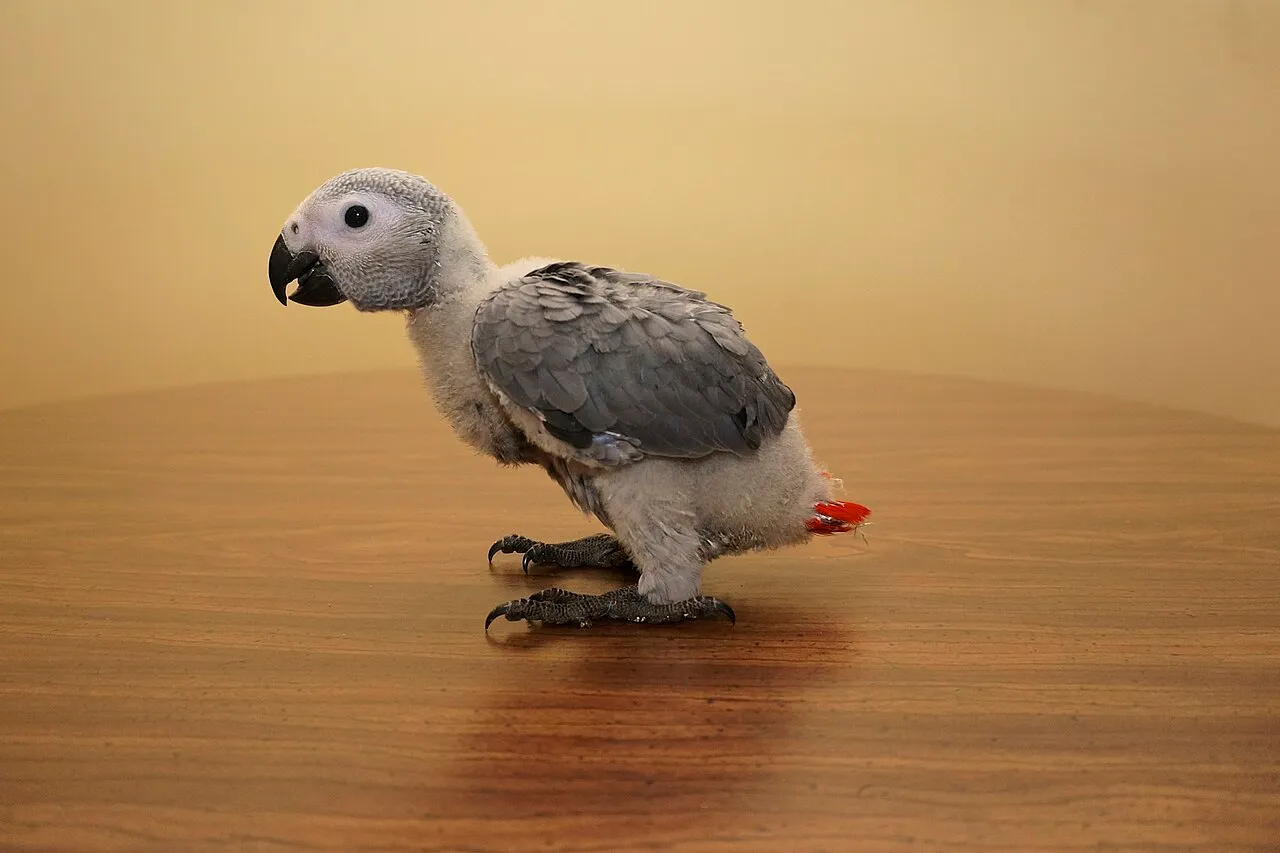
PetraGrey · CC BY-SA 4.0
6.1. In the wild
Wild greys inhabit rainforest, forest edges and mangroves, gathering at night in communal roosts that can number in the hundreds or thousands. By day they disperse in small groups to feed on oil-palm fruit, seeds, nuts and fruit, and visit clearings to eat mineral-rich soil. Pairs nest in cavities high in tall trees.
6.2. At home
Greys are cautious, observant birds. Rather than accepting new people or objects immediately, they watch for a while before approaching, and sudden changes can trigger panic. Many bond intensely with one person and may be standoffish or nippy with others; sharing care among family members from an early age helps.
They generally prefer to be near their people rather than cuddled constantly in the way many cockatoos demand. Greys are quieter than macaws and cockatoos, but whistles, shrieks and repeated mimicry can still fill the day.
6.3. Feather plucking
Greys are notorious for feather-destructive behaviour, which usually has several causes at once. Medical triggers include skin infection, parasites, nutritional deficiency and low calcium; behavioural ones include boredom, loneliness, poor sleep, upheaval and hormones. If your grey starts plucking, see an avian vet first to rule out medical causes, then review routine and environment.
Once established, plucking can continue even after the original trigger is gone, so prevention is key: daily foraging for food, destructible toys, short training sessions and plenty of sleep.
6.4. Reading the signals
- Head lowered with neck feathers raised: asking for a scratch
- Rapid pupil pinning: excitement, strong interest or an imminent bite
- Fluffing up then shaking out the feathers: tension released
- A low growl: displeasure or warning, a classic grey signal
- Tail fanned with raised feathers: aroused or threatened
- Beak grinding while standing on one leg: sleepy and content
- Wing flapping on the spot: wanting exercise or excited
- Sudden thrashing and crashing: panic, often at night
Greys are prone to night frights, thrashing in the cage after a sudden scare in the dark. A dim night light can help.
7. Life stages
| Stage | Age | What happens |
|---|---|---|
| Hatching | after about 28–30 days of incubation | Fed by parents |
| Fledging | about 11–13 weeks | Leaves the nest |
| Weaning | about 3–4 months | Eats independently; usual age for rehoming |
| Juvenile | 4 months to 1 year | Dark eyes, starting to talk |
| Adolescent | about 1–4 years | Personality forms; independence and nipping may increase |
| Adult | from about 4–5 years | Sexual maturity |
| Prime | about 15–35 years | Settled years |
| Senior | from about 35 years | Arthritis, cataracts, heart and vascular disease |
Captive greys typically live 40–60 years, sometimes longer. Taking one on means planning decades ahead, and many owners name a guardian in case their own health or circumstances change.
8. Housing
8.1. Cage and placement
Greys need a large cage of at least 90 × 60 cm and 120 cm tall, with bars about 2–2.5 cm apart and strong enough to resist a powerful beak. Many greys learn to open cage doors, so an extra lock may be needed.
Place the cage against a wall in the family living area. Open, exposed positions make greys nervous, and spots next to the front door or in a busy corridor are stressful. Avoid direct sun, air-conditioning draughts and the kitchen. Several hours a day on a play stand outside the cage, near the family, are essential.
8.2. Climate, light and sleep
Aim for 20–28°C and 50–70% humidity. As a rainforest bird, a grey's skin and feathers suffer in dry air, so mist-bathe several times a week or run a humidifier. Indoor birds get little ultraviolet light and may struggle to make vitamin D; discuss a bird-specific UVB lamp with your vet or arrange safe access to natural sunlight. Provide 10–12 hours of dark, quiet sleep.
8.3. Equipment checklist
- Large metal cage, 90 × 60 × 120 cm or more, with an extra lock
- Perches of varied diameter and material: natural wood, rope, a concrete perch
- Plenty of destructible and foraging toys
- Puzzle feeders
- Play stand
- Several stainless-steel bowls
- Mister or bath
- Bird UVB lamp if advised
- Dim night light
- Air purifier for powder down
- Large carrier
- Digital scale
9. Diet
9.1. Staple diet and calcium
A pellet formulated for large parrots should make up about 60–70% of the diet, with dark leafy greens such as kale, bok choy and broccoli, orange vegetables such as carrot, squash and sweet potato, and small amounts of fruit and nuts. Greys are thought to be more prone to hypocalcaemia than many parrots, so seed-based diets are especially harmful. Calcium and vitamin D supplements can be overdosed, so use them only on your vet's advice.
Wild greys eat a lot of oil-palm fruit, and some owners offer a little red palm oil, but it is fatty and should be rationed.
9.2. Amounts and foraging
| Item | Approximate daily amount | Notes |
|---|---|---|
| Pellets | 25–35 g | Adjust for weight and activity |
| Vegetables | 3–4 tablespoons | Mostly green and orange |
| Fruit | about 1 tablespoon | |
| Nuts | 1–3 | Training rewards |
| Water | Always available | Change once or twice daily |
Instead of serving everything in a bowl, wrap food in paper, hide it in boxes or load it into puzzle feeders. Foraging is one of the most effective cures for a bored grey.
9.3. Foods to avoid
- Avocado
- Chocolate, coffee, black or green tea, other caffeine and alcohol
- Onion, garlic and chives
- Apple seeds and cherry, apricot or peach pits
- Salty, greasy or fried food
- Mouldy nuts, especially peanuts, which can carry aflatoxin
- Anything containing xylitol
10. Health and disease
avocat · CC BY 4.0
10.1. Conditions common in greys
| Condition | Cause | Signs | Management |
|---|---|---|---|
| Hypocalcaemia | Low calcium and vitamin D, seed diet | Wobbling, falling off perches, seizures | Pellet diet, vet-prescribed supplements, UVB |
| Plucking and self-injury | Combined medical and behavioural causes | Damaged feathers, skin wounds | Diagnosis plus enrichment |
| Aspergillosis | Fungal spores, weakened immunity | Breathing difficulty, voice change, exercise intolerance | Ventilation, mould-free food |
| PBFD | Circovirus | Feather abnormalities, immune suppression, sudden death in young birds | Testing and quarantine |
| Vitamin A deficiency | Seed diet | Blocked nostrils, white spots in the mouth | Orange and green veg |
| Atherosclerosis | High-fat diet, ageing | Exercise intolerance, breathlessness, sudden death | Weight and diet control |
| Psittacosis | Chlamydia bacteria | Conjunctivitis, green droppings, lethargy | Testing and hygiene |
| PDD | Linked to avian bornavirus | Undigested seed in droppings, weight loss, neurological signs | Screening |
Greys are masters at concealing illness, so weekly weighing and at least yearly check-ups with blood work are the best tools for catching problems early.
10.2. When to see a vet
- Falling from perches, wobbling or seizures
- Sitting fluffed with eyes closed for long periods
- Tail bobbing or wheezing while breathing
- A sudden hoarse or changed voice
- Green or yellow droppings or abnormal urates
- New plucking or skin wounds
- Noticeable weight loss within a week
Choose a vet with substantial avian experience, and get baseline blood work when the bird first comes home so later results can be compared.
11. Breeding
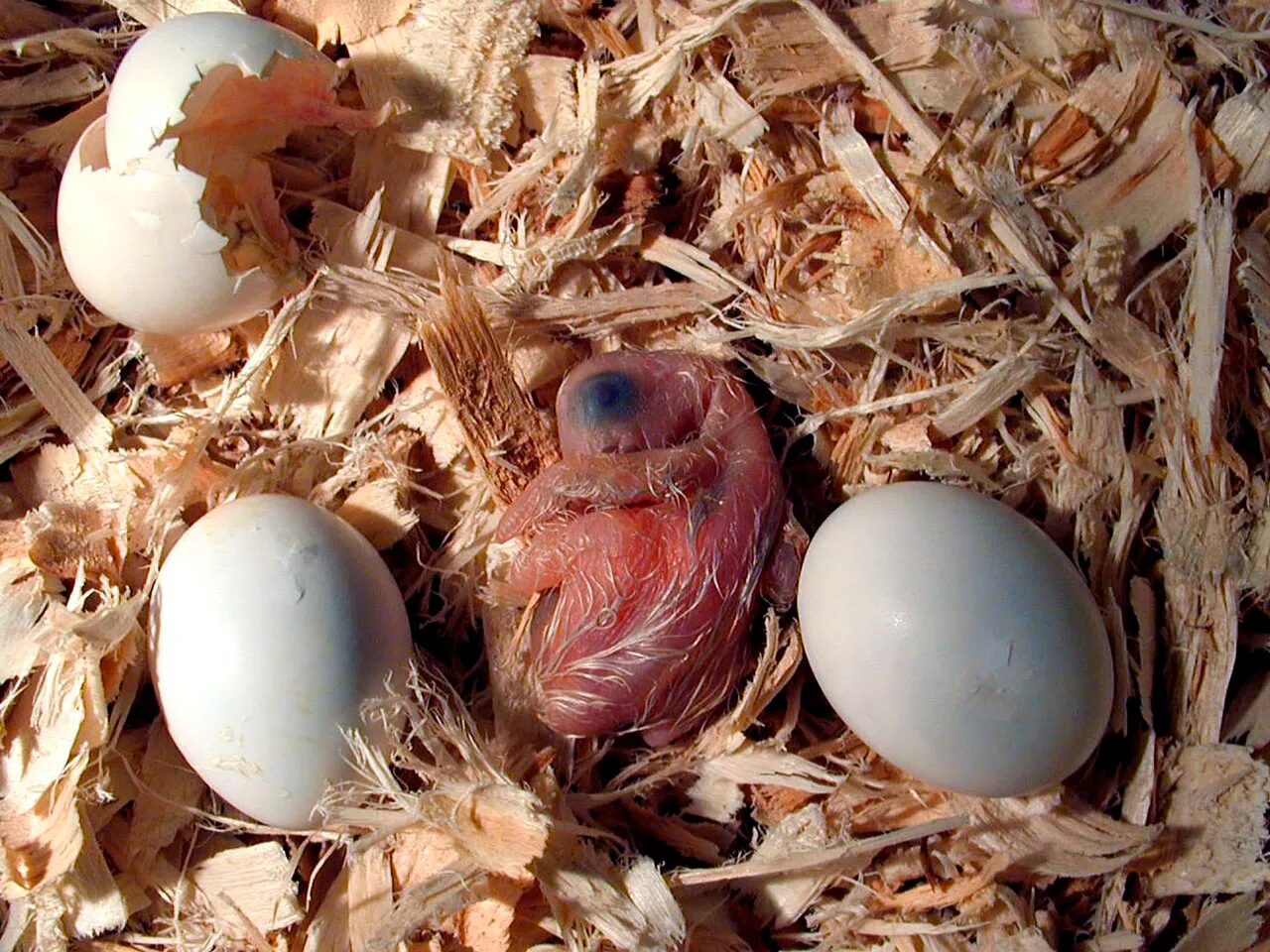
Greys usually mature at around four to five years and lay three or four eggs in a cavity-style nest box. Incubation lasts about 28–30 days, and chicks fledge at roughly twelve weeks, continuing to be fed by their parents for several weeks afterwards.
Breeding greys carries particularly heavy legal and ethical responsibilities. As an Appendix I species, captive-bred chicks may need certificates and official notification, and in Korea facility registration applies. Producing birds that will live for decades should be left to experienced breeders with secure homes lined up. If you are not breeding, skip nest boxes and dark hideaways and avoid petting that stimulates hormones.
12. Costs
Rough 2026 ranges for Korea; actual prices vary widely.
| Item | Estimated cost (KRW) | Notes |
|---|---|---|
| Bird | several million | Paperwork, tameness and Congo vs Timneh |
| Large cage | 400,000–1,200,000 | Heavy-duty metal |
| Play stand | 100,000–400,000 | |
| Perches, toys, bowls | 150,000–300,000 | |
| Air purifier and UVB lamp | 150,000–400,000 | As needed |
| First check with blood and disease tests | 150,000–400,000 | |
| Start-up total (excluding bird) | about 1,000,000–2,500,000 | |
| Monthly pellets, vegetables, nuts | 30,000–60,000 | |
| Monthly toys and supplies | 30,000–60,000 | |
| Annual check-up | 200,000–500,000 | With blood work |
| Emergency care | hundreds of thousands to millions |
Toys and foraging materials are not optional extras but essential spending on your grey's mental health. Budget too for bird-sitting when you travel.
13. Before you get one
- Paperwork: check that the captive-breeding certificate, previous registration or transfer documents and the leg-ring number all match. Birds without clear papers can bring legal trouble.
- Experience: greys are not ideal first parrots. Experience with smaller species first is a real advantage.
- Time: can you provide several hours of interaction daily, without the house standing empty all day?
- Allergies: discuss powder down with any family members who have allergies or asthma.
- Health: look for even, glossy feathers, clean eyes and nostrils and a lightly dusty beak, and ask for PBFD and psittacosis results.
- Weaning: bring home a fully weaned bird.
- The long view: plan for 40–60 years and decide who will care for the bird if something happens to you.
- Vet: confirm access to an experienced avian vet.
- Rehoming: adult greys sometimes need new homes because of an owner's circumstances; make sure the legal transfer of paperwork is completed properly.
14. Laws and regulations
The African grey, including the Timneh, has been on CITES Appendix I since January 2017. This section is general guidance; laws change, so check with your national wildlife authority before buying, selling or transferring a grey.
- International trade: commercial international trade in Appendix I species is essentially prohibited. Captive-bred birds may move only under strict permit systems.
- Domestic sale: in the European Union and the UK, selling or commercially using an Appendix I bird generally requires an Article 10 certificate. In the United States, imports are governed by the Wild Bird Conservation Act and interstate rules can apply.
- Registration: some countries require registration of Appendix I birds, notification when they change hands or die, and minimum housing standards. Korea, for example, requires keepers of certain CITES-listed species, Appendix I greys among them, to register their facilities and report transfers.
- Proof of origin: always obtain captive-breeding certificates and match them to the bird's closed leg ring or microchip.
- Penalties: trading without documents can lead to fines, prosecution and confiscation of the bird.
If you inherit or rehome a grey, make sure the paperwork travels with the bird.
15. African greys in culture
The grey is the archetypal talking parrot and turns up regularly in stories and news. When Alex died in 2007, obituaries appeared in newspapers around the world, and his reported last words to Dr Pepperberg, roughly 'You be good. See you tomorrow. I love you', were widely quoted. News outlets periodically feature greys said to know over a thousand words or to have picked up their owners' habits of speech a little too faithfully.
In fiction the eavesdropping parrot that blurts out secrets is a familiar device, and greys often fill the role. In Korea, greys holding conversations with their owners have become favourites on television animal shows and YouTube.
16. Trivia
- Greys can imitate several household members separately, sometimes calling one person in another's voice and causing real confusion.
- Some studies have compared greys' performance on certain tasks to that of young children, though such comparisons depend heavily on the test and should be treated with caution.
- The red tail probably serves as a social signal within the flock, but its exact function is still being studied.
- Wild greys eat soil at forest clearings, which may help neutralise plant toxins or supply minerals.
- Easily spooked by small noises or shadows at night, greys are affectionately called nervous geniuses by some keepers.
- There are many anecdotes of greys imitating smoke or burglar alarms so convincingly that families believed there was a real emergency.
Health notes are general information. If something seems wrong, contact a vet who treats this species.
FAQ
Do all African greys talk?
Many become excellent talkers, but individuals vary and some say very little. Get one because you love parrots, not for the talking.
What is the difference from a Timneh grey?
Timnehs are smaller and darker with a maroon tail and a horn-coloured patch on the upper beak. They are now usually treated as a separate species and are also on Appendix I.
What should I do if my grey starts plucking?
First see an avian vet to rule out infection or nutritional causes, then review sleep, enrichment, foraging and recent changes at home. Plucking usually has several causes at once.
Photo credits
Photos are freely licensed images from Wikimedia Commons. Authors and licenses are listed below.
- Perroquet à Yampopo Beach - Douala.jpg — Florettesokeng · CC BY-SA 4.0
- Congo African Grey Parrot -head detail.jpg — L.Miguel Bugallo Sánchez (http://commons.wikimedia.org/wiki/User:Lmbuga) · CC BY-SA 3.0
- Congo Grey 02.jpg — Bloopityboop · CC BY-SA 4.0
- Photo of Petra as a baby.jpg — PetraGrey · CC BY-SA 4.0
- Psittacus erithacus -eggs and new chick-8a.jpg — Ruth Rogers · CC BY 2.0
- Psittacus erithacus 560667035.jpg — avocat · CC BY 4.0