TailVille
At a glance
Rough ranges for supplies, food and electricity in Korea (USD is approximate). Purchase or adoption fees are not included.
Beginners to amphibians and anyone wanting a low-maintenance, long-lived pet to watch rather than handle.
People who want a cuddly pet, don't want to deal with live insects, or are bothered by night-time calls.
1. Overview
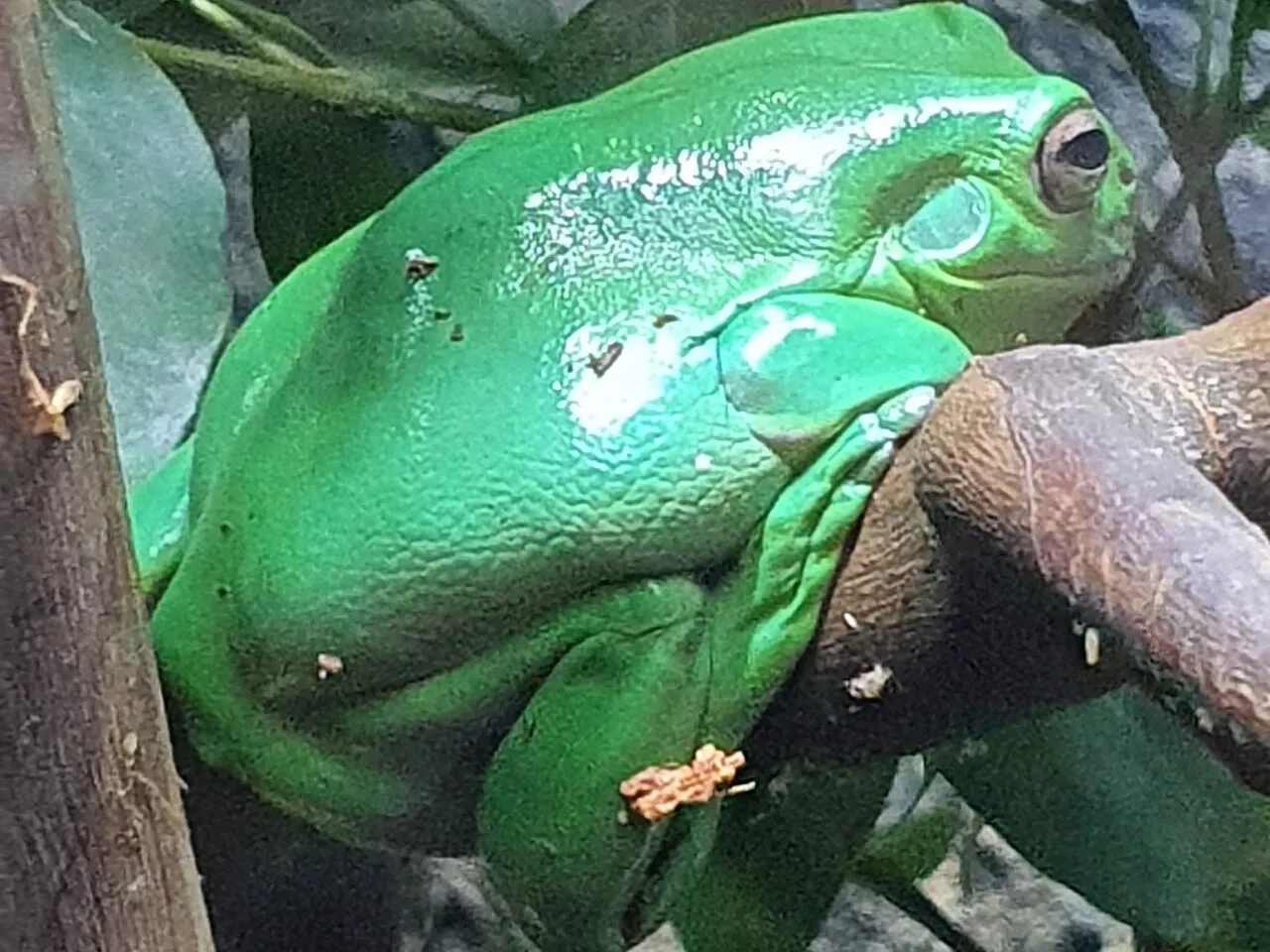
White's tree frog is a large tree frog from northern and eastern Australia and southern New Guinea. At 7–11 cm long it dwarfs Korea's native tree frog, and with its plump body, heavy brow ridges and upturned mouth it always seems to be smiling. Australians often call it the green tree frog, and its chubby build has earned the nickname dumpy frog.
It is sturdy and long-lived for a frog and copes with drier conditions than most amphibians, which has made it a favourite beginner species for decades. It is not easily frightened, moves in a relaxed, deliberate way and is a pleasure to watch; in good conditions it can live more than fifteen years.
It is also a greedy eater prone to obesity, and its delicate skin means frequent handling is a bad idea. This article covers classification and naming, history, anatomy, colour variants, behaviour, setting up the enclosure, diet, health, breeding, costs, what to check before buying and laws.
2. Name and classification
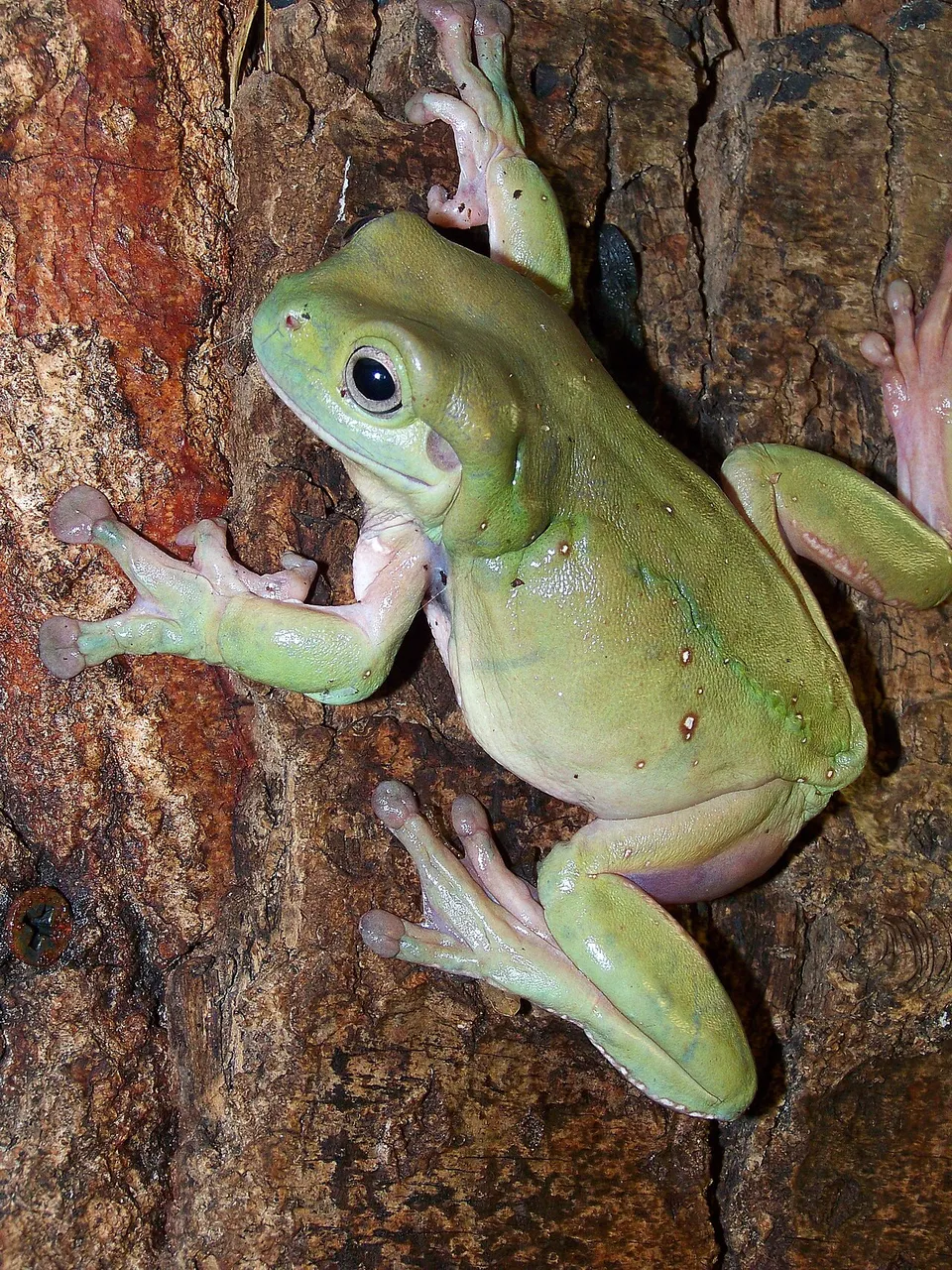
William Kreijkes · CC BY-SA 3.0
2.1. Scientific name and its changes
White's tree frog belongs to the tree frogs, placed either in Hylidae or in Pelodryadidae, a family some researchers use for Australasian tree frogs. For many years its scientific name was Litoria caerulea; work in the 2010s moved it to Ranoidea, and Ranoidea caerulea became widely used. Some later authors have argued for returning to Litoria, so both names appear in current sources. Australian tree frog taxonomy is still settling, and either name refers to the same frog.
The species name caerulea is Latin for sky blue. A green frog ended up named blue because the first specimens sent to Britain lost their yellow pigment in preservative and turned blue.
2.2. Where the common name comes from
The name honours John White, surgeon-general of the early British colony near Sydney, who recorded the frog in the late eighteenth century. His notes and specimens reached Europe, making this one of the first Australian frogs to be formally described. In Korean the name is a transliteration, so the word white in it refers to a person rather than a colour, a detail that often surprises new owners.
2.3. Related species
| Species | Notes |
|---|---|
| White's tree frog | 7–11 cm, plump, the common pet species |
| White-lipped tree frog (L. infrafrenata) | One of the world's largest tree frogs, white lip stripe, more active |
| Magnificent tree frog (L. splendida) | Large glands behind the head, restricted to north-western Australia |
| Japanese tree frog (Dryophytes japonicus) | 3–4 cm, an unrelated native Korean frog |
White's and magnificent tree frogs look similar and are sometimes confused. Korea's native tree frog differs in size, range and lineage, and wild native frogs should not be collected as pets.
3. History
In Australia, White's tree frogs are a familiar sight around homes. They turn up in rainwater tanks, drainpipes, letterboxes and even toilet bowls, and on summer nights they cling to windows picking off insects drawn to the light. For many Australians they are part of childhood memories.
They became popular as pets in Europe and North America in the late twentieth century. Because Australia bans commercial export of its wildlife, early pets came mostly from New Guinea or from captive breeding abroad. Today breeders in the United States, Europe and Asia produce them steadily, and nearly all pets are captive-bred.
In Korea, White's tree frogs arrived with the growth of the amphibian and reptile hobby in the 2000s, alongside horned frogs. Their calm nature and smiling face make them popular first frogs, and colour variants such as blue and snowflake are also imported.
Since the 1990s, chytrid fungus has caused severe declines in many Australian frogs. White's tree frogs have been affected in some areas too, a reminder that amphibian diseases can travel across borders.
4. Body
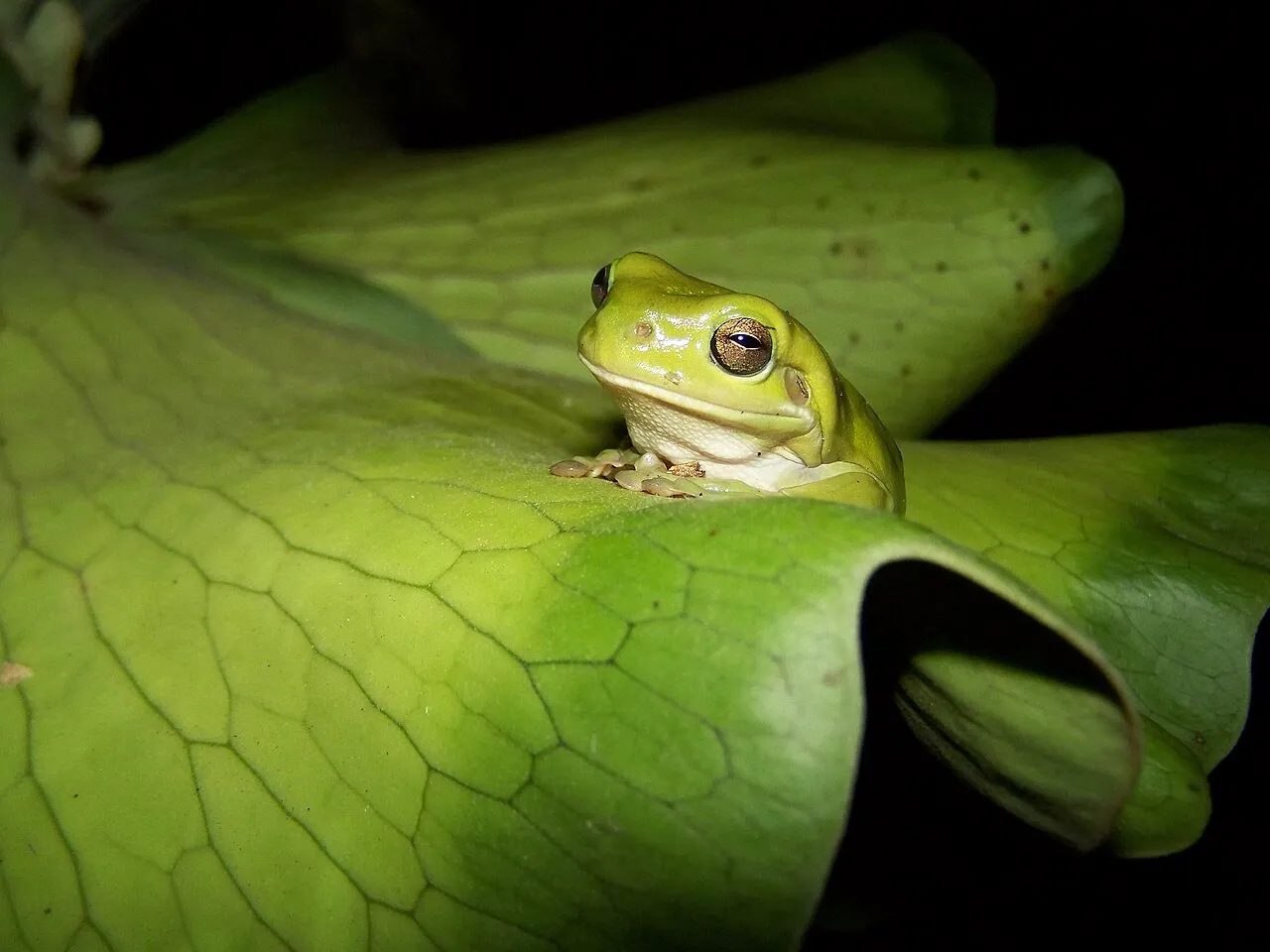
Alex's Backyard · CC BY-SA 4.0
4.1. Size and build
| Measure | Males | Females |
|---|---|---|
| Length | 7–9 cm | 9–11 cm, occasionally larger |
| Weight | 40–70 g | 60–100 g or more |
The body is broad and stout, and a thick ridge of fat sits above each eye. This ridge grows as the frog eats more; if it droops far enough to cover the eyes, the frog is overweight. Round toe pads let it cling to glass and smooth leaves, and the toes have partial webbing, more developed on the feet than the hands.
4.2. Skin and colour
The skin is smooth with a waxy feel. A thin layer of skin secretion reduces water loss, which is why White's tree frogs tolerate drier conditions than most frogs. These secretions contain peptides that inhibit bacteria and fungi and have attracted scientific interest.
Colour ranges from bright emerald through blue-green and olive to dull brownish tones. Cold, dark surroundings or stress darken the frog, while warmth and comfort bring out bright green. Many individuals have scattered small white spots on the back. The belly is white or cream.
4.3. Telling males from females
Mature males have a greyish, wrinkled patch of skin over the vocal sac under the chin, and in breeding condition they develop rough nuptial pads on the thumbs for gripping females. Calling at night is another giveaway. Females are larger, with a white throat, and do not call. Sexing becomes reliable at around a year old.
5. Colour variants and localities
White's tree frogs are green by default, but captive breeding has fixed several colour variants. Names and standards vary between sellers.
| Name | Description |
|---|---|
| Normal (green) | Most common, shifts from green to brownish |
| Blue | Lacks yellow pigment, appears sky blue or turquoise |
| Snowflake | Large, abundant white spots across the body |
| White-spotted or speckled | Lines with distinct white spotting |
| Hypo or pearl | Paler, pastel tones |
| New Guinea origin | Some reported to grow larger and differ slightly in colour |
Blue frogs are popular partly because they echo the story behind the name caerulea. Variants are rarer and cost more; they are not harder to keep than green frogs, but ask the seller about the health of the line. Because these frogs change colour so much, photos often look different from the real animal.
6. Behaviour
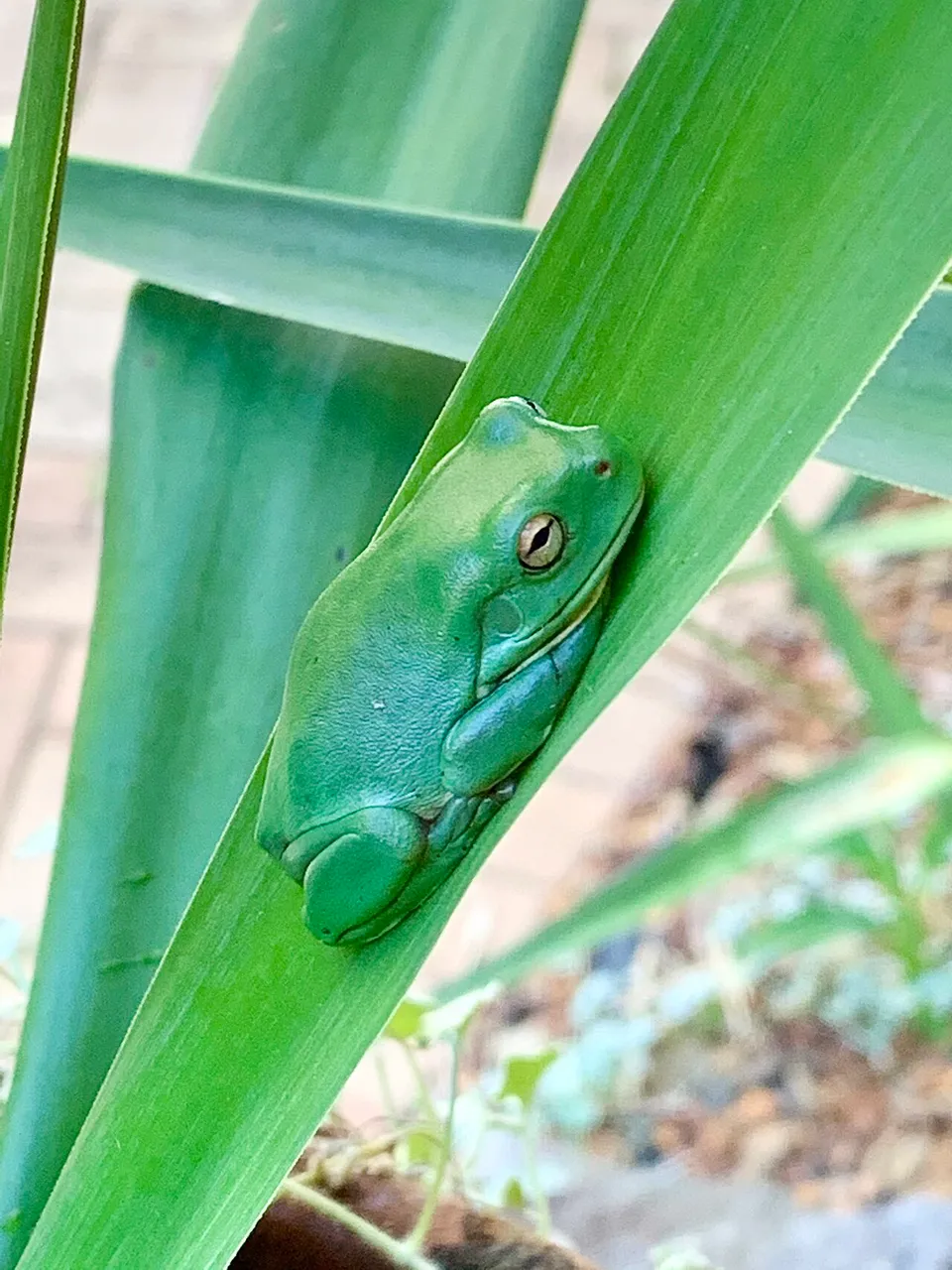
Chris Olszewski · CC BY-SA 4.0
6.1. In the wild
Wild White's tree frogs live in forest, around swamps, in grassland and in suburbs. By day they sleep in tree hollows, among leaves, in rock crevices and in cool, damp corners of buildings; after dark they emerge to eat insects, spiders, smaller frogs and occasionally even small mice, anything that fits in their mouth. In the dry season they shelter and conserve water under their waxy secretions, and with the rains they gather at pools and puddles to breed.
6.2. Behaviour at home and what it means
| Behaviour | Meaning |
|---|---|
| Sitting motionless on a wall or leaf by day, legs tucked | Normal sleep |
| Slowly clambering and looking around at night | Active period, hunting |
| Bright green | Warm and comfortable |
| Dark brown for long periods | Cold, stressed, or possibly ill |
| Sitting in the water bowl for a long time | Rehydrating; may be too warm or dry |
| Males barking at night | Breeding drive, responding to humidity or pressure changes |
| Skin turning whitish and peeling | Shedding, and eating the old skin is normal |
| Limp and unresponsive | Warning sign; check immediately |
These frogs absorb water through their skin, so they spend plenty of time sitting in the water dish. They shed regularly, wriggling free of the old skin and eating it. A male's call is a deep, repeated bark, especially after rain or misting.
Frogs don't enjoy being handled. Settled frogs may sit quietly on a hand, but body heat and the salts and oils on human skin stress their skin. Think of them as pets for watching rather than holding.
7. Life stages
White's tree frogs are unusually long-lived for frogs, typically 12–16 years in captivity, with records over 20.
| Stage | Duration | Notes |
|---|---|---|
| Egg | 1–3 days | Clumps floating at the surface |
| Tadpole | 4–8 weeks | Grows in water eating algae and prepared food |
| Metamorphosis | A few days | Front legs appear, tail is absorbed; risk of drowning |
| Froglet | Metamorphosis to 6 months | 1.5–3 cm, small insects daily |
| Juvenile | 6 months–1 year | Rapid growth to 4–6 cm |
| Adult | From 1–2 years | Able to breed, full size |
| Senior | After about 10 years | Less active, weight loss, possibly poorer eyesight |
Tiny froglets dehydrate and starve easily, so keep humidity a little higher and feed small insects daily. Older frogs may eat less and hunt clumsily, and tong-feeding helps.
8. Housing
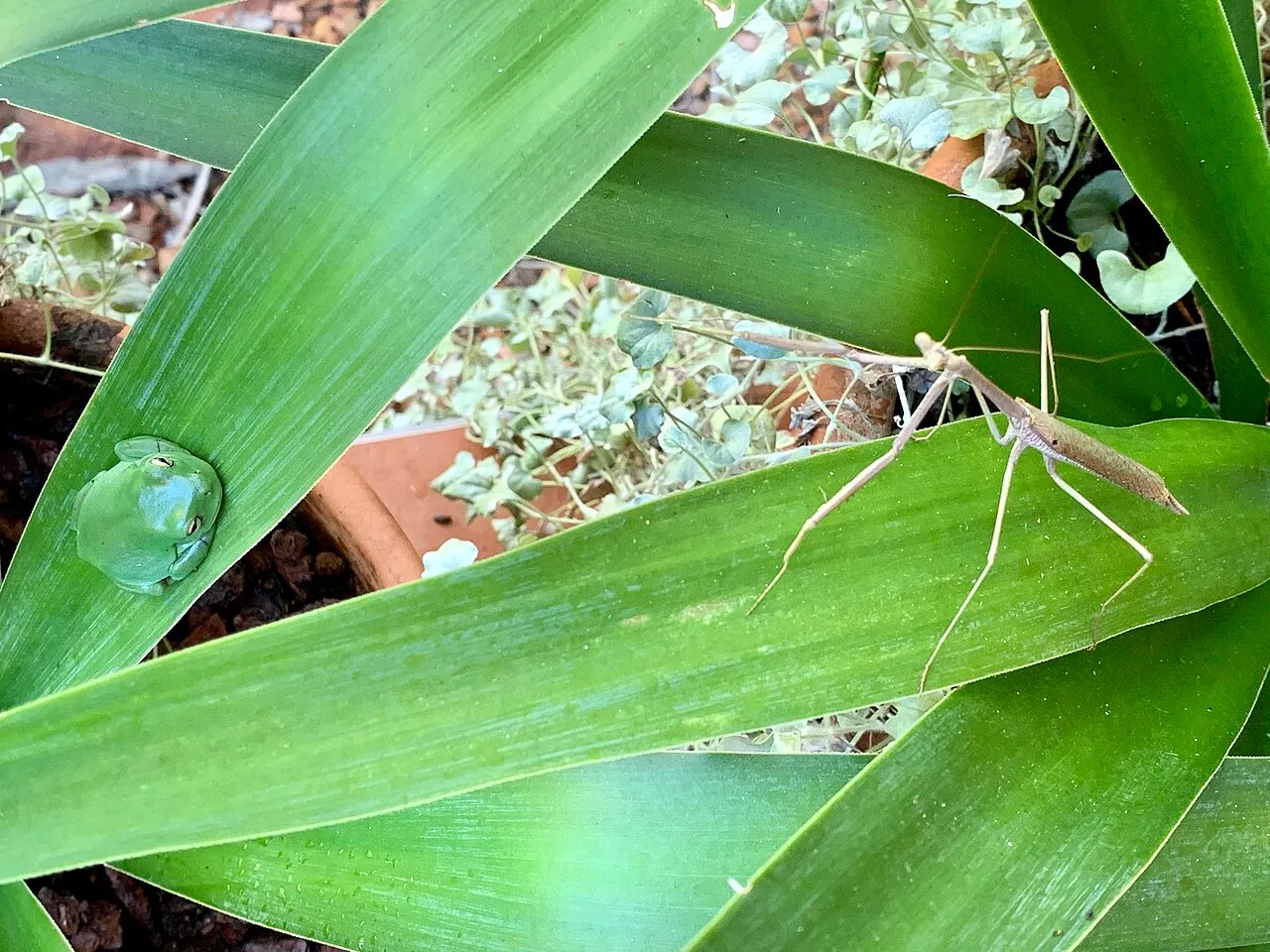
Kgbo · CC BY-SA 4.0
8.1. Enclosure size and layout
As climbers, White's tree frogs need a tall, vertical enclosure. One or two adults need at least 45 × 45 × 60 cm; three or four, about 60 × 45 × 90 cm. Front-opening glass terrariums with a ventilated mesh top are easiest to manage. Toe pads let frogs climb glass and squeeze through small gaps, so keep doors and lids secured.
Furnish the space with cork branches, bamboo, sturdy vines and broad-leaved plants such as pothos, sansevieria and bromeliads placed high, with shaded spots for daytime sleeping. Use substrates that hold moisture and are safer if swallowed, such as coconut fibre, bioactive soil or moss; avoid small gravel and sand, which can be ingested with food. Always include a wide, shallow water dish the frog can sit in.
8.2. Temperature, humidity and lighting
| Parameter | Target |
|---|---|
| Daytime | 24–29°C, warm spot around 30°C |
| Night | 20–23°C |
| Humidity | 50–70%, briefly higher after misting |
| Lighting | About 12 hours of daylight, low-level UVB recommended |
| Water | Dechlorinated, changed daily |
Korean winters often bring indoor temperatures below 20°C, so add a heat source on the side or top of the enclosure, controlled by a thermostat and placed outside the mesh so the frog cannot touch the bulb; amphibian skin burns very easily. Temperatures above 30°C in summer are dangerous too, so keep the tank out of direct sun.
Mist lightly once or twice a day, but constantly streaming glass encourages bacteria and mould. As an Australian frog it benefits from some drying time, so keep air moving. UVB is debated, yet many keepers find that low-level UVB helps calcium metabolism and activity; if you use it, provide plenty of shade so the frog can choose.
8.3. Cagemates and equipment
Similar-sized White's tree frogs usually live together peacefully. A much larger frog may swallow a smaller one, though, and mixing with other frog species or lizards is not recommended because of disease, stress and skin secretions. When keeping several, make sure each one gets food.
- Vertical front-opening enclosure with mesh top
- Cork branches, vines, live or artificial plants
- Moisture-holding substrate
- Wide, shallow water dish and dechlorinator
- Digital thermo-hygrometer
- Heat source with thermostat, low-level UVB
- Mister, feeding tongs, calcium and vitamin supplements
- Powder-free nitrile gloves for handling or cleaning
9. Diet
White's tree frogs are carnivores that respond to moving prey, so live insects make up most of the diet.
| Food | Suitability | Notes |
|---|---|---|
| Crickets | Staple | No wider than the gap between the frog's eyes |
| Dubia and other roaches | Staple | Nutritious and silent |
| Silkworms and hornworms | Treat or supplement | Relatively high in moisture and calcium |
| Mealworms and superworms | Occasionally | Fatty with tough shells |
| Waxworms | Rarely | Very fatty, causes obesity |
| Farmed earthworms | Occasionally | Offer with tongs |
| Pinky mice | Not recommended | Too fatty, obesity and disease risk |
| Age | How often and how much |
|---|---|
| Froglet | Daily, several small crickets |
| Juvenile | Every other day, 3–6 insects |
| Adult | 2–3 times a week, 3–5 insects |
Gut-load feeder insects with vegetables, grains or a commercial insect diet for a day or two before feeding. Dust with calcium at every feed and with calcium plus D3 or a multivitamin about once a week. Remove uneaten crickets, which can nibble a sleeping frog at night.
Because these frogs eat whatever they are offered, obesity is the most common problem. If the fat ridges droop over the eyes or the sides bulge until the legs look short, space meals further apart. Wild insects may carry pesticides or parasites, and fireflies are toxic.
10. Health
TarnishedPath · CC BY-SA 4.0
Frogs breathe and drink through their skin, which makes them extremely sensitive to pollutants and bacteria.
| Disease | Cause | Signs | Prevention and response |
|---|---|---|---|
| Obesity | Overfeeding, fatty foods | Drooping fat ridges, side folds, sluggishness | Reduce feeding |
| Red leg (bacterial septicaemia) | Dirty conditions, stress | Reddened legs and belly, lethargy, poor appetite | Prompt vet care, hygiene |
| Chytridiomycosis | Chytrid fungus | Excessive skin shedding, lethargy, abnormal posture | Vet, isolation, disinfect tools |
| Metabolic bone disease | Lack of calcium or D3 | Bent legs, jaw deformity, tremors | Supplements, UVB, vet |
| Impaction | Swallowed substrate or gravel, low temperature | No droppings, swollen belly | Safe substrate, correct temperature |
| Dehydration | Low humidity, no water dish | Wrinkled, tacky skin, sunken eyes | Constant water, adjust humidity |
| Chemical poisoning | Hand lotion, detergents, disinfectants | Spasms, skin damage, sudden lethargy | Clean hands, careful cleaning |
Even fewer clinics treat frogs than reptiles. See an amphibian-savvy vet for reddened or excessively peeling skin, limpness or unresponsiveness, several days without food plus weight loss, or an abnormally swollen belly.
Before handling, rinse your hands thoroughly so no soap remains, or wear powder-free gloves, and wash up afterwards. Household detergents and bleach leave residues that harm frogs, so clean the enclosure with hot water or amphibian-safe disinfectants and rinse well.
11. Breeding
In the wild, White's tree frogs breed in pools and puddles after summer rain. Keepers who want to breed them often simulate a dry season in winter, lowering temperature, humidity and day length a little for a month or two, then warming things up and misting heavily to mimic the wet season. Some use rain chambers or a separate breeding tank with a broad area of shallow water.
Males call nightly to attract females and mate in amplexus, gripping the female behind the forelegs. The female lays hundreds to over a thousand eggs on the water surface, which hatch into tadpoles within a day or two. Tadpoles grow for four to eight weeks on algae and tadpole food; once the front legs appear, they need a ramp or plants to climb out, because metamorphosing froglets drown easily.
A successful spawning means space and food for hundreds of froglets, which need tiny insects every day and are difficult to rehome responsibly. Don't attempt breeding without a plan, and never release tadpoles or frogs, which risks harming ecosystems and spreading disease.
12. Costs
Normal green frogs are fairly cheap, while blue or snowflake variants cost several times more. The table below shows rough keeping costs excluding the frog.
| Item | Estimated cost (KRW) | Notes |
|---|---|---|
| 45 × 45 × 60 cm vertical terrarium | 100,000–250,000 | Front-opening glass |
| Heat source and thermostat | 30,000–80,000 | |
| Low-level UVB | 30,000–80,000 | Optional but recommended |
| Digital thermo-hygrometer | 10,000–30,000 | |
| Substrate, branches, plants, water dish | 30,000–100,000 | |
| Mister, tongs, supplements, dechlorinator | 20,000–40,000 | |
| Total setup | About 250,000–500,000 | |
| Monthly feeder insects | 10,000–25,000 | |
| Monthly electricity | 5,000–10,000 | Higher with winter heating |
| Monthly substrate and supplements | 5,000–10,000 | |
| Monthly total | About 20,000–40,000 | |
| Yearly UVB replacement | 20,000–50,000 |
Breeding your own feeder insects can save money long term but adds smell and work. Vet fees vary widely because few clinics treat amphibians, so locate one in advance and keep some money aside.
13. Before you get one
- Can you buy, store and feed live insects?
- Are you happy with a pet that is mostly for watching rather than handling?
- Will night-time calling from a male be a problem?
- Can you commit to fifteen years or more?
- Have you found a vet who treats amphibians?
Make sure the frog is captive-bred; wild-caught frogs carry more parasites and disease and can spread infections such as chytrid. A healthy frog has clear, bright eyes, moist skin without wounds or red patches, and a well-rounded body. Avoid frogs with visible hip bones, reddened or flaking skin, or that lie limp on the floor during the day.
New frogs may refuse food for a few days, so give them a quiet place to settle. If you keep other amphibians, quarantine newcomers in a separate room for at least 30–60 days and use separate tools.
14. Laws
White's tree frogs are not listed under CITES. Australia bans the commercial export of its wildlife, so frogs in international trade should be captive-bred abroad or legally sourced from elsewhere in the range.
In Korea, amendments to the wildlife act are phasing in licensing for wildlife sellers and importers and a system specifying which species may be imported and sold. Which list this frog falls under and what private rehoming requires may change, so check with the Ministry of Environment or a regional environmental office. Rules elsewhere vary, so look up local regulations.
Amphibians can spread chytrid fungus and ranavirus. Never release frogs or tadpoles, and don't pour tank water or dump substrate into rivers, drains or gardens; flush used water or disinfect it first. Avoid collecting wild native frogs as pets as well.
15. White's tree frogs in culture
Thanks to its smiling face and rotund body, White's tree frog is a star of internet memes and photos. Images of its blank grin, its overflowing chubbiness or its belly pressed against glass circulate as the very picture of a cute, comical frog.
In Australia, finding one in the toilet or letterbox is a classic household anecdote, and the frog is a regular in children's books and nature education. Conservation groups use its familiar face to raise awareness of amphibian decline and chytrid fungus. Round, easy-going green frog characters in games and animation often look a lot like it.
16. Trivia
- Some peptides found in the frog's skin secretions dilate blood vessels or inhibit bacteria and have attracted medical research interest.
- It closes its eyes when swallowing, because pressing the eyeballs down into the head helps push food down the throat.
- It will try to stuff surprisingly large prey into its mouth with its hands, so housing it with much smaller animals is risky.
- When grabbed or threatened, it may let out a high-pitched distress scream quite unlike its usual call.
- In parts of Australia, males start calling before rain, earning them a reputation as weather forecasters.
- On warm days these frogs often nap on trees or house walls far from water, breaking the stereotype that frogs always live by ponds.
Health notes are general information. If something seems wrong, contact a vet who treats this species.
FAQ
My frog turned brown. Is it sick?
Colour changes with temperature, humidity, background and mood are normal. A frog that stays dark, lethargic and off its food needs a check of conditions and possibly a vet.
Can I keep several together?
Similar-sized frogs usually live together peacefully. Increase the enclosure size and make sure every frog gets food.
Is it poisonous to touch?
It isn't dangerous, but skin secretions can sting eyes or cuts. Wash your hands afterwards and keep handling brief for the frog's sake too.
Photo credits
Photos are freely licensed images from Wikimedia Commons. Authors and licenses are listed below.
- Green Tree Frog on pond after Rain 01014.jpg — Alex's Backyard · CC BY-SA 4.0
- Litoria caerulea2.JPG — William Kreijkes · CC BY-SA 3.0
- Young male green tree frog speciman on green leaf.jpg — Alex's Backyard · CC BY-SA 4.0
- Australian green tree frog in Corinda, Queensland, 2020.jpg — Chris Olszewski · CC BY-SA 4.0
- Australian green tree frog and stick insect in Corinda, Queensland, 2020.jpg — Kgbo · CC BY-SA 4.0
- Ranoidea caerulea.jpg — TarnishedPath · CC BY-SA 4.0