TailVille
At a glance
Rough ranges for supplies, food and electricity in Korea (USD is approximate). Purchase or adoption fees are not included.
Active people who can run, train and play with a dog for one to two hours every day, especially those interested in dog sports.
Busy people with little time for exercise, or anyone wanting a calm, low-key companion.
1. Overview
The Border Collie is a medium-sized herding dog developed on the hill farms along the border between England and Scotland. Typically weighing 14 to 20 kg, it combines a light, athletic frame with tireless stamina and an extraordinary ability to read human signals. It tops most rankings based on learning and obeying commands and is widely known as the cleverest dog in the world.
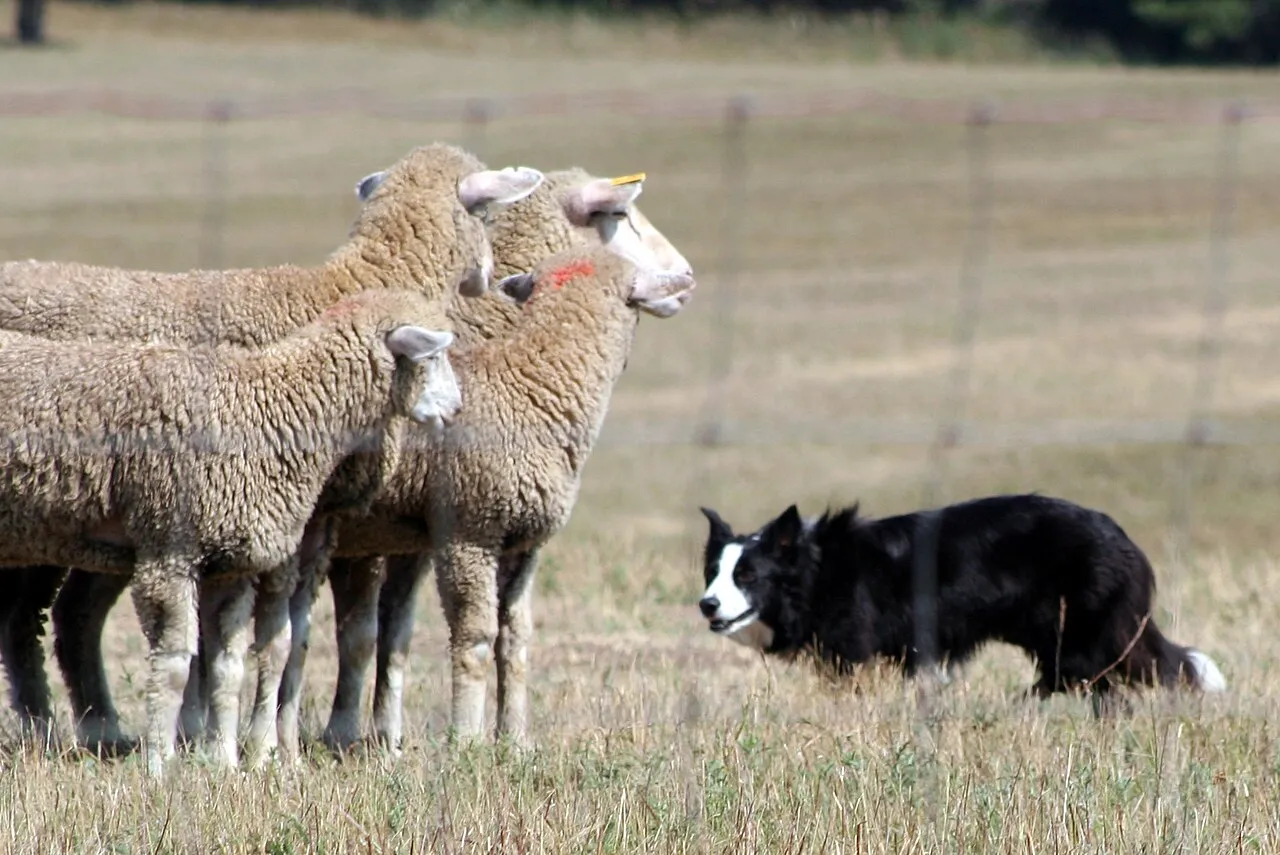
Border Collies still work sheep and cattle on farms in Britain, Australia, New Zealand, North America and elsewhere, and they dominate dog sports such as agility, flyball and disc. They have also become popular family pets, but their talents were built for a working life, and channelling that energy in an ordinary household takes real commitment.
This article covers what is specific to the Border Collie: its origins, temperament, exercise needs and inherited diseases. General dog behaviour, vaccination and basic care are covered in the main dog article.
2. Name and origin
C. MacMillan · CC BY 2.5
2.1. Working dogs of the Borders
Sheepdogs have been central to farming in the hills of northern Britain for centuries. Dogs there were selected purely on working ability, not looks, so size, coat and colour varied widely. The origin of the word 'collie' is uncertain; suggestions include an old Scots word for something useful and a dialect term for black-faced sheep.
The name 'Border Collie' came into use in the early twentieth century to describe the working collies of the Border region. The International Sheep Dog Society, founded in 1906, organised trials and kept stud records, laying the foundations of the breed.
2.2. Old Hemp and the sheepdog trials
A dog called Old Hemp, born in Northumberland in the 1890s, worked sheep with quiet authority and an intense stare and sired a great many puppies; he is often cited as the foundation sire of the modern breed. Sheepdog trials, generally traced to an event in Wales in 1873, spread rapidly and refined the art of directing a distant dog by whistle and hand signal.
2.3. Recognition
For most of its history the Border Collie was managed as a working dog rather than a show breed. The Kennel Club in Britain recognised it in the 1970s and the American Kennel Club in the 1990s, and the FCI lists it in Group 1 (Sheepdogs and Cattle Dogs) with Great Britain as the country of origin. Some working-dog organisations opposed show recognition, fearing that breeding for looks would erode working ability, a debate that continues today.
3. History and popularity in Korea
Korea has little tradition of sheep farming, so Border Collies there rarely do the job they were bred for. From the 2000s onward, dog sports such as agility and disc dog arrived and the breed quickly gained a reputation for winning. Television and online videos of Border Collies snatching frisbees mid-air and performing elaborate tricks cemented their image as the clever dog.
The smart black-and-white looks and brains attracted many pet owners, but apartment living and long working hours make it hard to meet the breed's needs. Trainers and vets report a steady stream of Border Collies with barking, destructive behaviour and over-arousal, and some end up surrendered.
The growth of off-lead dog parks, dog-sport clubs and scent-work classes has given active Korean owners more ways to keep a Border Collie fulfilled. Even so, an honest look at your own schedule remains the most important step before getting one.
4. Appearance and breed standard
Rocbag · CC BY-SA 4.0
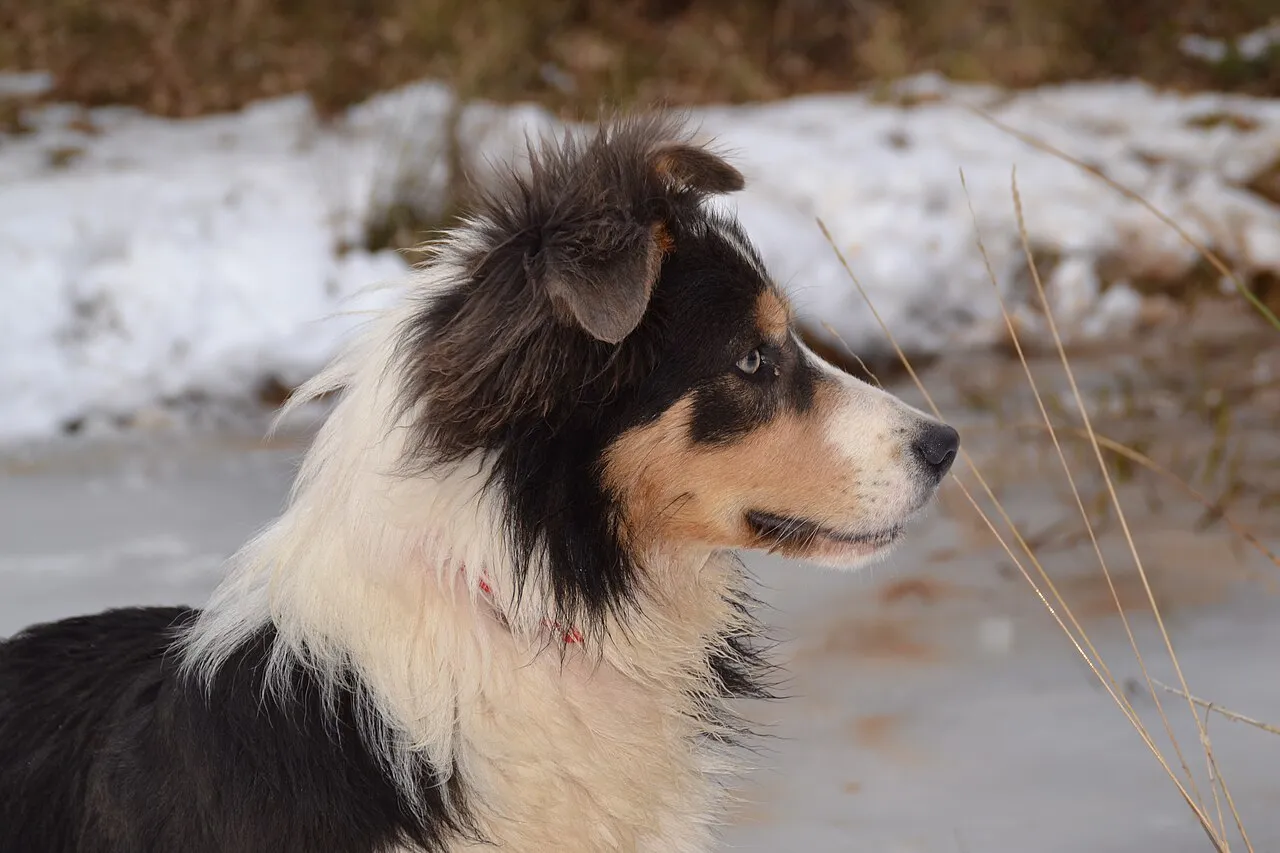
The Border Collie is slightly longer than it is tall, with a balanced, muscular build designed for both stamina and quick bursts of speed. Ears are erect or semi-erect, and the eyes give a keen, intelligent expression. There are two coat types, the medium-length 'rough' and the short 'smooth', both with a dense undercoat.
| Feature | Approximate standard |
|---|---|
| Height | Males around 53 cm, females slightly smaller (roughly 46–56 cm overall) |
| Weight | About 14–20 kg |
| Coat | Rough (medium length) or smooth (short), double-coated |
| Colours | Black and white most common; also red, blue, merle, tricolour, sable and more |
| Eyes | Usually brown; merles may have blue or odd eyes |
Working lines are bred with little regard for appearance and vary considerably, while show lines tend toward fuller coats and more uniform conformation. Dogs that are mostly white, and puppies from merle-to-merle matings, have a higher risk of deafness, so responsible breeders avoid such pairings.
5. Temperament
In a word, the Border Collie is a workaholic. It finds satisfaction in watching, herding and solving problems, and it reads its owner's face and body language with uncanny precision. Many pick up a new cue after only a handful of repetitions, which makes training enormously rewarding.
The trademark 'eye', a low crouch and fixed stare used to control sheep, shows up at home too. It can turn into stalking bicycles and cars, circling running children or other dogs, and nipping at heels.
Many Border Collies are sensitive, startle easily at loud noises or sudden movement and shut down under harsh correction. They are devoted to their families but often reserved with strangers at first. Without enough to do, some develop compulsive habits such as chasing shadows or reflections, spinning, or fixating on moving objects.
6. Who it suits and who it doesn't
A good match for:
- People with the time and energy for 1.5–2 hours or more of daily exercise and training
- Anyone interested in agility, disc dog, scent work or other dog sports
- Hikers, runners and campers who want a dog along
- Owners who can train consistently with clear rules
A poor match for:
- People out of the house most of the day
- Anyone who thinks a quick lap of the block counts as exercise
- Families with very young children who cannot manage herding behaviour
- People wanting a calm, low-key companion
A Border Collie is not automatically wrong for a first-time owner, but the idea that 'clever means easy' is a myth. The smarter the dog, the more deliberately you need to give it something to do.
7. Exercise and play
A Border Collie needs activity that works the brain as well as the legs, not just long walks. A sample day might look like this:
- Morning: 40–60 minute walk with plenty of sniffing time
- Daytime: puzzle toys or a snuffle mat while alone
- Evening: 20–30 minutes of fetch or disc, plus 10 minutes of trick training
- Weekends: a dog-sport class, a hike or free running in a safe, open space
Most adore balls and frisbees, but endless throwing can keep a dog permanently wound up and unable to settle. Mix in 'wait' and 'down' during play, stop after a set number of throws, and teach your dog to relax on a mat; learning to switch off is as important as exercise.
Until growth plates close at around 12 to 18 months, avoid repetitive high jumping and long-distance running to protect developing joints. The double coat makes summer heat tough, so exercise in the cooler hours and offer plenty of water.
8. Coat care and hygiene
Border Collies shed all year, and in spring and autumn the undercoat comes out in clumps. Brush two or three times a week with a pin brush and slicker, and daily with an undercoat rake during moults. Rough-coated dogs tangle behind the ears, in the armpits and on the 'trousers'.
Shaving the coat to keep cool in summer is not recommended. The double coat insulates against sun as well as cold, and it may grow back unevenly. Thorough brushing to remove dead undercoat improves airflow far more effectively.
A bath every six to eight weeks is enough. Active dogs often crack paw pads or pick up grass seeds between the toes, so check the feet after outings. Even very active dogs need their nails checked every two to four weeks, and daily tooth brushing is ideal.
9. Feeding and weight
Energy needs vary enormously with workload. A dog working sheep all day can burn several thousand kilocalories, while a city pet that mainly goes for walks needs far less. Treat the feeding guide as a starting point and adjust every few weeks based on weight and body condition.
- Split food into two meals and avoid feeding in the hour before and after strenuous exercise
- Very active dogs may benefit from a performance diet with moderately higher protein and fat
- Use part of the daily ration for training rewards or puzzle toys so treats don't add extra calories
- Reduce portions after neutering and in old age, when metabolism slows
This is a lean breed: ribs that are easy to feel and a clear waist are normal. A dog that looks slim but is well muscled is usually in ideal shape.
10. Inherited disease and health
Border Collies are generally hardy, but several inherited conditions are known, and many can be screened by DNA testing. Responsible breeders share the parents' results openly.
10.1. Eye disease
- Collie eye anomaly (CEA): a congenital defect in the development of the choroid at the back of the eye. Most affected dogs see adequately, but severe cases can suffer retinal detachment and blindness. It is recessive and can be identified by DNA test and by eye examination of puppies at around six to seven weeks.
- Progressive retinal atrophy and primary lens luxation have also been reported, and regular eye checks are worthwhile.
10.2. Neurological and immune conditions
- Neuronal ceroid lipofuscinosis (NCL): waste material builds up in the brain, causing behaviour changes, anxiety, vision loss and incoordination from around one to two years of age. It is fatal, recessive and preventable through DNA testing.
- Trapped neutrophil syndrome (TNS): white blood cells cannot leave the bone marrow, leaving puppies with severe recurring infections. A DNA test is available.
- Imerslund-Gräsbeck syndrome (IGS): an inability to absorb vitamin B12 that causes poor growth and appetite; it is managed with lifelong B12 injections.
- Epilepsy: idiopathic epilepsy is relatively common in the breed.
- Border Collie collapse (BCC): episodes of wobbliness or collapse after intense exercise, the cause of which is not yet fully understood.
10.3. Joints and drug sensitivity
Hip and elbow dysplasia occur, so ask for the parents' hip scores from a recognised scheme such as OFA or BVA. The MDR1 mutation, which causes dangerous reactions to some antiparasitic and cancer drugs in several collie-type breeds, is reported to be relatively uncommon in Border Collies, but testing gives peace of mind. Dogs with largely white heads can be checked for congenital deafness with a BAER hearing test.
11. Life stages and lifespan
Average lifespan is roughly 12 to 15 years, long for a medium-sized dog. Border Collies that keep using body and brain often stay lively well into old age.
| Stage | Age | Key points |
|---|---|---|
| Puppy | 0–6 months | Socialisation, foundation training, redirecting herding into games, curbing nipping |
| Adolescent | 6–18 months | Peak energy; focus work and learning to settle; limit high-impact jumping |
| Adult | 1.5–8 years | Dog sports and a steady routine; manage weight and injuries |
| Senior | 9 years and up | Joint care, lighter exercise, continued brain games, regular check-ups |
Older dogs slow down and take longer to recover, but the desire to work rarely fades. Gentle scent games and short trick sessions keep a senior Border Collie mentally sharp.
12. Costs
These are rough 2026 South Korean figures. With a Border Collie, exercise and training tend to cost more than routine vet care.
| Item | Approximate cost | Notes |
|---|---|---|
| Purchase price | Hundreds of thousands to several million won | Working or show lines, health-tested parents |
| Initial supplies, vaccines, registration | 700,000–1,500,000 won | Crate, harness, long line, puzzle toys |
| Food and treats | 60,000–150,000 won per month | Depends on activity |
| Toys and consumables | 20,000–50,000 won per month | Balls and discs wear out fast |
| Dog sport or training classes | 100,000–300,000 won per month | Optional but very helpful |
| Daycare or dog walker | Several hundred thousand won per month | Worth considering for working households |
| Insurance | 30,000–60,000 won per month | Varies with age and cover |
| DNA testing | Tens to hundreds of thousands of won | For a breed panel |
| Cruciate ligament surgery | Several million won | A fairly common injury in athletic dogs |
Don't forget the steady cost of driving to open spaces at weekends to give your dog a proper run. Prices in Europe, North America and Australia follow a similar pattern, usually at higher levels.
13. Before you get one
- Work out honestly whether you can fit 1.5–2 hours of exercise and training into every single day
- Ask for the parents' DNA results for CEA, NCL, TNS and IGS, and their hip scores
- If a puppy comes from a merle-to-merle mating or is mostly white, check its hearing and eyes
- Working lines are typically very high-drive while some show lines are calmer; choose to fit your life
- Meet the parents if possible and note any sensitivity or noise phobia
- Avoid puppies taken from their mother before eight weeks and sellers offering many breeds in volume
Border Collies are frequently surrendered because they turn out to be 'far more active than expected'. As a result, breed rescues and shelters often have Border Collies and collie crosses looking for homes. Adopting an adult lets you see its energy level and personality up front, and rescue groups can help match a dog to your lifestyle.
14. Border Collies in culture
The 1995 film Babe features a pair of farm sheepdogs, both Border Collies, and the story of a pig who learns their methods and enters a sheepdog trial introduced many viewers to the breed's work.
In Britain, televised sheepdog trials were a long-running favourite, and the image of a single dog guiding a flock across a hillside into a pen by whistle alone is part of the country's rural iconography.
Border Collies are famous in science too. Rico, a German dog, was the subject of a study showing he knew the names of more than 200 objects, and Chaser in the United States learned to identify over 1,000 named toys. Psychologist Stanley Coren's widely read rankings of dog intelligence placed the breed first for working and obedience intelligence, cementing its reputation.
Online, videos of Border Collies catching discs in mid-air or performing elaborate trick routines are perennial favourites.
15. Trivia
- Shepherds each develop their own whistle commands, and handlers running several dogs often give each dog a different set.
- The name 'Border Collie' is much younger than the dogs themselves; for centuries they were simply called sheepdogs.
- Coat length and ear carriage vary even within one litter because the breed was selected for ability rather than appearance for so long.
- Border Collies herd ducks, geese and cattle as well as sheep, and some have been employed to clear birds from airports and golf courses.
- Some shepherds are said to have favoured dogs with white markings so they could spot them at dusk and so the sheep could see them coming.
- More than a few owners report Border Collies that have taught themselves to open fridge doors, lever handles and gate latches.
Health notes are general information. If something seems wrong, contact a vet who treats this species.
🍽️ Can my dog or cat eat this? →
FAQ
Can a Border Collie live in an apartment?
Activity matters more than square metres. With 1.5–2 hours of real exercise and mental work every day an apartment can work; without it, even a big house will not prevent problems.
Is it really the smartest dog?
It consistently tops rankings based on learning and obeying commands. But a quick mind also needs constant stimulation, which can make it harder, not easier, for first-time owners.
How much do they shed?
Year-round, with heavy seasonal moults in spring and autumn. Smooth-coated dogs shed less visibly but still shed. Expect regular brushing and frequent vacuuming.
Photo credits
Photos are freely licensed images from Wikimedia Commons. Authors and licenses are listed below.
- Border Collie Macho Blanco y Negro (Batman, los Baganes Border Collie).jpg — Rocbag · CC BY-SA 4.0
- BC eye.jpg — C. MacMillan · CC BY 2.5
- Border Collie Macho Blue Tricolour (Brix, Los Baganes Border Collie).jpg — Rocbag · CC BY-SA 4.0
- Border Collie Puppy in water.jpg — Cyr~commonswiki · CC BY-SA 3.0