TailVille
At a glance
Rough ranges for supplies, food and electricity in Korea (USD is approximate). Purchase or adoption fees are not included.
Active families who want a friendly, child-loving big dog and will manage diet and exercise consistently.
Busy people in small homes, or anyone unable to afford big-dog costs and daily exercise.
1. Overview
The Labrador Retriever is a large gundog descended from dogs that worked alongside fishermen in Newfoundland and were refined in Britain. It has a short, dense, water-resistant coat, a thick 'otter' tail, a broad head and a kind expression, and comes in three recognised colours: black, yellow and chocolate. It topped American registrations for more than 30 years and is loved worldwide.
Above all, the Lab is a working dog. Calm, sociable and intensely food-motivated, it serves around the world as a guide dog for blind people, a drug and explosives detection dog and a search-and-rescue dog, and most guide dogs in Korea are Labradors. Its appetite is so strong, however, that obesity is the breed's most common health problem. This article leaves general dog care to the main dog article and focuses on the Lab's history, temperament, the genetics behind its appetite, breed-related diseases and its role as a guide dog.
2. Name and origin
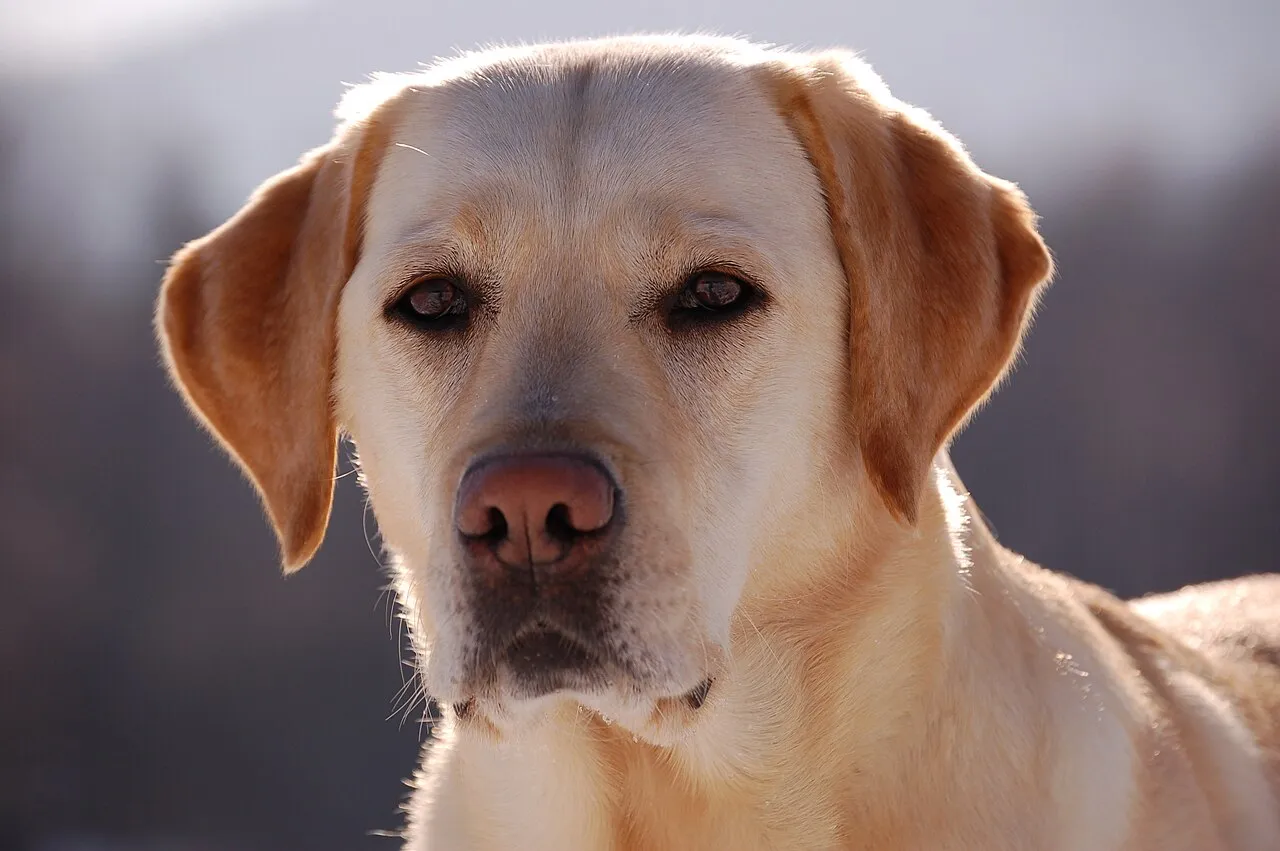
2.1. The St John's water dog
The Lab's ancestor was the St John's water dog of Newfoundland. These dogs are said to have retrieved fish and nets lost in the icy North Atlantic and carried lines between boats and shore. Their oily, water-shedding coat and thick, rudder-like tail survive in today's Labradors. The giant Newfoundland breed is thought to share the same regional roots.
In the early 1800s British aristocrats, notably the Earls of Malmesbury and the Dukes of Buccleuch, imported these dogs and began breeding them as waterfowl retrievers. The name is usually said to come from the Labrador region of Canada, though the dogs actually came from Newfoundland, so interpretations of the name vary.
Back home, dog taxes and sheep-protection laws in the late nineteenth century decimated the population, and the St John's water dog is thought to have disappeared by the mid-twentieth century. The dogs taken to Britain became the foundation of the modern Labrador.
2.2. Colours and recognition
Early Labradors were mostly black, and yellow and chocolate (then called liver) puppies were long disfavoured. Yellows and chocolates began to be recorded around the turn of the twentieth century, and all three colours eventually gained acceptance. The Kennel Club recognised the Labrador as a separate breed around 1903, and the AKC in the late 1910s.
The FCI places Labs in Group 8 (retrievers, flushing dogs and water dogs), the AKC in the Sporting Group. Some sellers now market pale 'silver', 'champagne' or 'charcoal' Labs. These colours result from a dilution gene, are not accepted as standard by major clubs or are disputed, and a hair-loss skin condition associated with dilute colours has been reported.
3. Labradors in Korea
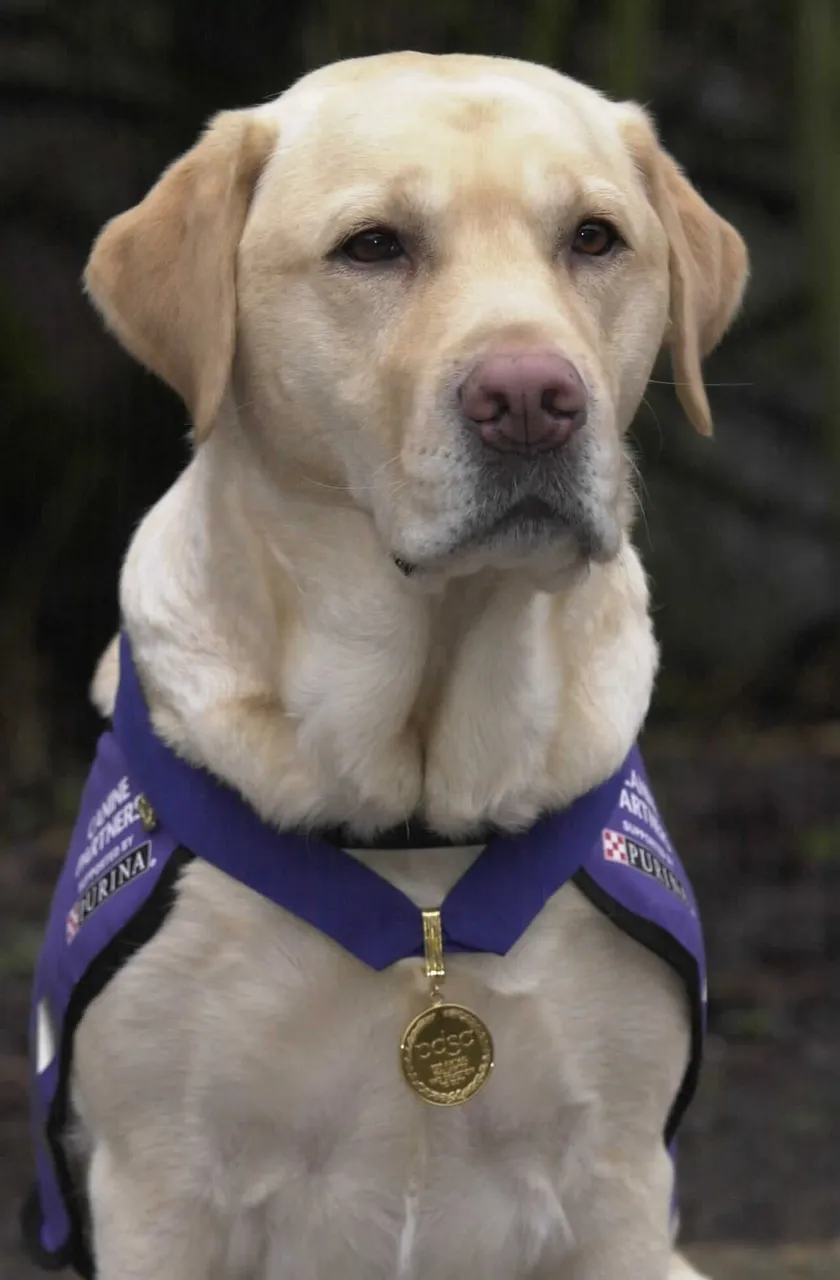
Guide dogs are what made Labradors familiar in Korea. Since the country's first guide dog school opened in the early 1990s, most of the guide dogs it has trained have been Labradors or Lab crosses, and Labs in yellow working vests have become a familiar sight on streets and subways. Labradors also serve as customs detection dogs and as rescue and detection dogs for fire and police services.
As pets they are less common than small breeds because of their size, but they are a steady choice for families in houses or larger homes who want a big, child-friendly dog. Many owners, though, expect a dog as composed as a guide dog and are surprised by a boisterous adolescent. Guide dogs come from carefully selected lines and undergo long, specialist training.
Awareness of guide dogs is improving, yet media still report cases of guide dog users being refused entry by restaurants, lodgings or taxis.
4. Appearance and breed standard
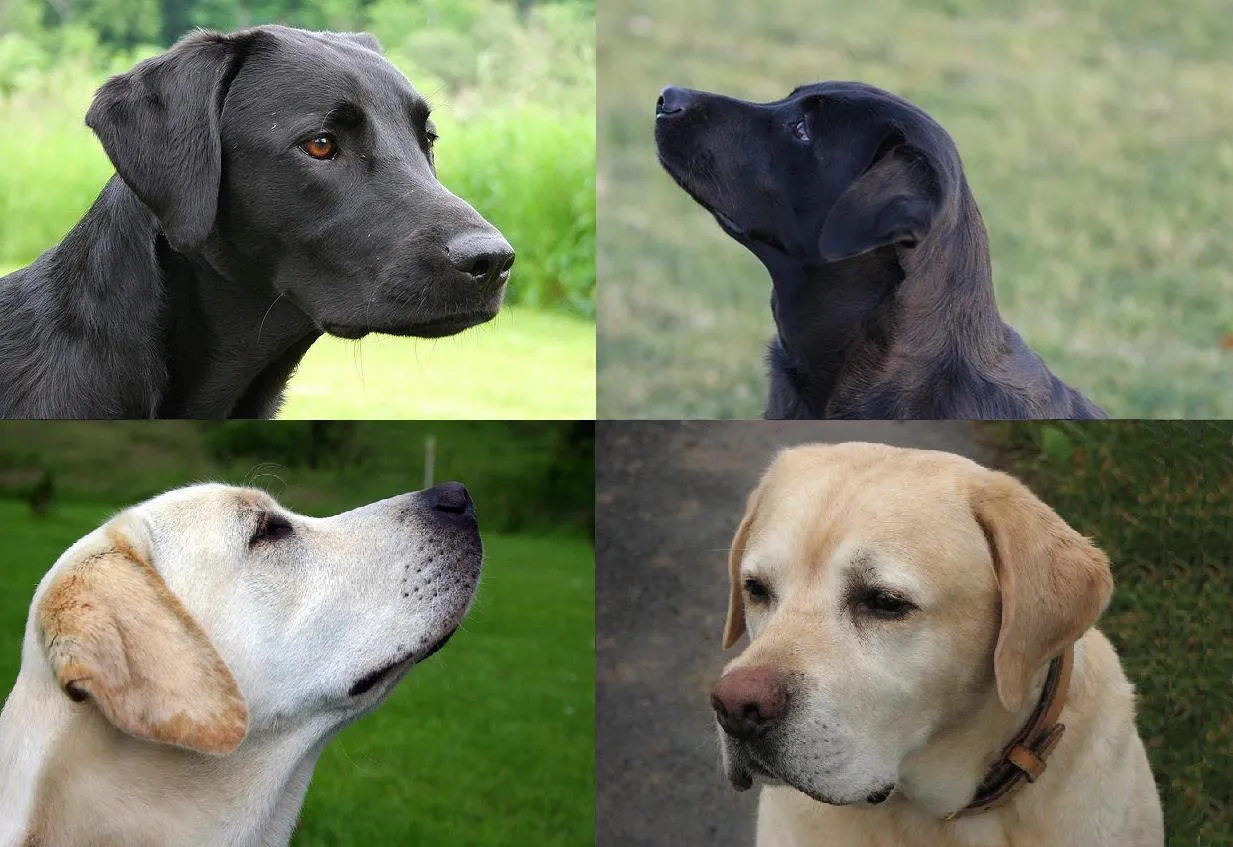
Labrador_Retriever_yellow_profile.jpg: John R. (Levels corrected from original Flickr photo by Pharaoh Hound) Labrador_R · CC BY-SA 3.0
The Labrador has an athletic build with a broad, deep chest and strong body. The head is wide with a clear stop, and the medium-sized ears hang close. Its signature is the otter tail: thick at the base, tapering to the tip and rounded with short, dense hair.
| Trait | Typical standard | Notes |
|---|---|---|
| Height | Males 56–62 cm, females 54–60 cm | Varies slightly by registry |
| Weight | Males 29–36 kg, females 25–32 kg | AKC gives similar ranges |
| Coat | Short, straight, dense outer coat; weather-resistant undercoat | Wavy coat or feathering is a fault |
| Colour | Black, yellow (cream to fox red), chocolate (liver) | A small white chest spot is sometimes allowed |
| Tail | Thick otter tail | Curling over the back is a fault |
Labs fall into two broad types:
- Show (English) type: heavier, broader-headed and shorter-legged, often calmer and popular as family dogs.
- Field (American or working) type: leaner, longer-legged and narrower-headed, with very high energy and drive, favoured for hunting and dog sports.
They are the same breed but very different to live with, so ask which type a puppy comes from.
5. Temperament
Labradors are outstandingly sociable with people and animals, cheerful and playful. Most greet strangers with enthusiasm, which makes them poor guard dogs but superb assistance dogs in public places.
- Food motivation: the Lab's strongest driver. It makes training easy, but also fuels food theft, bin raiding and scavenging on walks.
- Retrieving instinct: Labs love carrying things and will fetch tirelessly. Swallowed socks, towels and toy pieces leading to surgery for intestinal blockage are common.
- Love of water: puddles, streams and the sea are irresistible.
- Long adolescence: until two or three years old, excited Labs tend to jump up and pull on the lead. A 30 kg dog jumping up can knock over a child or an elderly person, so start manners training early.
- Off switch: mature Labs are good at relaxing indoors and playing hard outdoors, adjusting to the situation. That switch is one reason they are chosen as guide dogs.
Labs are known for low aggression, but like any dog they can develop problems without socialisation and training.
6. Who it suits and who it doesn't
- Good fit: families with children who enjoy the outdoors
- Good fit: people who can exercise a dog for one to two hours daily
- Good fit: anyone keen on training, dog sports or swimming with their dog
- Good fit: households that will manage diet strictly and stick to shared rules
- Poor fit: people in small homes who are out for long hours
- Poor fit: untidy households where food and small objects are left around
- Poor fit: anyone unable to sustain big-dog costs
- Poor fit: people expecting a dog that behaves like a trained guide dog from day one
Field-bred Labs need far more exercise and work than show-bred dogs, so less active households should check the line carefully.
7. Exercise and play
An under-exercised Lab vents its energy through chewing and over-excitement. Adults need at least one to two hours of exercise daily, and field-bred dogs may need more.
- Swimming: the Lab's ideal exercise, low-impact and great for dogs on a diet or with arthritis. Start in shallow water with a life jacket and avoid strong currents and algae blooms.
- Fetch and dummy work: gundog-style retrieves on cue build focus and self-control.
- Scent work: hiding part of the daily ration stretches both exercise and mealtime.
- Dog sports: dock diving, agility, tracking and obedience.
During growth, protect the joints by avoiding long runs and high jumps in favour of short, frequent sessions. Dogs carrying the exercise-induced collapse gene can lose hind-leg control during intense exercise, so know the parents' DNA results. Labs struggle in heat, so exercise early and late in summer.
8. Coat and grooming
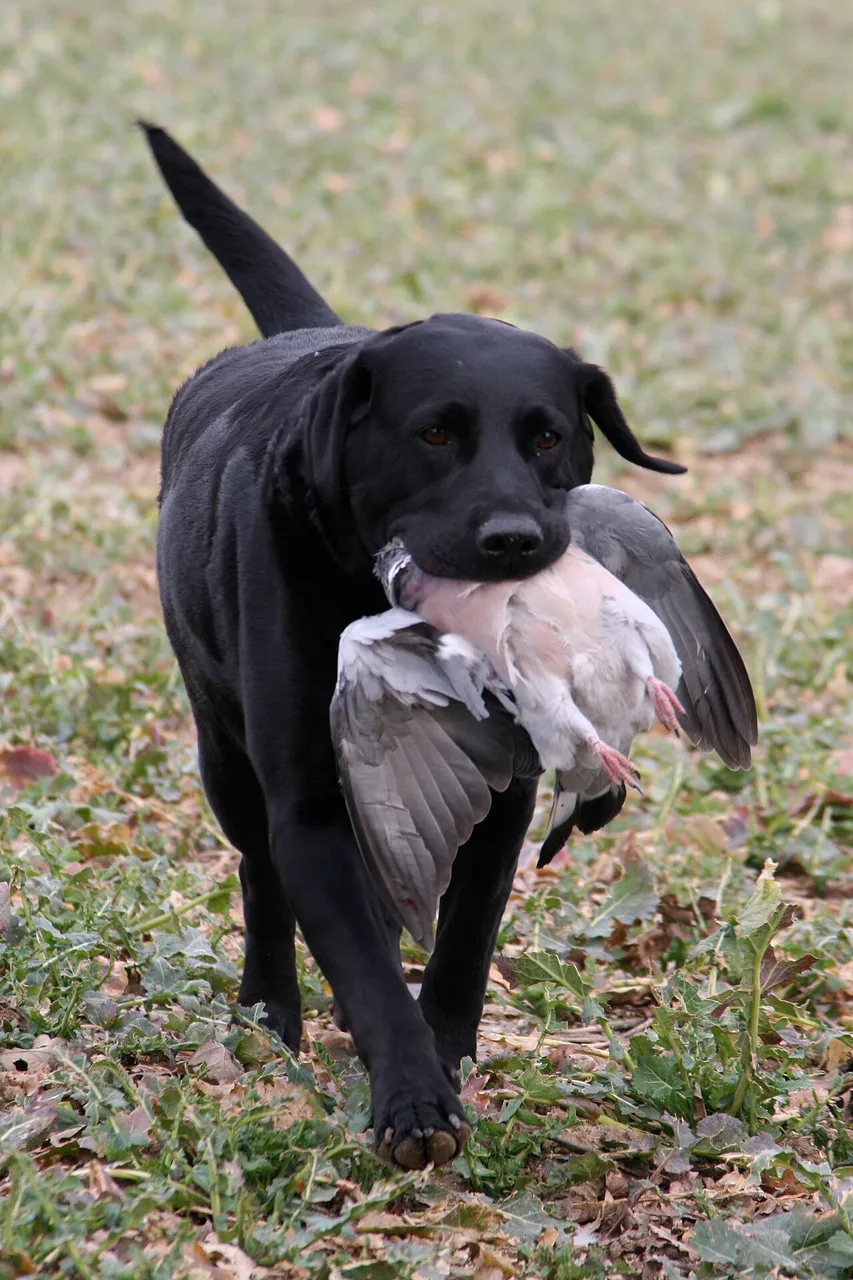
FieldsportsChannel TV · CC BY 2.0
The short coat looks low-maintenance, but the dense undercoat sheds more than people expect, and the short, stiff hairs weave themselves into clothes, sofas and carpets.
- Brushing: two or three times a week, daily during moults. A rubber curry brush or de-shedding tool works well.
- Bathing: every one to two months is plenty. Natural oils waterproof the coat, so frequent bathing dries the skin. Rinse with fresh water after sea or river swims.
- Ears: drop ears catch water, so ear infections are common, especially in swimmers. Clean and dry ears after every swim. A UK study found chocolate Labs more prone to ear infections and hot spots.
- Nails and teeth: trim nails every two to four weeks and brush teeth daily if possible.
- Lumps: older Labs often develop lipomas, soft fatty lumps. Most are benign, but they can look like malignant tumours such as mast cell tumours, so have any new lump checked.
9. Diet and weight
Labradors and appetite go together. In 2016 researchers at the University of Cambridge reported that a substantial share of Labs, about a quarter of those studied, carry a variant of the POMC gene involved in regulating hunger and energy use, and that carriers tended to be heavier and more food-obsessed. The variant was even more common among assistance-dog Labs, perhaps because food motivation made them easier to train.
An older study shows why weight matters. A pet food company followed 48 Labrador littermates for life; those fed 25% less than their paired sibling and kept lean had a median lifespan nearly two years longer and developed chronic conditions such as arthritis later.
- Portions: always weigh food and treat the bag's guide as a starting point; needs often fall after neutering.
- Body shape: ribs should be easy to feel under a thin layer of fat, with a visible waist from above. A hungry expression is not a body condition score.
- Treats: take training rewards from the daily ration; small amounts of low-calorie vegetables such as cucumber or carrot can help.
- Speed: use slow feeders, snuffle mats and food puzzles.
- Bloat (GDV): a risk in deep-chested breeds. Avoid vigorous exercise after meals and go to a vet at once if the belly swells and the dog retches without producing anything.
10. Inherited conditions and health
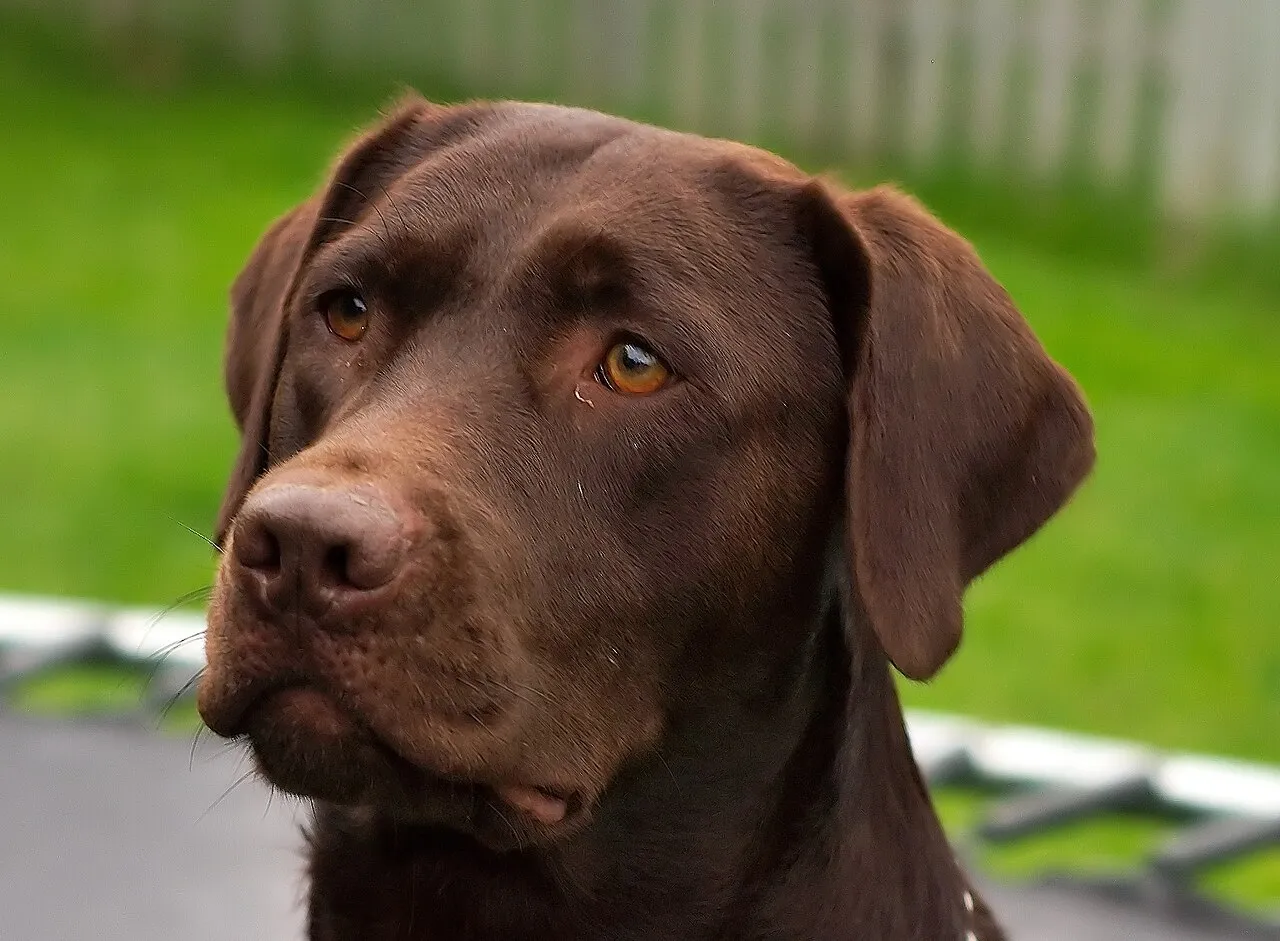
Rob Hanson · CC BY 2.0
With such a large population, Labradors have been studied extensively and DNA tests exist for many inherited conditions. This is background only; diagnosis and treatment are for your vet.
10.1. Joint disease
Hip and elbow dysplasia: inherited joint malformations worsened by rapid growth and obesity. Signs include stiffness on rising, lameness and reluctance to walk; X-rays confirm. Choosing parents with good scores is the best prevention.
Cruciate ligament rupture: very common in Labs and closely linked to obesity. It shows as sudden hind-leg lameness, and one rupture raises the risk of the other knee following. Large dogs usually need surgery, which is costly.
Arthritis: the common end result of the above in old age, managed with weight control, low-impact exercise such as swimming, pain relief and joint supplements.
10.2. DNA-testable conditions
| Condition | What happens | Notes |
|---|---|---|
| Exercise-induced collapse (EIC) | Hind legs give way after 5–20 minutes of intense exercise; usually recovers within tens of minutes | Stop exercise at the first sign |
| prcd-PRA | Night blindness progressing to blindness | Usually in adulthood |
| Centronuclear myopathy (CNM) | Muscle weakness and exercise intolerance from a young age | Autosomal recessive |
| Hereditary nasal parakeratosis (HNPK) | Dry, cracked, crusty nose | Lifelong moisturising |
| Skeletal dysplasia 2 (SD2) | Short-legged dwarfism | Testing advised for breeding |
| Copper storage hepatopathy | Copper builds up in the liver causing hepatitis | Some genetic factors identified |
Good breeders use these tests to plan matings that won't produce affected puppies. Carriers with one copy are usually healthy, but two carriers can produce affected offspring.
10.3. Other conditions and colour differences
Labs are also prone to ear infections, atopic dermatitis, lipomas, tumours such as mast cell tumours and lymphoma, laryngeal paralysis in old age (noisy breathing and a changed bark), hypothyroidism and heart conditions such as tricuspid valve dysplasia.
A large 2018 UK study of veterinary records found chocolate Labs had a median lifespan more than a year shorter than black and yellow Labs, with more ear disease and hot spots. The researchers suggested the cause might be a narrower breeding pool used to produce chocolate rather than the colour itself. This describes population averages; an individual dog's health can't be judged by its colour.
11. Life stages and lifespan
Labradors typically live 10 to 12 years, and lean dogs sometimes reach 13 or 14 and beyond.
| Stage | Age | Focus |
|---|---|---|
| Puppy | 0–6 months | Rapid growth, socialisation and handling, basic manners, watch for swallowed objects |
| Adolescent | 6 months–2/3 years | Peak energy; work on pulling and jumping up; protect joints |
| Adult | 3–7 years | Calmer; weight control and steady exercise |
| Senior | 8+ years | Arthritis, tumours, laryngeal paralysis and thyroid checks; non-slip floors |
Guide dogs typically spend about a year from around seven weeks old with volunteer puppy-raising families, then undergo specialist training, start work at about two and retire around ten. Retired guide dogs are adopted into homes or return to their puppy-raising families.
12. Costs
Rough 2026 ranges in Korean won.
| Item | Approximate cost | Notes |
|---|---|---|
| Initial supplies, vaccines, registration | 1,000,000–2,000,000 | Excluding purchase; large crate, locking bin, life jacket |
| Food | 80,000–150,000 a month | Including weight-control diets |
| Treats and supplies | 30,000–60,000 a month | |
| Parasite prevention | 30,000–50,000 a month | |
| Bathing and hygiene | 60,000–120,000 per visit | Cheaper than long-coated breeds |
| Pet insurance | 40,000–90,000 a month | |
| Cruciate surgery | Several million per knee | TPLO and similar procedures common for large dogs |
| Foreign-body surgery | Several million | Emergency surgery for blockages |
| Senior care | Tens to hundreds of thousands extra a month | Joint medication, regular tests |
Budget roughly 200,000–400,000 won a month for basics. Labs are prone to sudden expensive surgery from swallowed objects and cruciate tears, so many owners choose pet insurance.
13. Before you get one
- Parental health screening: hip and elbow scores, eye exams and DNA results for EIC, CNM, prcd-PRA, HNPK and others.
- Line: show or field type makes a big difference to exercise needs.
- Dilute colours: Labs sold at a premium as 'silver' or 'champagne' are not a standard colour and carry skin concerns.
- Pet shops and puppy farms: selling puppies under two months is illegal in Korea; avoid sellers who can't show parental information and health records.
- Career-change and retired guide dogs: guide dog schools rehome dogs that left training and retired guides. Waiting lists can be long, but these dogs are usually healthy and well trained.
- Puppy raising: if you'd love a Lab but can't commit for life, volunteering to raise a future guide dog for about a year is an option.
- Shelters: Labs and Lab mixes do appear in shelters, and big dogs are adopted less often, so they especially need homes.
- Home check: locking bins, no food left on tables and small objects off the floor are the basics of Labrador life.
14. Guide dogs and the law
Even if you never own a Lab, guide dog etiquette is worth knowing. If you meet a working guide dog, don't call it, pet it, feed it or crowd it for photos; a distracted guide dog can put its handler in danger. If you have your own dog with you, keep a respectful distance.
In Korea, the Act on Welfare of Persons with Disabilities provides that refusing entry without good reason to assistance dogs displaying the official mark, their users, trainers and puppy raisers, whether on public transport or in public places, lodgings and restaurants, can lead to a fine. Amounts and details may change with amendments, so check official guidance. Many other countries give assistance dogs similar legal access rights.
A pet Labrador is subject to the same rules as any dog: registration, leash and ID tag requirements, and keeping the dog under close control in shared spaces of apartment buildings. Labradors are not a designated dangerous breed.
15. Labradors in popular culture
The best-known Labrador story is Marley & Me, the 2008 film based on a memoir about a gloriously badly behaved yellow Lab and his family. It is often cited as a vivid picture of just how chaotic Labrador adolescence can be. The Japanese film Quill followed the life of a guide dog and brought guide dog training to a wide audience.
Political Labradors include Buddy, Bill Clinton's chocolate Lab, and Konni, Vladimir Putin's black Lab. In Britain a Labrador puppy has fronted a toilet-paper brand's adverts for decades, becoming the archetypal advertising puppy. In Korea, documentaries and news coverage of guide dogs, including guide dogs entering the National Assembly and other public buildings, have helped Labradors raise public awareness of assistance dogs.
16. Trivia
- Labs have well-developed webbing between their toes, which helps them swim.
- Two black Labs can produce yellow or chocolate puppies, because coat colour depends on the combination of two genes, B and E.
- In Korea, cloning of outstanding detection dogs for use in detection work has been reported, sparking ethical debate about cloned animals.
- Many Labs seem calmer with something in their mouth, so walking along carrying their own toy is a common sight.
- Only a proportion of guide dog candidates actually qualify; strict health and temperament criteria mean many change careers or become family pets.
- A happy Lab's otter tail is powerful enough to sweep cups off a coffee table.
Health notes are general information. If something seems wrong, contact a vet who treats this species.
🍽️ Can my dog or cat eat this? →
FAQ
Do Lab colours differ in temperament?
Black, yellow and chocolate are the recognised colours, and colour itself isn't a reliable guide to temperament. Field-bred versus show-bred lines differ much more in energy. One large UK study did find chocolate Labs had a somewhat shorter average lifespan.
Can I adopt a retired guide dog?
Many guide dog organisations rehome retired dogs and dogs that didn't qualify, though waiting lists can be long. You can also volunteer as a puppy raiser for a future guide dog.
Does a Lab need to swim?
Not essential, but most adore water and swimming is excellent low-impact exercise. Introduce it gradually in shallow water, use a dog life jacket at first, and avoid strong currents and algae blooms.
Photo credits
Photos are freely licensed images from Wikimedia Commons. Authors and licenses are listed below.
- Labrador on Quantock (2175262184).jpg — IDS.photos from Tiverton, UK · CC BY-SA 2.0
- Afra 013.jpg — Unknown · Public domain
- American and English Labrador heads.jpg — Labrador_Retriever_yellow_profile.jpg: John R. (Levels corrected from original Flickr photo by Pharaoh Hound) Labrador_R · CC BY-SA 3.0
- Endal Dickin.jpg — Allenandendal at English Wikipedia · Public domain
- George Digweed's labrador.jpg — FieldsportsChannel TV · CC BY 2.0
- Labrador Retriever chocolate Hershey sit (cropped).jpg — Rob Hanson · CC BY 2.0