TailVille
At a glance
Rough ranges for supplies, food and electricity in Korea (USD is approximate). Purchase or adoption fees are not included.
People who can live with lots of hair and want a cheerful, active companion for daily walks and games.
Anyone bothered by shedding or barking, or who won't stick to strict portion control.
1. Overview
The Pembroke Welsh Corgi is a cattle-herding dog from south-west Wales. A surprisingly long, solid body sits on legs that put the shoulder only about 30 cm off the ground, topped by large upright ears, a foxy face and a rounded rear that often looks tailless. Nearly all the corgis you see in daily life are Pembrokes rather than their cousin, the Cardigan.
The cute silhouette makes corgis look like toys, but they were bred as working dogs that spent all day moving cattle many times their size. Their stamina, confidence and appetite for a job are far beyond what most people expect from a small dog. This article leaves general dog care to the main dog article and focuses on what is particular to corgis: the health consequences of short legs and a long back, the remarkable shedding, behaviour that flows from herding instinct, and the breed's long association with the British royal family.
2. Name and origin
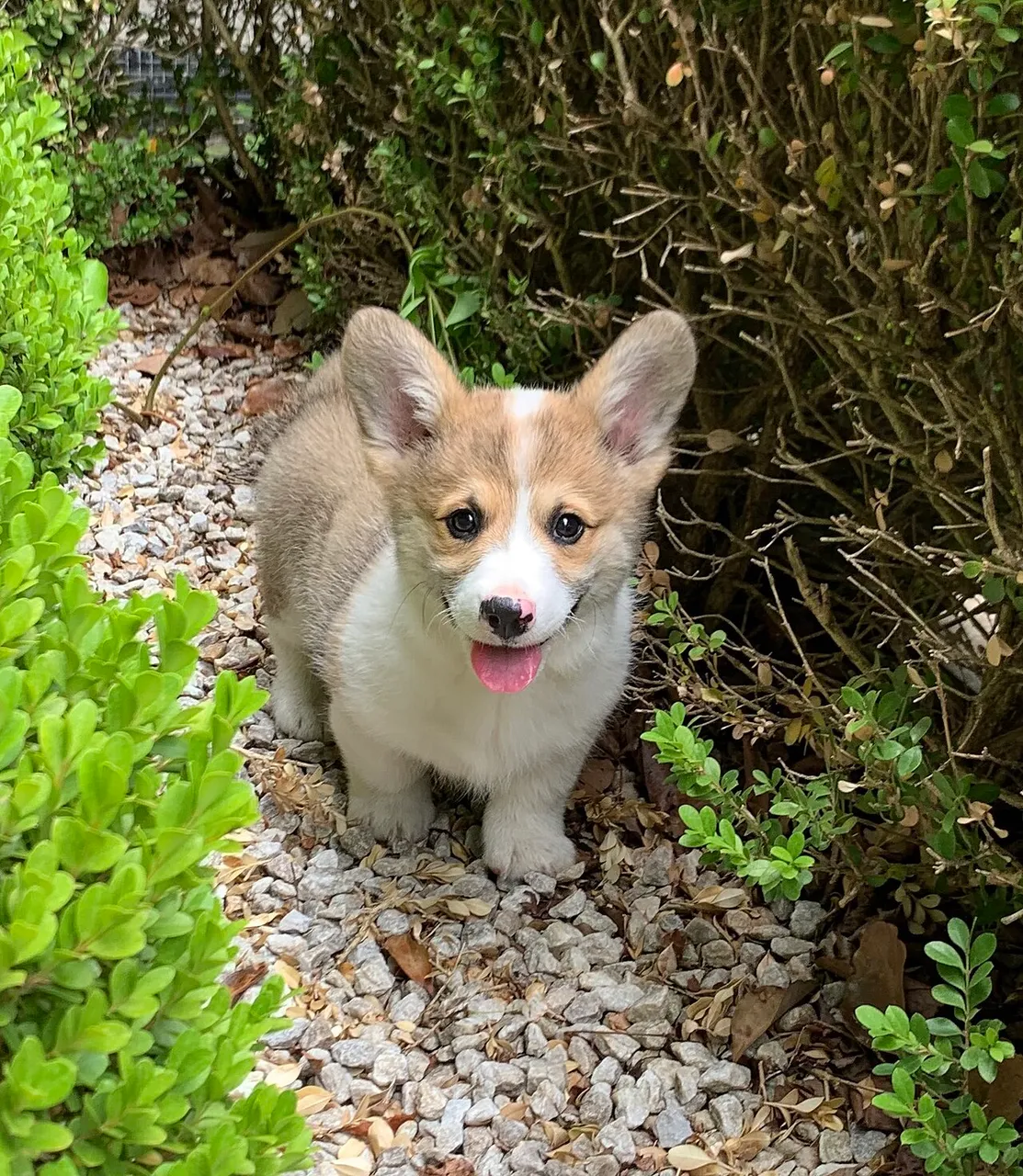
Lili7777 · CC BY-SA 4.0
2.1. What the name means
The name is usually traced to Welsh: cor meaning dwarf and ci meaning dog, although some read it as 'gathering dog'. Pembroke refers to Pembrokeshire, the county where this type was mainly kept. In Welsh the plural is corgwn, though English speakers simply say corgis.
2.2. Pembroke and Cardigan
Wales had two corgi types from neighbouring counties. The Cardigan, from Cardiganshire, is generally considered the older line, while the Pembroke is said to have been influenced by spitz-type dogs brought by Flemish weavers who settled in the area in the Middle Ages, though that story rests more on tradition than on records. The two were shown and sometimes interbred together until Britain's Kennel Club separated them into distinct breeds in the 1930s.
| Feature | Pembroke | Cardigan |
|---|---|---|
| Tail | Often short or absent (natural bobtail or docked) | Always a long, full tail |
| Ears | Fairly pointed tips | Larger, more rounded tips |
| Build | Slightly smaller and lighter | Longer, heavier bone |
| Colours | Red, sable, fawn, black and tan, with or without white | Those plus blue merle, brindle and others |
| Temperament | Often called more outgoing | Often called more reserved |
2.3. Registry recognition
The FCI places the Pembroke in Group 1 (sheepdogs and cattle dogs), and the American Kennel Club in its Herding Group. Both the UK Kennel Club and the AKC began treating Pembrokes as a separate breed in the mid-1930s.
3. Corgis in Korea
There is no clear record of when the first corgi arrived in Korea, but the breed became widely known after 2000 and boomed in the 2010s thanks to social media, TV variety shows and YouTube. Clips of corgis galloping on short legs and photos of their loaf-shaped rear end were especially popular, and the breed regularly ranks high among medium-sized dogs in registration figures and surveys.
Popularity had a downside. Demand fed large-scale breeding operations that sold puppies through pet shops without health-testing the parents, and some owners who chose a corgi for its looks gave it up after struggling with shedding, barking and exercise needs. Tail docking of newborn puppies is still common in Korea, which has spread the mistaken belief that corgis are naturally tailless.
4. Appearance and breed standard
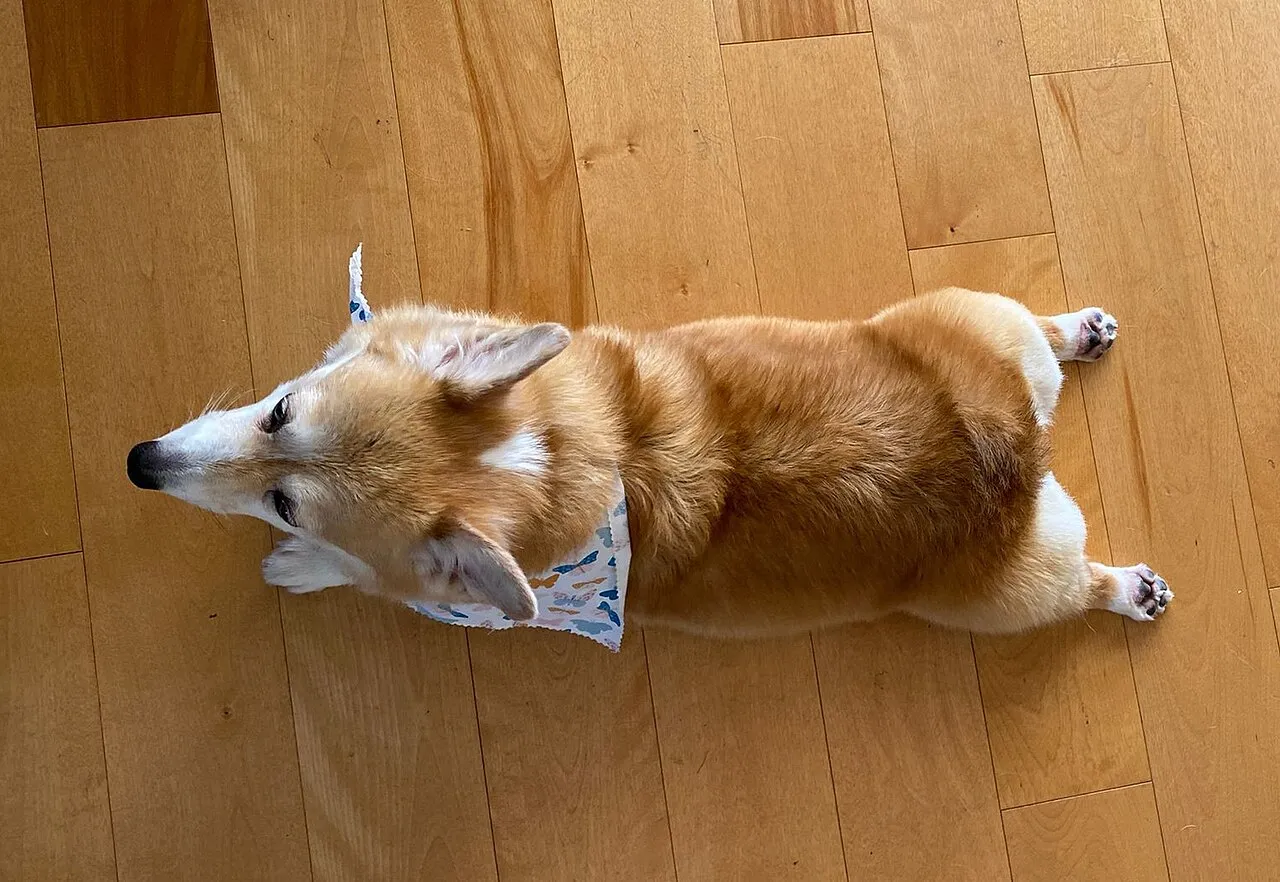
Think of a corgi as a medium-sized dog on short legs. The body is clearly longer than it is tall, with a deep chest and heavy bone, so a corgi feels surprisingly solid when you pick it up. The short legs come from a chondrodysplasia-related genetic trait shared with breeds such as the Dachshund and Basset Hound.
| Trait | Typical standard | Notes |
|---|---|---|
| Height | 25–30 cm | Little difference between sexes |
| Weight | Males 10–14 kg, females 10–13 kg | AKC ideal is up to about 13.6 kg for males, 12.7 kg for females |
| Ears | Large, erect, slightly rounded triangles | Often floppy in young puppies, standing within a few months |
| Coat | Medium-length outer coat over a dense undercoat | Very long coat is a fault |
| Colours | Red, sable, fawn, black and tan | White markings on legs, chest, neck and face allowed |
| Tail | Traditionally short | Natural tails accepted where docking is banned |
Corgis with unusually long, soft coats are called fluffies, the result of a recessive gene. It is a show fault, not a health problem, but the coat mats more easily. Occasionally a puppy is born mismarked with white covering much of the body; if white extends over the ears, ask for a hearing check.
5. Temperament
Corgis are bright, lively and people-focused. They read faces and voices well and enjoy earning praise, so they respond quickly to food-reward training. Like any dog that once faced down cattle, they also have opinions and will bark or paw at you to make a request.
Herding instinct is the key to understanding corgi behaviour. Running children, bicycles, vacuum cleaners and other dogs may trigger chasing and nipping at heels to 'move' them along. This is a working behaviour rather than aggression, but it can frighten or hurt a child, so teach alternatives such as sit and come early and channel the drive into tug and fetch.
Corgis are alert and often bark loudly at doorbells, footsteps in the corridor or strangers. The voice is bigger than the dog, so barking management is a core task for apartment owners. Most get on with other dogs, though their rough, body-slamming play style can overwhelm gentler dogs, so supervise first meetings.
6. Who it suits and who it doesn't
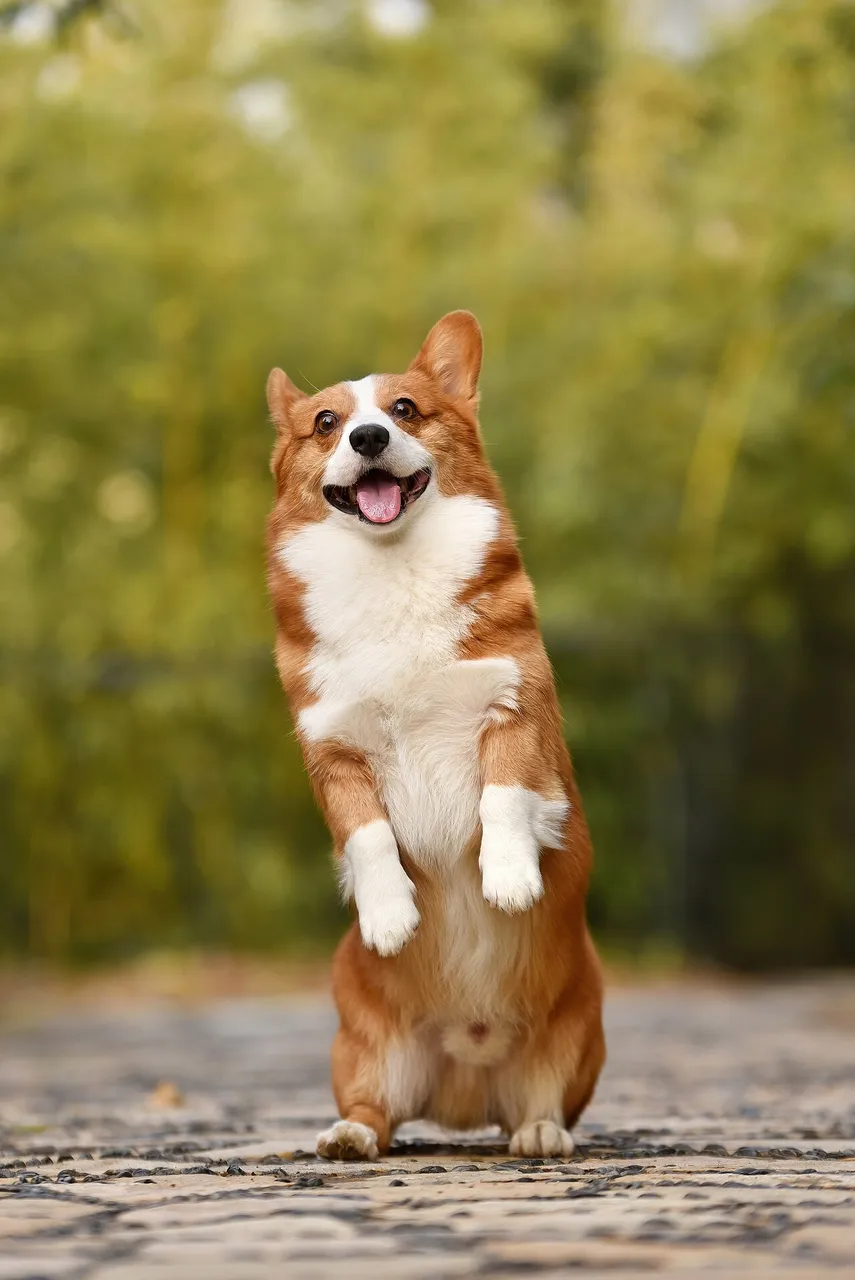
Huoadg5888Minor edits made by Subsidiary account · CC0
- Good fit: people who enjoy an hour or so of walks and play every day
- Good fit: owners who like training, tricks and scent games
- Good fit: households that accept hair as part of daily life
- Good fit: families who want an expressive, energetic dog
- Poor fit: anyone with dog allergies or a strong dislike of hair indoors
- Poor fit: people in thin-walled housing without time to work on barking
- Poor fit: families who show love with frequent snacks, which leads straight to obesity
- Poor fit: anyone wanting a quiet lapdog
It helps to think of a corgi as sitting between small and large breeds: modest space needs, but exercise and grooming demands at least on a par with a medium-sized dog.
7. Exercise and play
An adult corgi needs about an hour of walking a day, ideally split into two outings. Short legs don't mean low stamina; on level ground corgis happily cover long distances. In summer, however, they sit close to hot pavement, so walk early in the morning or after sunset.
Activities that suit corgis:
- Scent work: hiding treats delivers a lot of mental satisfaction in little time.
- Trick training: paw, spin and play dead come easily.
- Fetch: roll the ball low on grass or matting; sharp stops on slick floors and leaping catches strain the back.
- Agility and treibball: corgis compete in agility, but skip high jumps and wait until growth plates close at around 12 months.
Avoid jumping down from heights, sprinting up and down stairs and long periods standing on hind legs. Some corgis enjoy swimming, but their heavy body and short legs tire quickly, so use a life jacket.
8. Coat and grooming
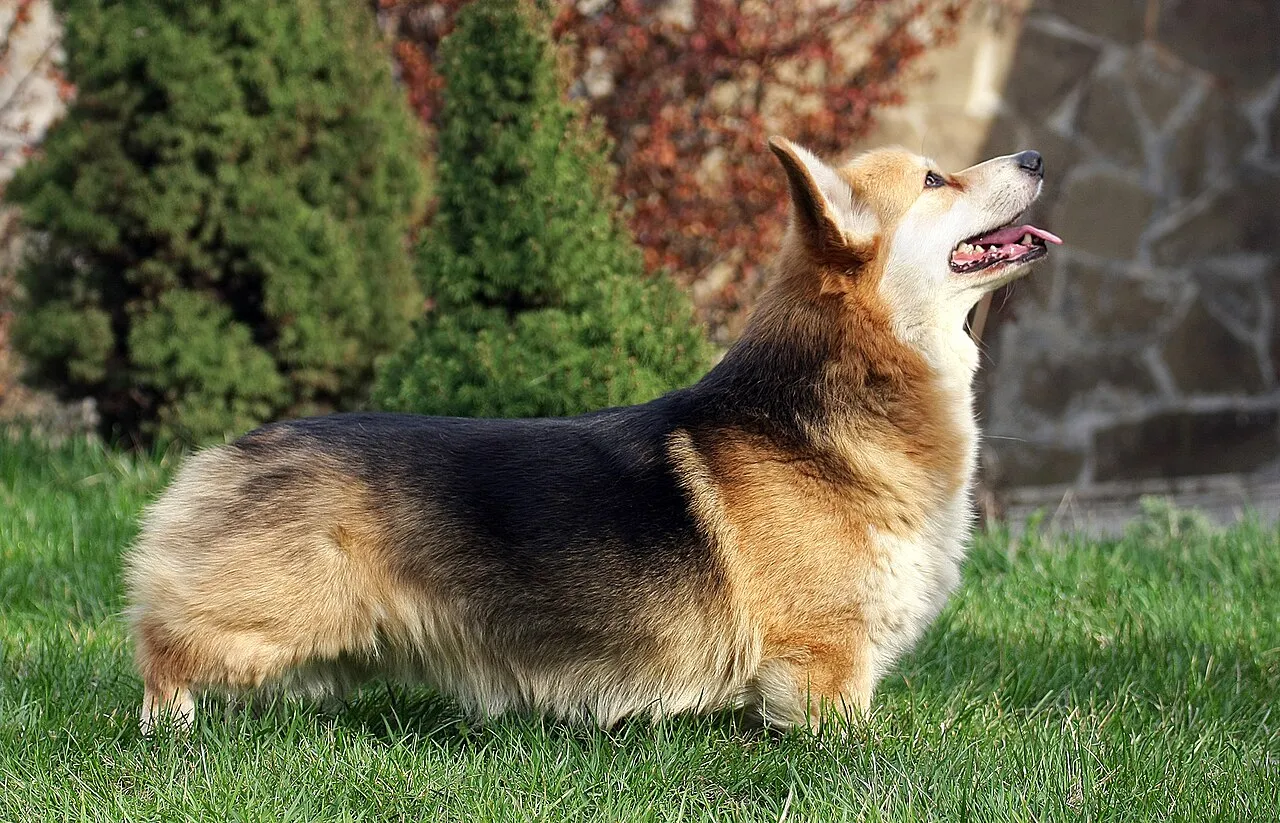
Marsiyanka · CC BY-SA 3.0
The most common thing corgi owners say is that the hair is beyond anything they imagined. The double coat sheds all year, and in spring and autumn the undercoat comes out in sheets; owners joke that each brushing produces another puppy.
- Brushing: two or three times a week, daily during moults, using a slicker brush plus an undercoat rake.
- Bathing: every four to six weeks. The dense undercoat dries slowly, so blow-dry down to the skin to prevent hot spots.
- Clipping: shaving isn't recommended. The double coat insulates against heat and sun, and shaved coats can regrow unevenly. A tidy of the paw pads and rear end is enough.
- Nails and feet: a long body on short legs puts a lot of weight on the feet, and overgrown nails spoil posture. Check every two to three weeks.
- Ears and teeth: upright ears stay fairly dry, but check them weekly and brush teeth daily if possible.
A robot vacuum, an air purifier and a lint roller by the door are practically standard equipment in corgi homes.
9. Diet and weight
Corgis are among the most food-obsessed breeds. They empty bowls in seconds, patrol under the dinner table and are masters of the mournful stare. The problem is that on short legs and a long back, even a little extra weight sharply increases the load on the spine and joints.
- Portions: start from the bag's chart, but neutered or less active corgis often need 10–20% less. Always weigh the food.
- Body check: from above you should see a waist behind the ribs, and the ribs should be easy to feel. The thick coat hides fat, so use your hands, not just your eyes.
- Treats: under 10% of daily calories; take training rewards out of the day's ration.
- Speed: gulping causes vomiting and swallowed air, so slow feeders and snuffle mats help.
Many corgis are told by their vet that they need to lose weight. Aim for about 1–2% of body weight per month and discuss whether a prescription weight-loss diet makes sense.
10. Inherited conditions and health
Corgis are generally hardy, but their build and bloodlines carry several conditions worth knowing. This is background information only; diagnosis and treatment belong with your vet.
10.1. Intervertebral disc disease (IVDD)
Cause: many short-legged breeds inherit a tendency for discs to harden early, and corgis are among them. A hardened disc can suddenly rupture or bulge and compress the spinal cord.
Signs: a hunched back, yelping when picked up, sudden refusal of stairs, wobbly or dragging hind legs, loss of bladder control.
Tests: neurological exam, X-rays, and MRI or CT to confirm.
Management: preventing obesity, limiting jumps and using ramps are the best prevention. Hind-leg weakness can worsen within hours, so treat it as an emergency.
10.2. Degenerative myelopathy (DM)
Cause: a progressive degeneration of the spinal cord associated with a mutation in the SOD1 gene, which is common in Pembroke corgis.
Signs: usually after about eight years, starting with scuffing hind toes and swaying, progressing over months to years to hind-limb paralysis and eventually the front legs. Typically not painful.
Tests: a DNA test shows whether a dog carries at-risk copies, but not every at-risk dog develops the disease; diagnosis means ruling out other spinal problems.
Management: there is no cure, but physiotherapy, hydrotherapy and a dog wheelchair can preserve quality of life for a long time. This is why breeding dogs should be DNA tested.
10.3. Hip dysplasia
Cause: a poorly fitting hip joint with genetic and environmental components, reported fairly often in corgis. Obesity and over-exercise during growth make it worse.
Signs: stiffness on rising, a bunny-hopping gait, reluctance to walk.
Tests: X-rays; schemes such as OFA or PennHIP grade breeding dogs.
Management: weight control, joint supplements, pain relief and, in severe cases, surgery.
10.4. Other conditions
| Condition | What happens | How it's checked |
|---|---|---|
| Von Willebrand disease (type 1) | Low clotting factor; prolonged bleeding after surgery or injury | DNA test, clotting test before surgery |
| Progressive retinal atrophy | Retina degenerates, starting with night blindness | Eye exams, DNA tests for some forms |
| Cataract, lens luxation | Clouding or displacement of the lens | Eye exams |
| Obesity-related disease | Arthritis, diabetes, breathing difficulty | Body condition scoring, bloodwork |
| Bladder stones | Blood in urine, frequent urination | Urinalysis, X-rays |
Checking that both parents were DNA tested for DM and vWD, hip scored and eye examined greatly reduces the risk.
11. Life stages and lifespan
Corgis typically live 12 to 14 years, and lean, well-managed dogs sometimes pass 15.
| Stage | Age | Focus |
|---|---|---|
| Puppy | 0–6 months | Ears start to stand; socialisation and handling; limit stairs and jumps |
| Adolescent | 6 months–2 years | Peak energy; key time to curb nipping and barking |
| Adult | 2–7 years | Weight control, regular walks, yearly check-ups |
| Senior | 8+ years | Watch for DM, disc and arthritis signs; six-monthly check-ups; more non-slip flooring |
Weakening hind legs are the most common change in older corgis. It is easy to put this down to age, but it can be an early sign of disc disease or DM, so knuckling toes or a swaying rear end deserve a vet visit. Shorter but frequent daily walks help preserve muscle.
12. Costs
Rough 2026 ranges in Korean won; actual costs vary widely by region, clinic and dog.
| Item | Approximate cost | Notes |
|---|---|---|
| Initial supplies, vaccines, registration | 700,000–1,500,000 | Excluding purchase; includes crate, ramps, cleaning gear |
| Food | 40,000–80,000 a month | Weight-control diets may cost more |
| Treats and supplies | 20,000–40,000 a month | |
| Parasite prevention | 10,000–30,000 a month | Depends on weight |
| Hygiene grooming | 40,000–80,000 per visit | Bath and tidy rather than full clip |
| Pet insurance | 30,000–60,000 a month | Depends on age at enrolment and cover |
| Disc surgery | Several million won or more | MRI extra |
| DM rehab and wheelchair | Hundreds of thousands for a cart; tens of thousands per session | Often long term |
Budget around 120,000–220,000 won a month for basics, and remember the hidden costs of hair: vacuum and purifier filters wear out faster.
13. Before you get one
- Meet the parents: if possible, see both parents and judge their temperament and build. Be wary of sellers who won't show them.
- Health paperwork: ask for DNA results for DM and von Willebrand disease, hip scores and eye exams. Few Korean sellers have these yet, so their presence is a strong positive sign.
- Tail docking: docking is cosmetic and banned in the UK, much of Europe and Australia. If you want an undocked puppy, say so early.
- Pet shops and puppy farms: shops displaying puppies under two months old or selling many breeds at once are often supplied by mass breeders. Such puppies are more prone to infections like parvovirus and to poor socialisation.
- Age: Korean law prohibits selling dogs younger than two months.
- Adoption: corgis and corgi mixes surrendered over shedding or barking turn up regularly in shelters and rescues. With an adult dog you already know its personality and health.
- Reality check: in a walk-up building, can you carry the dog up and down stairs for life? Does anyone at home have allergies? Can you walk an hour a day?
14. Corgis in popular culture
No discussion of corgis is complete without Queen Elizabeth II. After her family's first corgi in her childhood, she was given Susan for her eighteenth birthday and, mostly through Susan's descendants, is said to have owned more than 30 corgis over her life, along with dorgis, corgi-Dachshund crosses. Her corgis appeared alongside her and James Bond in the film shown at the London 2012 Olympic opening ceremony, and after her death her last corgis were reported to be living with family members.
In animation, Ein, the data dog of Cowboy Bebop, is a well-known Pembroke, and the 2019 animated film The Queen's Corgi made a royal corgi its hero. The Pokémon Yamper is often said to resemble one. Online, the frog-legged lying pose known as the sploot is practically a corgi trademark, and Korean social media is full of star corgi accounts and jokes comparing their rumps to loaves of bread.
15. Trivia
- Welsh legend says corgis were the steeds of fairies, and the darker saddle of fur over the shoulders marks where the fairy saddle sat.
- Staying low was an advantage for a cattle dog: kicks from hooves tended to pass overhead.
- Corgi beach days in California and elsewhere draw hundreds of corgis at once, and some racetracks hold corgi races as entertainment.
- Many corgis sleep flat on their backs with all four legs in the air, a favourite photo subject.
- Some Pembrokes carry a natural bobtail gene; inheriting two copies is believed to be lethal before birth, which breeders must take into account.
- Puppy ears go through many phases, sometimes standing one at a time and drooping again during teething before settling.
Health notes are general information. If something seems wrong, contact a vet who treats this species.
🍽️ Can my dog or cat eat this? →
FAQ
Are corgis born without tails?
Some Pembrokes are born with a natural bobtail, but most have full tails. Many tailless-looking corgis were docked a few days after birth. Cosmetic docking is banned in the UK and much of Europe, so corgis there usually keep their tails.
What's the difference between Pembroke and Cardigan?
Cardigans are slightly longer and heavier, always have a long brush tail, and come in more colours including blue merle; their ears are more rounded. Most corgis you meet are Pembrokes.
Will shaving a corgi reduce shedding?
Not really: you get shorter hairs instead of longer ones. The double coat insulates against heat and sun, and shaved coats sometimes grow back patchy. Regular brushing with an undercoat rake and a thorough blow-dry after baths work far better.
Photo credits
Photos are freely licensed images from Wikimedia Commons. Authors and licenses are listed below.
- Welsh Pembroke Corgi.jpg — Dog breed facts · CC BY-SA 4.0
- Archie the Pembroke Welsh Corgi.jpg — Lili7777 · CC BY-SA 4.0
- Corgi with fairy saddle.jpg — Corgipup13 · CC BY-SA 4.0
- Fawn and white Welsh Corgi puppy standing on rear legs and sticking out the tongue.jpg — Huoadg5888Minor edits made by Subsidiary account · CC0
- Pembroke Welsh Corgi.jpg — Marsiyanka · CC BY-SA 3.0