TailVille
At a glance
Rough ranges for supplies, food and electricity in Korea (USD is approximate). Purchase or adoption fees are not included.
Roomy family homes, including those with children or dogs, that can handle grooming and big-cat costs.
People in very small flats, or anyone who can't cope with heavy shedding and higher running costs.
1. Overview
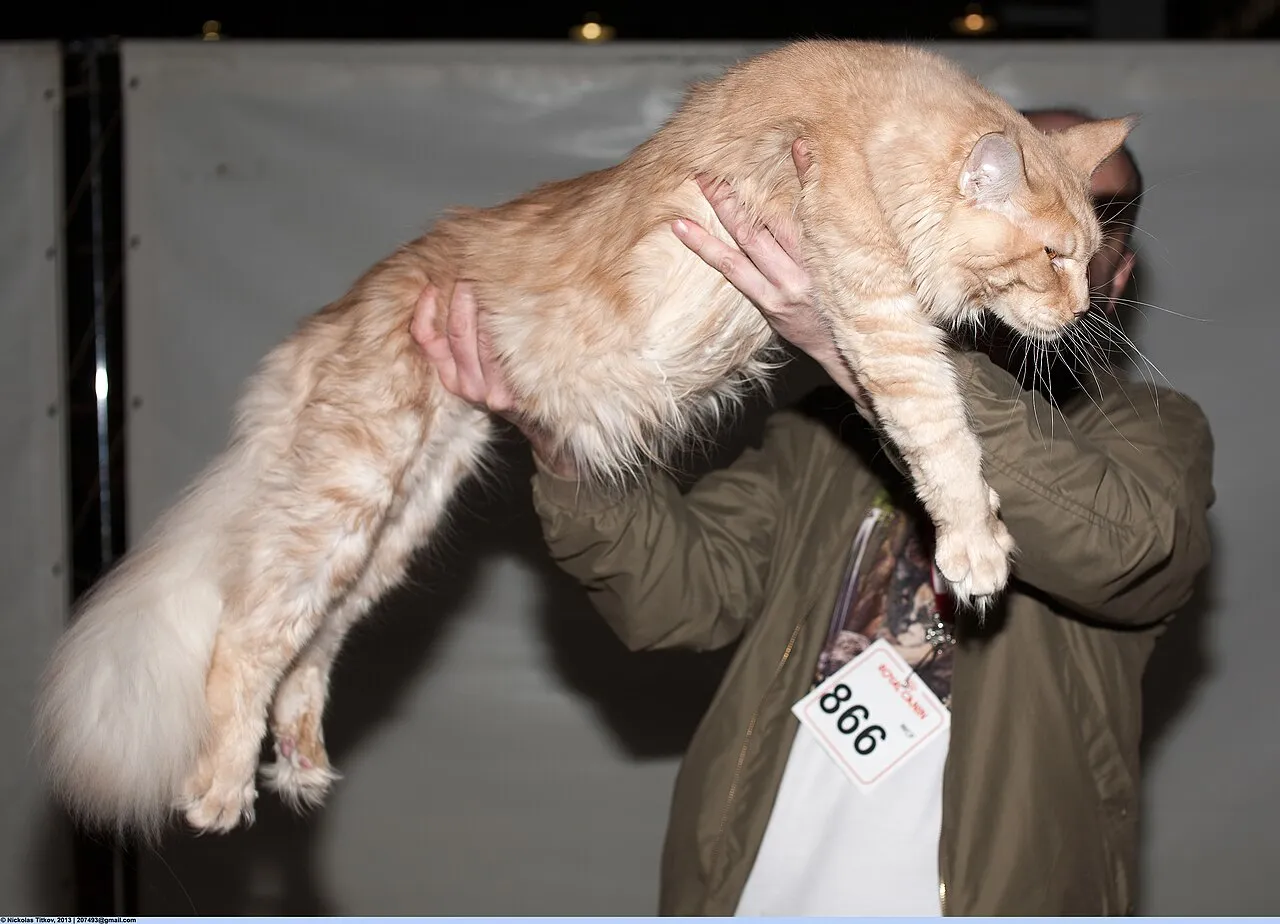
The Maine Coon is a longhaired breed that developed naturally in the north-eastern US state of Maine, and it is one of the largest domestic cat breeds. Its size, tufted ears, lion-like ruff and plumed tail have earned it the nickname 'gentle giant'. Like all domestic cats it is Felis catus.
Rather than being designed by breeders, the Maine Coon is a natural breed: hardy farm cats that survived a harsh climate were later organised into a pedigree. Its big body, water-resistant coat and furry, snowshoe-like feet are all explained as adaptations to the cold.
Despite its size it is gentle and sociable, which makes it a popular family cat. Prospective owners should still understand what comes with it: space and equipment for a big body, higher food bills, longhair grooming and known heart and joint conditions. This article leaves general cat information to the main cat article and focuses on what is specific to the Maine Coon.
2. Name and origin
2.1. Legends and reality
The Maine Coon has attracted plenty of colourful origin stories. The most famous claims it is a cross between a cat and a raccoon, inspired by its ringed, bushy tail and brown tabby coat, and the 'Coon' in the name is often traced to that animal. Cats and raccoons, however, cannot interbreed.
Other tales say Marie Antoinette, planning to flee the French Revolution, sent her longhaired cats ahead by ship to America, or that the breed descends from Norwegian Forest Cats brought by Vikings. None has any confirmed basis.
The most widely accepted explanation is that assorted cats arriving from Europe by ship survived Maine's long, cold winters and naturally formed a population of big, heavily coated cats. Genetic studies suggest a close relationship with Northern European cats such as the Norwegian Forest Cat.
2.2. Shows and recognition
By the late nineteenth century Maine Coons were already popular entries at rural fairs in the north-eastern US. A famous record tells of a brown tabby female named Cosey winning top honours at a cat show held at Madison Square Garden in New York in 1895.
In the early twentieth century, fashionable imported longhairs such as Persians eclipsed the breed, and at one point it was even said to be close to disappearing. Enthusiasts began preservation work in the 1950s and 1960s, and the CFA, TICA, Britain's GCCF and Europe's FIFe all went on to recognise it; the CFA is reported to have granted championship status in the 1970s.
In 1985 Maine named the Maine Coon its official state cat.
3. History and popularity in Korea
Maine Coons began attracting attention in Korea from the mid-2010s, when social media photos of cats 'as big as a person' or 'as big as a dog' went viral. Interest grew, and so did the number of local catteries.
Korean housing, dominated by apartments and studio flats, doesn't always leave room for the extra-large cat trees and litter boxes a Maine Coon needs. Food and litter consumption is high, and imported bloodlines can be very expensive, so the breed has a higher barrier to entry than most.
Some sellers trade on the idea that bigger is better, but the breed standard looks at balanced type and health, not size alone.
4. Appearance and breed standard
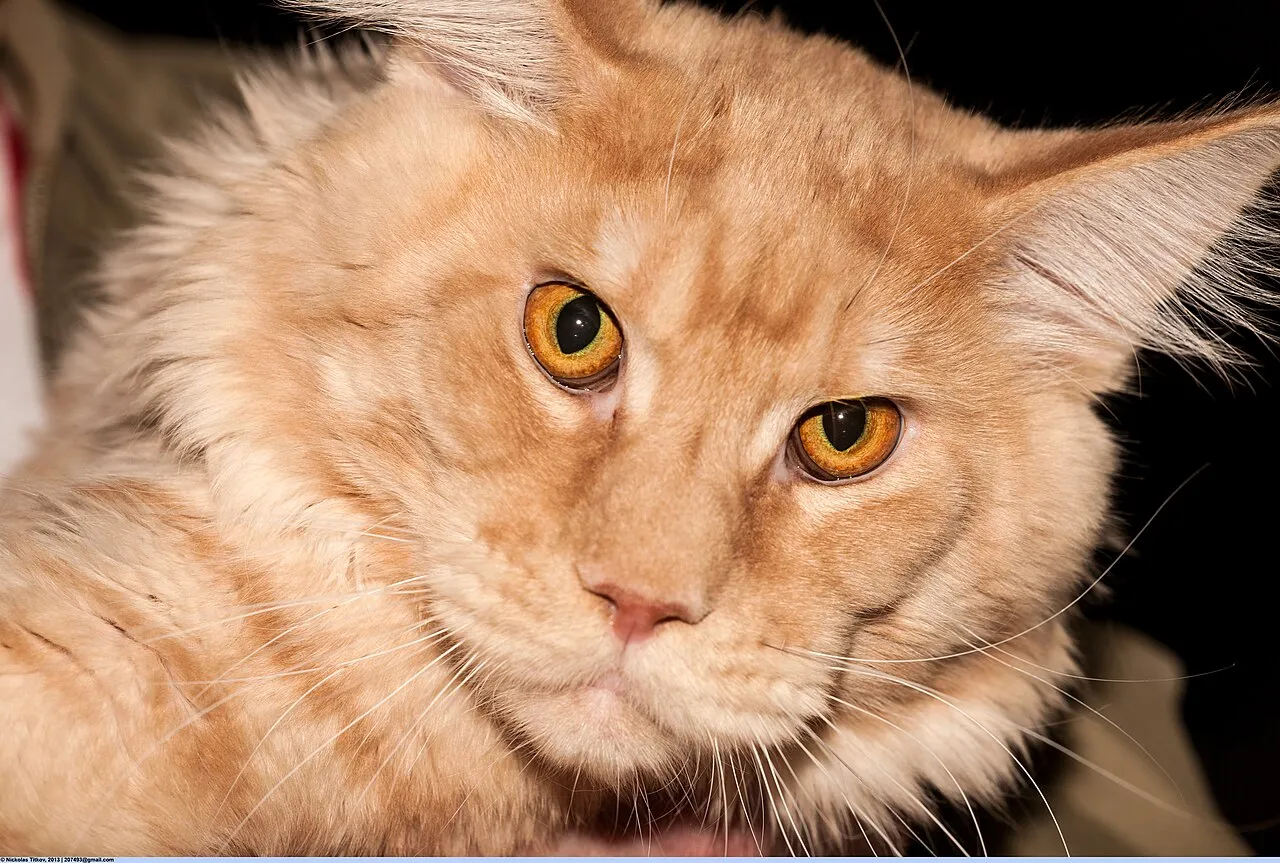
The Maine Coon has a large, muscular, rectangular build with a coat and body adapted to a cold climate.
| Feature | Description |
|---|---|
| Weight | Males about 6–9 kg or more (some exceed 10 kg); females about 4–6 kg |
| Length | Nose to tail tip can approach 1 m |
| Build | Long, rectangular body; broad chest; heavy bone and muscle |
| Head | Medium to large with high cheekbones and a square muzzle |
| Ears | Large, wide at the base, set high, with lynx-like tip tufts |
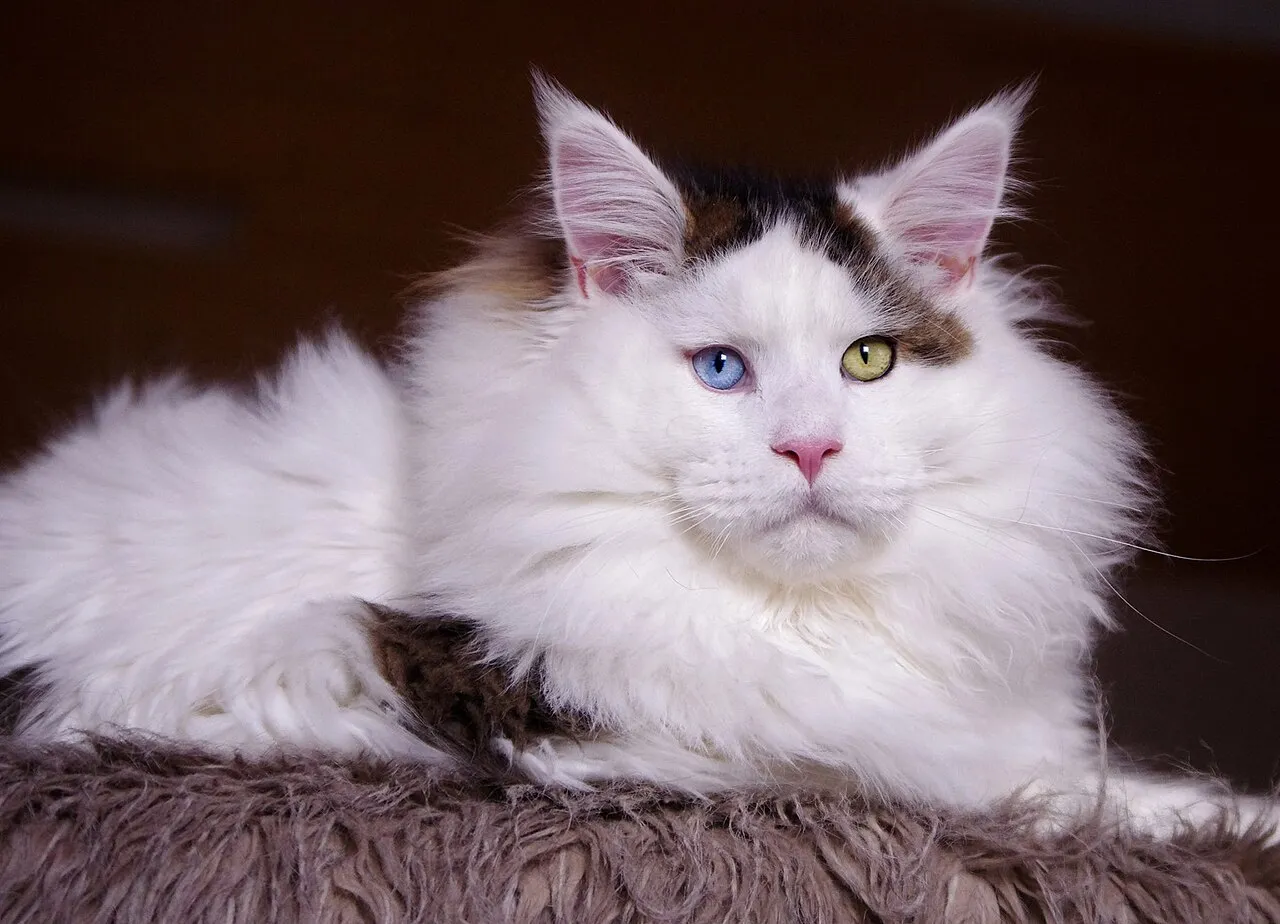
| Eyes | Large, slightly oval; green, gold or copper; whites may have blue or odd eyes |
| Tail | As long as the body, with flowing fur |
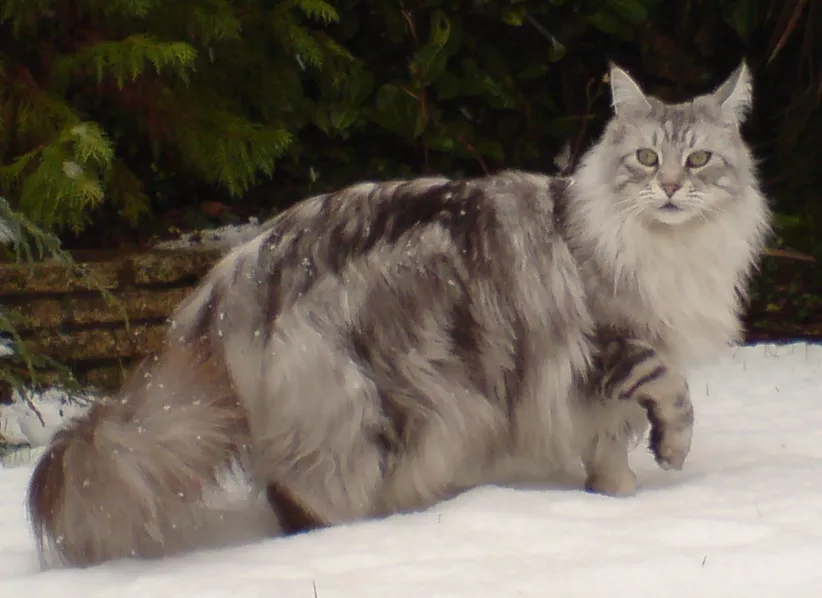
| Coat | Uneven, shaggy semi-longhair: short on the shoulders, longer on belly and britches, with a ruff |
| Feet | Large and round with tufts between the toes |
| Colours | Brown tabby is classic; most colours allowed (some registries exclude pointed patterns) |
The coat combines a water-resistant topcoat with a soft undercoat, and its uneven length is explained as an adaptation that keeps snow from clinging. Big, furry feet work like snowshoes, and the long tail can be wrapped around the body and face for warmth.
Polydactyl cats with extra toes were reportedly common in the early Maine Coon population. Most registries no longer accept polydactyly on the show bench, but some groups and enthusiasts preserve polydactyl Maine Coons separately.
5. Temperament
Maine Coons are famous for being far gentler and friendlier than their size suggests. They tend to bond with the whole family rather than one person, and usually get along with children, dogs and other cats, which makes them popular in all sorts of households.
Most aren't devoted lap cats, but they like to stay near their people and watch what's going on. Following you from room to room and lying beside you while you work is their typical way of showing affection.
The voice is surprisingly small and high for such a big cat. Rather than loud meows, many communicate with bird-like chirps and rolling trills, which often surprises people hearing them for the first time.
Clever and playful, many enjoy fetch, harness walks and simple training. Their interest in water is well known: paddling in the water bowl or staring at a dripping tap are common sights. Because they mature slowly, they often keep a kittenish playfulness until three or four years old despite their size.
6. Who it suits and who it doesn't
Barry Wom · CC BY-SA 3.0
- Suits: people with roomy homes and space for a large cat tree and litter box
- Suits: families with children, dogs or other cats who want a sociable cat
- Suits: owners willing to comb several times a week and live with shedding
- Suits: households that can comfortably absorb higher food and vet bills
- Doesn't suit: people in small studios or who move house often
- Doesn't suit: homes sensitive to shedding or with allergy sufferers
- Doesn't suit: anyone choosing purely on size
7. Exercise and play
Maine Coons are moderately to fairly active and enjoy games that use their big bodies.
- Hunting play: two sessions of 15–20 minutes a day with a wand toy for leaping and pouncing. Toys built for large cats last longer.
- Fetch: many happily retrieve balls or small plush toys.
- Harness walks: calm, confident individuals often adapt well. Practise indoors and begin with short trips somewhere quiet.
- Water games: water lovers enjoy chasing a ball floating in a wide, shallow dish. Never leave a filled bath or bucket unattended.
- Cat trees: thick posts and a heavy base are essential; a wobbling tree can topple.
While a big cat is still growing, its bones and joints are immature, so limit repeated jumps from great heights.
8. Coat and hygiene
Djurmel · CC BY-SA 3.0
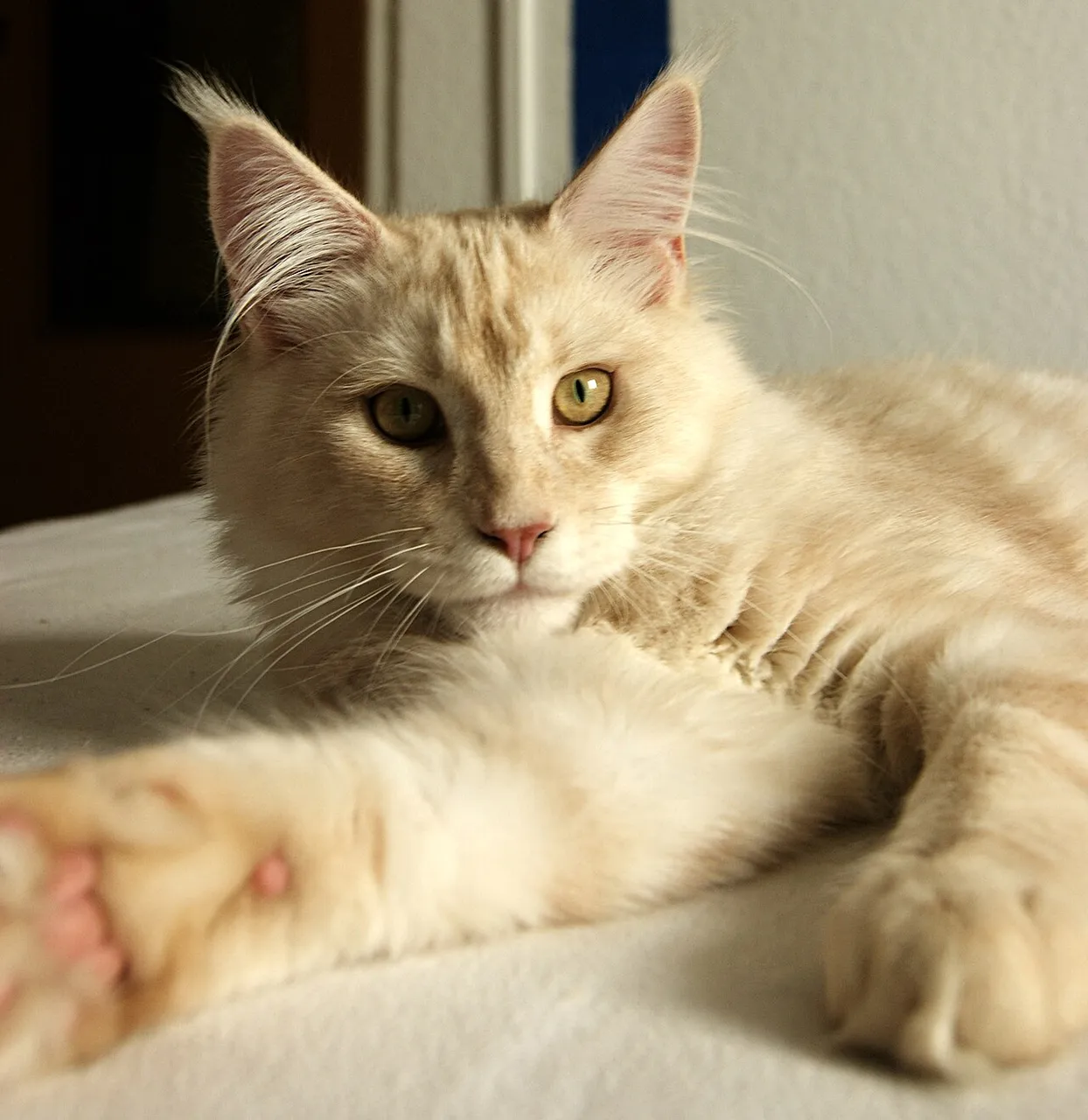
The coat tangles less than a Persian's but is long and plentiful, so regular grooming is a must: two or three times a week normally and daily during moults.
- Mat hot spots: belly, armpits, britches and under the ruff
- Tools: start with a wide-toothed comb and finish with a fine one. Use deshedding tools gently so they don't scrape the skin.
- Mats: tease small tangles apart with your fingers. Cutting large mats with scissors can injure the skin, so leave those to a vet or groomer.
- Sanitary trim: trimming fur around the rear and between the paw pads reduces soiling and slipping.
- Claws: large and strong; trim about every two weeks.
The volume of shed hair is considerable, so a robot vacuum, air purifier and lint rollers make life much easier.
9. Diet and weight
With a big body and a long growth period, life-stage nutrition is especially important for Maine Coons.
| Item | Guideline |
|---|---|
| Daily energy (neutered 7 kg adult) | About 280–350 kcal, adjusted for body condition and activity |
| Growth | Kitten or large-breed growth food is often used up to one or two years; ask your vet |
| Feeding | Two or three measured meals |
| Water | Include wet food; wide bowls or a fountain |
| Treats | Under 10% of calories |
Because Maine Coons are naturally heavy, the number on the scale alone doesn't tell you whether a cat is overweight. Check whether the ribs are easy to feel, whether there's a waist from above and whether the belly sags from the side. The thick coat makes hands more reliable than eyes.
Obesity puts great strain on joints, especially in cats with hip dysplasia, and is bad for the heart. Wide, shallow bowls suit their broad faces and avoid whisker discomfort.
10. Inherited disease and health
The Maine Coon began as a hardy natural breed, but several inherited conditions have become known as the pedigree was established. Diagnosis and treatment must come from a vet.
10.1. Hypertrophic cardiomyopathy (HCM)
In Maine Coons a specific variant of the MYBPC3 gene, often written A31P, has been linked to HCM. It sits at a different position from the Ragdoll mutation.
- Inheritance: dominant. Cats with two copies have been reported to develop disease earlier and more severely, while some carriers never develop it.
- Testing: a DNA test shows whether a cat carries the variant. HCM can arise from other causes, so periodic heart scans in adulthood are still advised.
- Signs: none at first; later fast or open-mouth breathing at rest, lethargy, or hind-leg paralysis from a clot
- Management: medication slows progression and helps prevent clots.
10.2. Spinal muscular atrophy (SMA)
SMA is an inherited disease in which motor neurons in the spinal cord are lost, weakening the muscles, especially in the hind legs. A causative variant has been identified in Maine Coons.
- Inheritance: recessive; a cat must inherit the variant from both parents.
- Signs: from a few months of age, weak-looking hind legs, a swaying gait and difficulty jumping up. It is not thought to be painful.
- Testing: a DNA test identifies carriers and affected cats.
- Management: there is no cure, but progression is fairly slow and many affected cats live comfortably indoors in a low-level home.
10.3. Hip dysplasia and other issues
- Hip dysplasia: a loose or malformed hip joint that leads to arthritis. It is uncommon in cats overall but reported more in large breeds like the Maine Coon. Cats limp less obviously than dogs, so it may show only as reluctance to jump or reduced activity. X-rays confirm it.
- Kidney cysts: reported in Maine Coons too, though not always from the Persian-type PKD1 variant, so ultrasound is useful.
- Dental disease: big cats get tartar and gum disease too; brush and have dental checks.
- Obesity: easily missed under a big frame.
When buying, ask for the parents' HCM (A31P) and SMA DNA results and, where possible, heart scan and hip X-ray records.
11. Life course and lifespan
Maine Coon lifespans are usually given as around 11–15 years, and well-cared-for cats may live longer. The most distinctive thing about the breed's life course is how long it takes to grow.
| Stage | Age | What to know |
|---|---|---|
| Kitten | 0–6 months | Rapid growth; socialisation; watch for signs of SMA |
| Adolescent | 6 months–2 years | Neutering; body lengthens and legs thicken |
| Late growth | 2–5 years | Weight, muscle and ruff fill out |
| Adult | 5–9 years | Weight control and periodic heart scans |
| Senior | 10+ years | Check joints and kidneys; twice-yearly exams |
Joints feel the strain more with age in a big cat. In later life, add steps or ramps, lower the litter box entry and make sure floors aren't slippery.
12. Costs
Rough Korean prices; they vary by clinic, region and individual cat.
| Item | Rough cost | Notes |
|---|---|---|
| Purchase price | Hundreds of thousands to several million won or more | Varies widely with pedigree, import and cattery |
| Starter equipment | 500,000–1,000,000 won | Large cat tree, large litter box or storage-bin box, large carrier |
| Vaccines and neutering | 300,000–800,000 won | Anaesthesia and drug costs can scale with weight |
| Food | 50,000–120,000 won a month | Can be 1.5 times an average cat or more |
| Litter and supplies | 30,000–60,000 won a month | High usage |
| Annual check-up | 150,000–500,000 won | More with heart scans |
| Grooming | Tens of thousands to over 100,000 won per visit if needed | Mat removal, sanitary trims |
Owners joke that everything comes one size up for a Maine Coon: gear, food and medicine. Remember that drug and anaesthesia costs are often calculated by body weight.
13. Before you get one
- Space: make sure there's room for a litter box at least 60 cm long, a heavy-duty cat tree and a large carrier.
- DNA tests: ask for the parents' HCM (A31P) and SMA results and, if possible, heart scan and hip X-ray records.
- Size marketing: sellers promoting 'record-breaking' or 'giant lines' may be breeding for size over health.
- Age and seller: kittens under two months can't be sold in Korea, and as a slow-maturing breed Maine Coons often go home at 12–16 weeks. Check the seller's registration and breeding conditions.
- Importing: check quarantine rules and airline weight limits; cabin limits include the carrier, so adult Maine Coons often have to travel in the hold.
- Contract: get written terms covering inherited disease and refunds.
- Rescue: some Maine Coons are surrendered because they grew bigger than expected, so check rescues and shelters too.
14. In popular culture
Their size has long tied Maine Coons to Guinness World Records for the longest domestic cat, and several record holders measuring over a metre are reported to have been Maine Coons. Guinness no longer accepts some categories, such as heaviest cat, to avoid encouraging owners to harm their animals.
In the Harry Potter films, Argus Filch's cat Mrs Norris is reported to have been played by several Maine Coons. On social media, photos of enormous Maine Coons standing beside their owners regularly go viral and have done much to spread the breed's fame.
In Maine itself the breed is a beloved local symbol and turns up on souvenirs and tourism material.
15. Trivia
- The Maine Coon is counted among America's oldest natural breeds.
- The tufts on the ear tips are called lynx tips, and the long hair sprouting from inside the ears is known as ear furnishings.
- Polydactyl Maine Coons, with their outsized paws, are affectionately said to be wearing mittens.
- Maine Coons and Norwegian Forest Cats look alike, but the Norwegian has a straight-profiled triangular head, while the Maine Coon has a square muzzle and high cheekbones.
- The ruff shows clear seasonal change, growing fuller in winter and noticeably thinner in summer.
Health notes are general information. If something seems wrong, contact a vet who treats this species.
🍽️ Can my dog or cat eat this? →
FAQ
How big do Maine Coons get?
Males usually reach 6–9 kg, with some exceeding 10 kg, and females 4–6 kg. Nose-to-tail length can approach a metre, and growth continues slowly until three to five years.
Are Maine Coons part raccoon?
No. Cats and raccoons cannot interbreed; the story comes from the bushy tail and tabby coat.
Can a Maine Coon live in a flat?
Yes, if you provide vertical space and daily play, but you'll need room for a big cat tree and litter box.
Photo credits
Photos are freely licensed images from Wikimedia Commons. Authors and licenses are listed below.
- 8 Toed Red Maine Coon Polydactyl Kitten.png — Jamesishere · CC BY-SA 3.0
- MCO Nicolas Real Hero Backwoods (8636797293).jpg — Nickolas Titkov from Moscow, Russian Federation · CC BY-SA 2.0
- MCO Nicolas Real Hero Backwoods (8637954832).jpg — Nickolas Titkov from Moscow, Russian Federation · CC BY-SA 2.0
- MaineCoonSilverTabby.jpg — Barry Wom · CC BY-SA 3.0
- Maine Coon Guardian Angel of Canadian Summer 8 months c.jpg — Djurmel · CC BY-SA 3.0
- Obsidian, mâle Maine coon yeux vairons - Odd eyed 02.jpg — Alixia Pain-Brun · CC BY-SA 4.0