TailVille
At a glance
Rough ranges for supplies, food and electricity in Korea (USD is approximate). Purchase or adoption fees are not included.
People who enjoy a quiet home and are happy to spend time every day grooming and cleaning a cat's face.
Anyone without time for daily grooming, on a tight vet budget, or wanting an energetic, playful cat.
1. Overview
The Persian is a long-haired pedigree cat with a flowing coat, round head, short nose and large, round eyes. It is one of the oldest and best-known cat breeds, long nicknamed the aristocrat of the cat world.
Persians are among the calmest and most easy-going of all cats. They would rather drape themselves elegantly over a cushion than race across the furniture, and their voices are soft and quiet, which makes them a natural fit for a peaceful indoor home.
That beauty comes with considerable upkeep and real health concerns. Without daily brushing the coat mats quickly, and the flat face brings overflowing tears, breathing difficulty and dental problems. Inherited polycystic kidney disease (PKD) is also well known in the breed. This article focuses on what is specific to the Persian; general cat behaviour and care are covered in the main cat article.
2. Name and origin
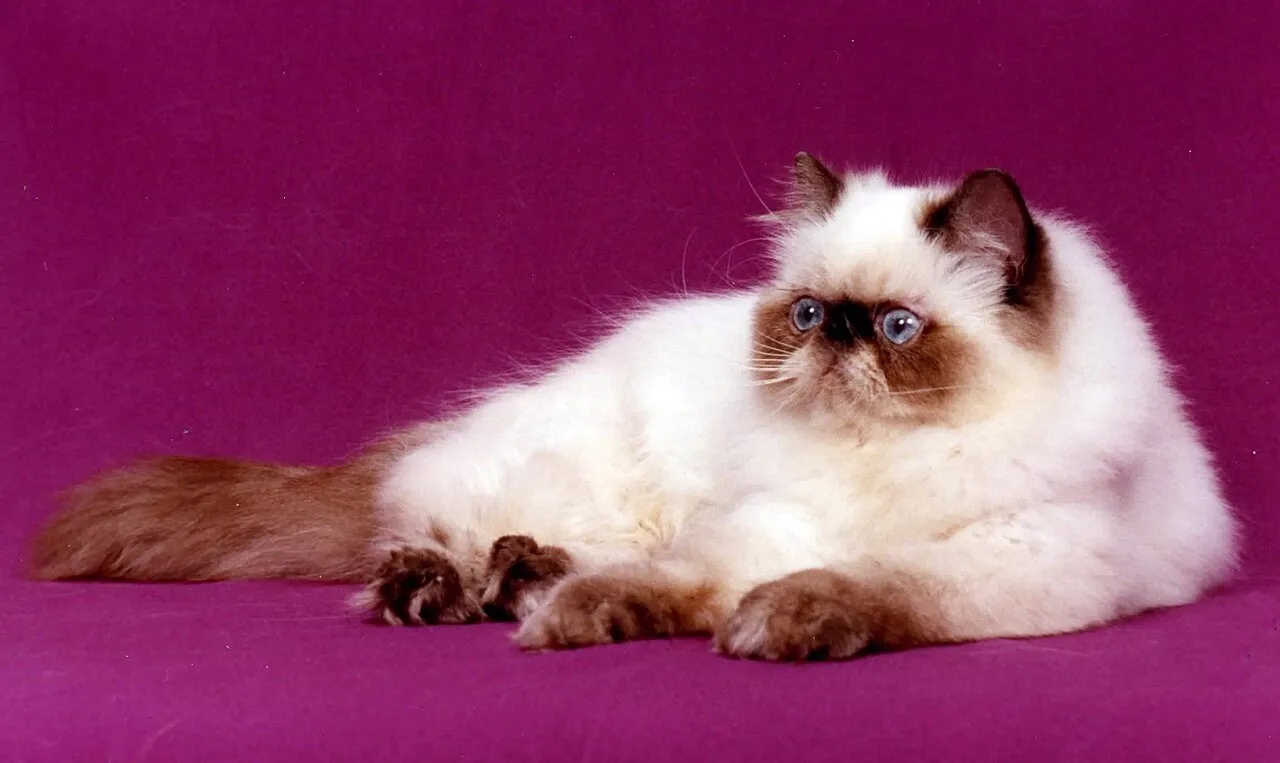
Cindy See · CC BY-SA 2.0
2.1. From Persia to Europe
The name comes from Persia, the historical name for the region of modern Iran. An Italian traveller of the early 1600s is often cited as having brought long-haired cats from Persia to Europe, and at about the same time long-haired cats from the Turkish region, ancestors of today's Turkish Angora, also arrived.
Exactly where those early long-haired cats came from, and what they looked like, is not well documented. Long hair is caused by a recessive gene whose origin is itself debated, and in the early days Persian and Angora cats were not clearly distinguished.
2.2. Victorian refinement in Britain
The Persian took its modern shape in nineteenth-century Britain. With the arrival of cat shows, long-haired cats with round heads, cobby bodies and abundant coats became wildly popular, and Queen Victoria's blue Persians added to the breed's prestige. In Britain the breed was for a long time simply called the Longhair.
In the United States from the mid-twentieth century, show fashion favoured ever flatter faces. The 'extreme' or 'peke-faced' type, with the nose leather level with the eyes, won prizes, and as a result many Persians today have far flatter faces than their ancestors.
2.3. Registries and related breeds
The Persian is recognised by all major registries, including CFA, TICA, FIFe and the GCCF. Colourpoint Persians are known as Himalayans and are treated either as a colour division of the Persian or as a separate breed depending on the registry. The Exotic Shorthair, created by crossing Persians with American Shorthairs and others, shares the Persian's body and face with a short, plush coat.
3. History and popularity in Korea
The Persian was one of the first pedigree cats to become familiar in Korea. In the 1990s and 2000s, as pet cats were just catching on, it was the archetypal luxury cat, and silver chinchilla Persians were especially popular. Persians appeared in adverts, dramas and magazines as a symbol of wealth and elegance.
From the 2010s, breeds such as the British Shorthair, Scottish Fold, Munchkin and Ragdoll grew in popularity and the Persian's share is generally thought to have declined. As awareness grew of the daily grooming and the tear and breathing problems, more first-time owners chose other breeds.
Persians remain much loved by people who value a quiet, gentle cat. More Korean owners now seek out the less flattened 'doll-face' type, and checking that the parents have been DNA-tested for PKD is gradually becoming standard practice.
4. Appearance and breed standard
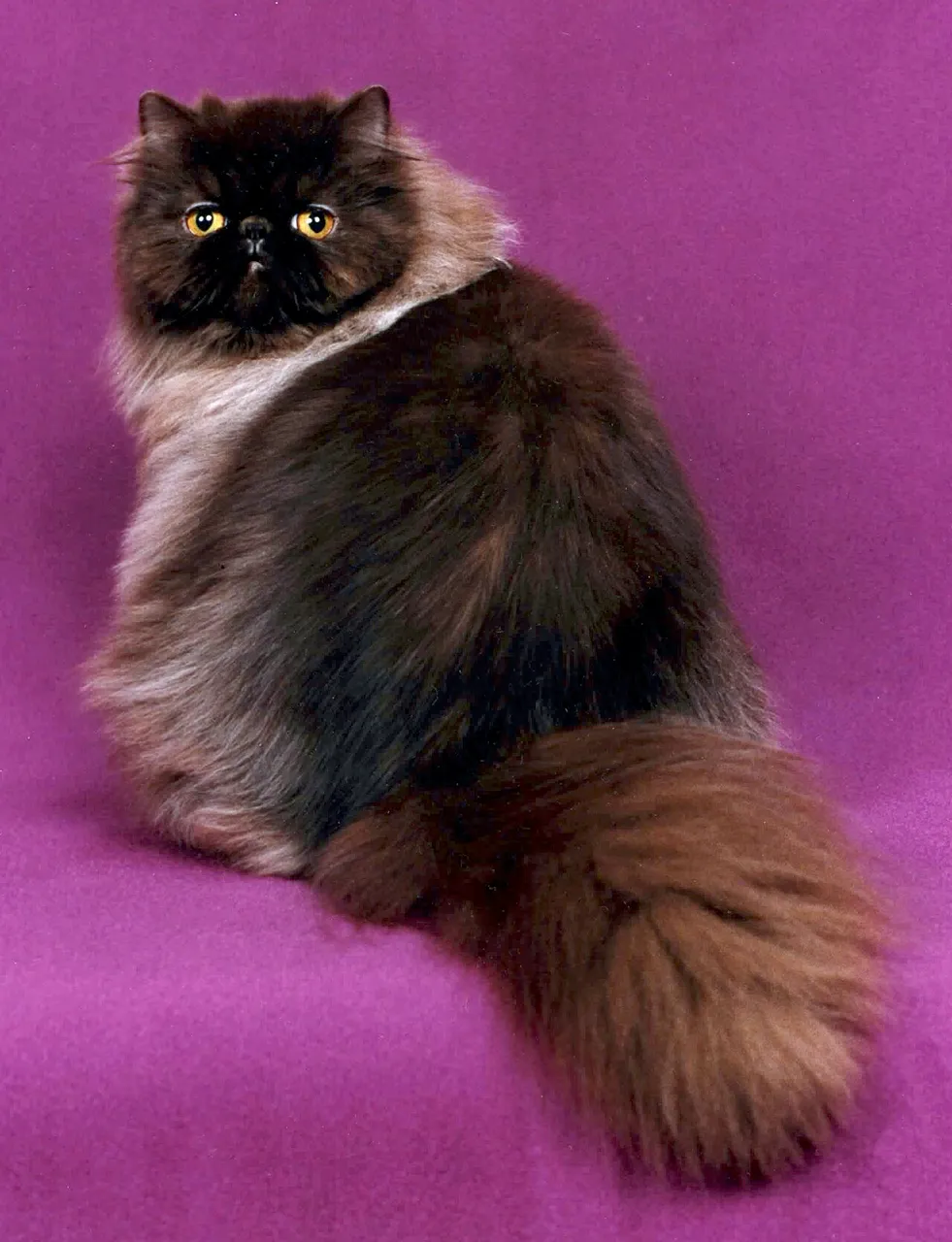
Cindy See · CC BY-SA 2.0
The Persian has a short, sturdy 'cobby' body with short, thick legs, a broad chest and a large, round head. The ears are small, round-tipped and set low, and the eyes are large and round. In show-type cats the nose is very short and sits between the eyes, so forehead, nose and chin form an almost vertical line.
| Feature | Approximate standard |
|---|---|
| Weight | About 3–6 kg, males larger |
| Body | Short, cobby, short-legged |
| Coat | Long, fine guard hairs over a thick undercoat, with a full ruff around the neck |
| Face | Show or extreme type (very flat); doll-face or traditional type (more nose) |
| Colours | Solids (white, black, blue, cream, red), chinchilla and silver, golden, smoke, tabby, bicolour, calico, colourpoint (Himalayan) and more |
| Eyes | Copper is common; green in chinchillas; blue, copper or odd in whites; blue in pointed cats |
The adult coat can exceed 10 cm, with an especially full ruff, chest and tail. Health problems vary considerably with face shape, and more and more voices are calling for less extreme faces in the interest of breathing and eye health.
5. Temperament
Persians are famously quiet, gentle and laid-back. They spend much of the day on a favourite cushion or sunny windowsill and climb and sprint far less than most breeds, which has earned them the jokey label of 'living furniture'.
They are affectionate with their people and love being stroked and simply sitting close by. Rather than pestering you for attention, a Persian tends to wait for you to come to it. Many have soft voices and rarely meow at all.
Persians prefer a peaceful, predictable home to a noisy, chaotic one. Rough handling or chasing by children stresses them, but they usually get along with calm children and other gentle pets. Individuals vary, of course, and some Persians are far more playful than the stereotype suggests.
6. Who it suits and who it doesn't
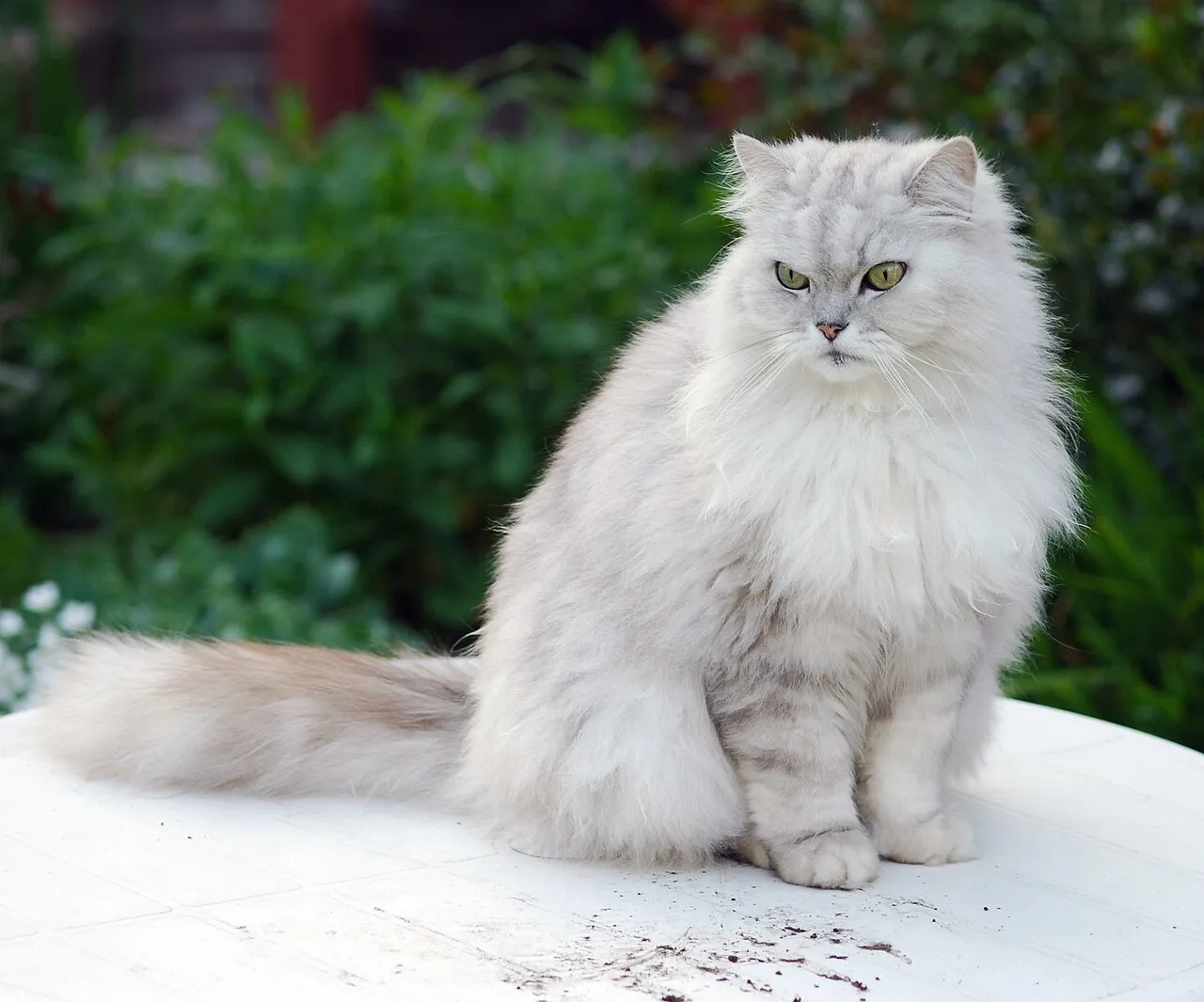
allen watkin from London, UK · CC BY-SA 2.0
A good match for:
- People who enjoy a quiet, peaceful indoor life
- Owners happy to spend 10–15 minutes a day brushing and cleaning the face
- Anyone wanting a companion that sits with them rather than an energetic playmate
- Those able to budget for regular check-ups and grooming
- Homes that can keep air conditioning going in summer
A poor match for:
- People short on time for coat care
- Anyone fussy about fur and cleaning
- People who want an active, playful cat
- Households that could not cope with sudden vet bills
Persians are easily mistaken for low-maintenance cats because they are so placid. Their temperament may be easy, but their grooming needs are among the highest of any breed.
7. Exercise and play
Persians are not very active, and one or two gentle play sessions of 10–15 minutes a day are usually enough. Because they move so little, though, they gain weight easily, so do not skip playtime.
- Wand toys trailed slowly along the floor for short hunting games
- Rolling balls and feather toys
- Low cat trees and wide cushioned platforms
- A window seat for watching the world
Many Persians do not enjoy leaping, so a low tree with several broad platforms suits them better than a tall tower. Vigorous play can leave a flat-faced cat breathless; if your Persian starts open-mouth breathing, stop and let it rest. Unlike in dogs, panting is not normal in cats.
8. Coat care and hygiene
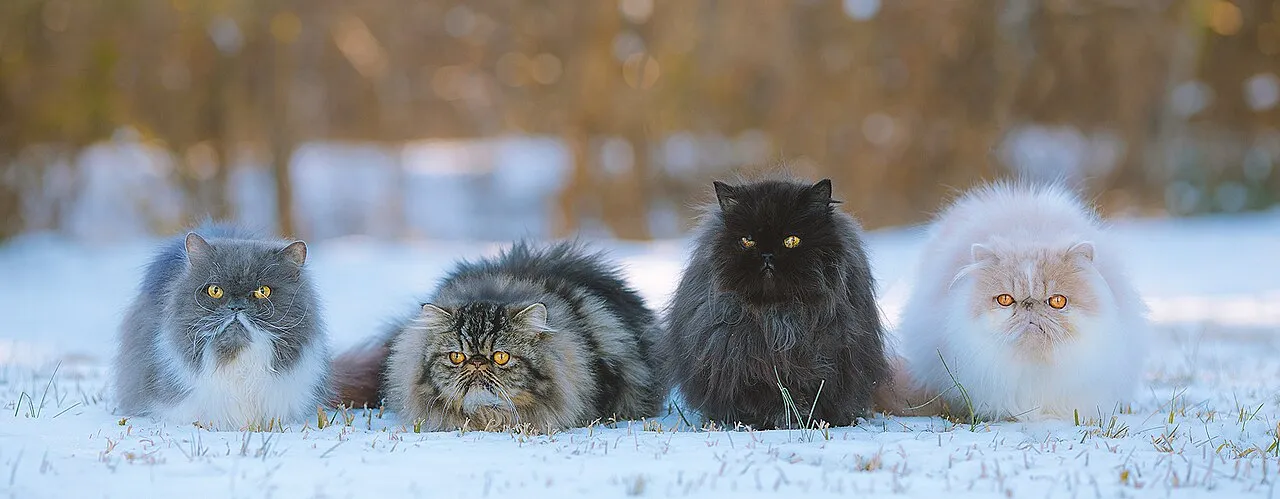
Reba Spike · CC BY 2.0
Daily brushing is the heart of Persian care. The undercoat is so fine and thick that skipping even a day or two lets mats start forming in the armpits, behind the ears, on the belly and around the groin. Mats pull on the skin, causing pain and sores, and bad ones mean shaving the whole coat.
- Brushing: 10–15 minutes daily, working through tangles with a wide-toothed comb, then finishing with a fine comb, lifting the hair to reach right down to the skin
- Eyes: once or twice a day, wipe away tears and discharge with gauze moistened in lukewarm water, then dry
- Facial folds: tears and food trapped in the fold above the nose cause dermatitis, so clean it too
- Sanitary trim: keep the hair around the rear short so faeces don't stick
- Bathing: many owners bathe or book a professional groom every four to eight weeks; the thick coat takes a long time to dry, so dry it thoroughly with warm, not hot, air to prevent skin problems
Some owners opt for a summer 'lion cut'. It helps with matting, but it can stress the cat and exposes skin to sun and injury, so discuss it with your vet or an experienced groomer.
9. Feeding and weight
Persians are not very active and need relatively few calories. A 4 kg adult typically needs about 180–230 kcal a day, and portions should be measured, especially after neutering.
- Some kibbles are shaped for flat-faced cats to pick up easily, and wide, shallow dishes are easier than deep bowls
- Persians swallow a lot of hair, so hairball-control diets or extra fibre can help
- Given the PKD risk, mix in wet food to boost water intake
- Use a wide water bowl that doesn't press against the face, or try a fountain
The thick coat hides body shape, so feel for the ribs and waist with your hands and weigh your cat monthly. Obesity makes breathing and joint problems worse.
10. Inherited disease and health
Generations of selection for a particular look have left several health problems widespread in the breed. This is not a judgement on owners, simply the reality to prepare for before choosing a Persian.
10.1. Polycystic kidney disease (PKD)
Fluid-filled cysts form in the kidneys and gradually enlarge, destroying kidney function. PKD is autosomal dominant, so a kitten can inherit it from just one affected parent. Surveys once found it in a large proportion of Persians and related breeds; since DNA testing became widely available, responsible breeders have removed carriers from their programmes and the disease is reported to be declining.
- Signs: usually from middle age, increased thirst and urination, weight loss, poor appetite and vomiting, as with other chronic kidney disease
- Testing: PKD1 DNA test (cheek swab or blood) and kidney ultrasound
- Management: there is no cure, but kidney-supportive diets, hydration and blood pressure control can slow progression
10.2. Problems linked to the flat face
- Breathing: narrow nostrils and shortened nasal passages cause noisy breathing, snoring and in severe cases open-mouth breathing; heat and stress are particularly dangerous
- Tear overflow (epiphora): short, kinked tear ducts send tears down the face instead of into the nose, causing reddish-brown staining and skin irritation
- Eye disease: large, prominent eyes are prone to corneal ulcers, and entropion (inward-rolling eyelids) is also reported; squinting or pawing at the eyes needs prompt attention
- Teeth: a shortened jaw crowds and misaligns the teeth, encouraging tartar and gum disease
- Birth: kittens' large heads can cause difficult deliveries
10.3. Other conditions
- Hypertrophic cardiomyopathy (HCM): thickening of the heart muscle, reported in Persians; ask for a heart check at annual visits and consider an echocardiogram if advised
- Progressive retinal atrophy (PRA): an inherited early-onset form causing blindness has been described in Persians
- Ringworm (dermatophytosis): a fungal skin infection to which long-haired cats, and Persians in particular, seem prone; it can spread to people
- Anaesthetic risk: airway anatomy calls for extra care during anaesthesia and recovery, so insist on thorough pre-operative checks
Cats hide illness well, so from around age seven plan check-ups once or twice a year including blood and urine tests and, where advised, kidney ultrasound.
11. Life stages and lifespan
Average lifespan is roughly 12 to 16 years, and cats free of PKD and well cared for can live longer.
| Stage | Age | Key points |
|---|---|---|
| Kitten | 0–6 months | Socialisation, vaccinations, getting used to brushing and face cleaning |
| Junior | 6 months–2 years | Neutering; the adult coat comes in and tangles increase |
| Adult | 2–7 years | Daily coat and eye care, weight control, dental checks |
| Mature | 7–10 years | Kidney function tests, heart checks, check-ups once or twice a year |
| Senior | 11 years and up | Kidney disease and arthritis management; more help with grooming |
Making brushing and eye cleaning a pleasant routine with treats from kittenhood makes lifelong care far easier. Older Persians groom themselves less and grow stiff, so they need more help keeping the back and rear clean and tangle-free.
12. Costs
These are rough 2026 South Korean figures. Persians cost more than most cats in grooming and medical care.
| Item | Approximate cost | Notes |
|---|---|---|
| Purchase price | Hundreds of thousands to several million won | Varies with pedigree, colour and parents' PKD testing |
| Initial supplies | 300,000–600,000 won | Several combs, low cat tree, wide bowls, pet dryer |
| Vaccines, neutering, registration | 300,000–600,000 won | Varies by sex and clinic |
| Food and litter | 50,000–110,000 won per month | Including hairball and wet food |
| Grooming and bathing | 70,000–150,000 won per visit every 4–8 weeks | Depends on matting and area |
| Eye and hygiene supplies | 10,000–30,000 won per month | Gauze, cleansers and so on |
| Insurance | 20,000–50,000 won per month | Premiums may be higher for the breed |
| Kidney ultrasound and blood tests | Several hundred thousand won per visit | Regularly from middle age |
| Corneal ulcer treatment | Several hundred thousand won or more | Surgery in severe cases |
| Chronic kidney disease care | Tens to hundreds of thousands of won per month | Prescription diet, fluids, medication |
Some insurance policies exclude breed-related conditions, so check whether PKD and eye disease are covered before signing up. The same caution applies in other countries, where grooming and specialist eye care are often more expensive still.
13. Before you get one
- Insist on negative PKD1 DNA results for both parents, and walk away from sellers who cannot show them
- Look at the parents' faces and listen to their breathing; quiet breathing and mild tearing are good signs
- Check that the kitten has clear eyes, reasonably open nostrils and quiet breathing
- If health is your priority, consider the doll-face type with a more visible nose
- Kittens that stay with their mother until around 12 weeks benefit in both social skills and immunity
- Avoid sellers offering many breeds in volume, and check the licence, pedigree papers and vaccination records
Some Persians are surrendered because their owners could not keep up with grooming, so breed rescues and shelters sometimes have adults available. An adult's health and personality are already clear, which makes planning easier, though a rescue that arrives badly matted may need an initial shave and skin treatment.
14. Persians in culture
In film, the Persian has long symbolised wealth and power. The most famous example is the white long-haired cat stroked by the villain Blofeld in the James Bond films; the faceless villain caressing his cat became one of the most parodied images in cinema.
In the 2001 film Cats & Dogs, a white Persian named Mr. Tinkles plots world domination, playing the stereotype for laughs. In Western popular culture the white Persian often stands for the elegant cat with sinister plans.
In Korea, Persians appeared in 1990s and 2000s adverts and dramas as the cat in a wealthy family's living room, and silver chinchilla Persians were favourite models for premium pet food and household products. The breed has also long been a popular long-haired cat in Japan.
15. Trivia
- In Britain Persians were long called simply Longhairs, and each colour was treated almost as a separate breed.
- The chinchilla Persian is named after the silvery fur of the South American rodent; black tips on otherwise white hairs give the coat its shimmer.
- The Exotic Shorthair is jokingly called 'the Persian for lazy people' because it combines the Persian face and temperament with a short coat.
- The Himalayan was created by introducing Siamese colourpoint genes into the Persian, and its name is said to come from the similarly marked Himalayan rabbit.
- Veterinary organisations in several countries, and some cat registries, have called for breed standards to move away from extreme flat faces for health reasons.
- Owners agree that what Persians lack in climbing ambition they make up for in their talent for claiming the middle of the bed and the best seat on the sofa.
Health notes are general information. If something seems wrong, contact a vet who treats this species.
🍽️ Can my dog or cat eat this? →
FAQ
Do Persians really need brushing every day?
Yes. The fine, long undercoat starts knotting behind the ears, under the legs and on the belly within a day or two. Mats pull on the skin and cause pain and sores, so make a 10–15 minute daily brush part of your routine.
What causes tear stains and how do I manage them?
The flat face kinks or compresses the tear ducts, so tears spill onto the face instead of draining into the nose. Wiping and drying once or twice a day limits staining and skin irritation. See a vet if your cat squints or the discharge turns yellow or green.
Are there Persians with less flat faces?
Yes. Some breeders and owners prefer the 'doll-face' or traditional type with a more visible nose. It may not match every show standard, but such cats tend to have fewer breathing and tearing problems, which makes them worth considering if health is your priority.
Photo credits
Photos are freely licensed images from Wikimedia Commons. Authors and licenses are listed below.
- Cat Show - Ft. Lauderdale - October 2008.jpg — Jill Warner from Delray Beach, FL, USA · CC BY-SA 2.0
- Chocolate Himlayan.jpg — Cindy See · CC BY-SA 2.0
- Chocolate Persian.jpg — Cindy See · CC BY-SA 2.0
- Fat Cat (2516955618) (cropped).jpg — allen watkin from London, UK · CC BY-SA 2.0
- Four Persian Cats (51841092530) (cropped).jpg — Reba Spike · CC BY 2.0