TailVille
At a glance
Rough ranges for supplies, food and electricity in Korea (USD is approximate). Purchase or adoption fees are not included.
People in small homes who want an affectionate, low-shedding little dog and will keep up with grooming and tooth brushing.
Homes with toddlers, settings where barking is a problem, or anyone unwilling to pay for regular grooming.
1. Overview
The Yorkshire Terrier is a toy terrier weighing around 3 kg, instantly recognisable by its long, straight, silky coat of steel blue and gold. Universally nicknamed the 'Yorkie', it descends from small terriers kept by working people in Yorkshire, in northern England, to catch rats.
Despite its dainty looks it is a true terrier: brave, inquisitive, alert and opinionated. The single coat sheds very little, which has made it a popular indoor companion around the world, and in Korea it was one of the most common small dogs of the 1990s and 2000s alongside the Maltese and Shih Tzu.
The hair grows continuously, like human hair, and needs regular trimming, and the tiny mouth is crowded with teeth that are prone to gum disease. Kneecap problems, a collapsing windpipe and other toy-breed issues are worth knowing about too. This article focuses on the Yorkie specifically; general dog topics are covered in the main dog article.
2. Name and origin
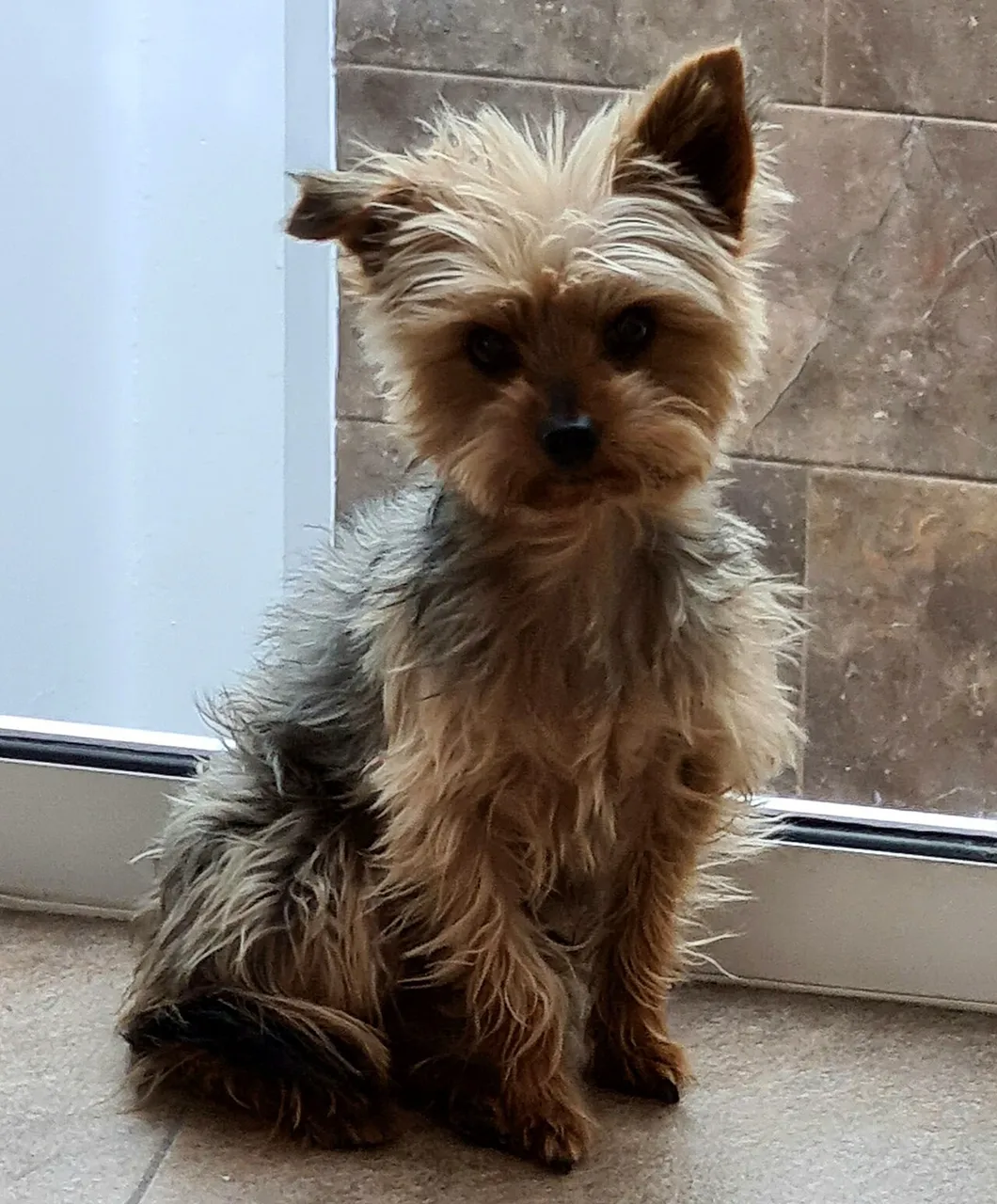
Jerryacutedoggy · CC0
2.1. Ratters of the mills and mines
During the Industrial Revolution, Scottish workers who moved south to find jobs in Yorkshire and Lancashire are thought to have brought several kinds of small terrier with them. In textile mills and coal mines these dogs kept the rats down, and crossed with local terriers they were gradually refined into a smaller, longer-coated type. Breeds often mentioned in the mix include the now-extinct Clydesdale and Paisley terriers, the Skye Terrier and possibly the Maltese, but records are scarce and the exact recipe is unknown.
The breed took its final shape in Yorkshire, hence the name. Early Yorkies were often noticeably larger than today's dogs.
2.2. Huddersfield Ben and the Victorians
A dog called Huddersfield Ben, born in the 1860s, was a celebrated show winner and prolific sire and is often called the father of the breed. Around this time the Yorkie moved from rat-catcher to lapdog of fashionable Victorian ladies, and coat-care rituals such as wrapping the long hair in paper to protect it were born.
2.3. Recognition
The Yorkshire Terrier was recognised by both the Kennel Club in Britain and the American Kennel Club in the late nineteenth century, making it one of the older registered toy breeds. The FCI places it in Group 3 (Terriers), toy terrier section, with Great Britain as the country of origin, while the AKC classes it in the Toy Group.
3. History and popularity in Korea
Yorkies took off in Korea in the 1980s and 1990s, as apartment living became the norm and keeping small dogs indoors spread. Low shedding and tiny size were seen as ideal for flats, and alongside the Maltese, Shih Tzu and Poodle the Yorkie became one of the country's quintessential small dogs.
From the 2000s, Poodles, Pomeranians and Bichons Frisés grew in popularity and the Yorkie's share is generally felt to have declined, though it remains a steady favourite and many Korean households are caring for long-lived senior Yorkies.
The boom years also brought mass supply through pet shops and breeding farms, including undersized 'teacup Yorkies' and puppies from untested parents. Older Yorkies still turn up in Korean shelters regularly, waiting for new homes.
4. Appearance and breed standard
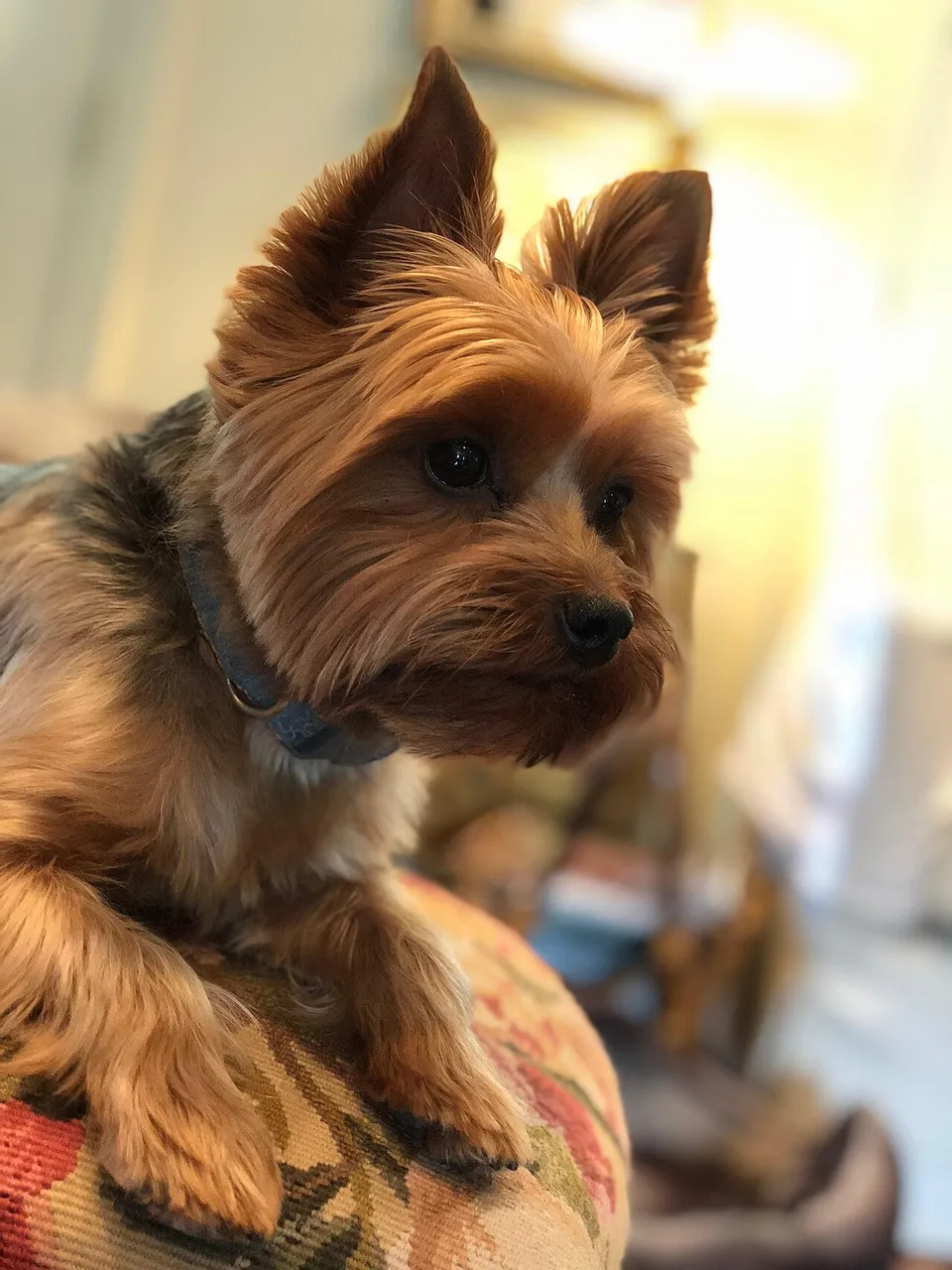
The Yorkie is small and compact, with a small head, medium-length muzzle and small, erect V-shaped ears. In full show coat the hair reaches the floor and parts neatly down the middle of the back.
| Feature | Approximate standard |
|---|---|
| Weight | Standard upper limit about 3.2 kg (7 lb); pets commonly 2–4 kg |
| Height | About 18–23 cm |
| Coat | Single coat, fine, straight and glossy |
| Adult colour | Dark steel blue body, rich golden tan head, chest and legs |
| Puppy colour | Born black and tan, gradually changing |
| Non-standard colours | Parti-colour (with white), chocolate and others, depending on registry |
The colour change is one of the breed's quirks. The black puppy body coat gradually clears to blue-grey and the tan on the head lightens to gold, a process that can take two or three years. Parti-coloured Yorkies with white gave rise to the Biewer Terrier, developed in Germany and now recognised as a separate breed by some registries.
5. Temperament
The Yorkie is often described as a big dog in a small body. It explores every corner of the house, announces strangers and odd noises with quick barking, and its terrier heritage shows in its love of chasing small moving things and 'killing' squeaky toys.
Yorkies are affectionate and cuddly with their people, but stubborn and independent too. They are known as one of the slower breeds to house-train, so consistent, reward-based teaching is essential.
Carrying a Yorkie everywhere and keeping it away from other dogs because it is small tends to produce a fearful, reactive adult. The snappy, yappy behaviour sometimes called 'small dog syndrome' usually comes from too little socialisation and training. Tiny dogs need rules and experiences just as much as big ones.
6. Who it suits and who it doesn't
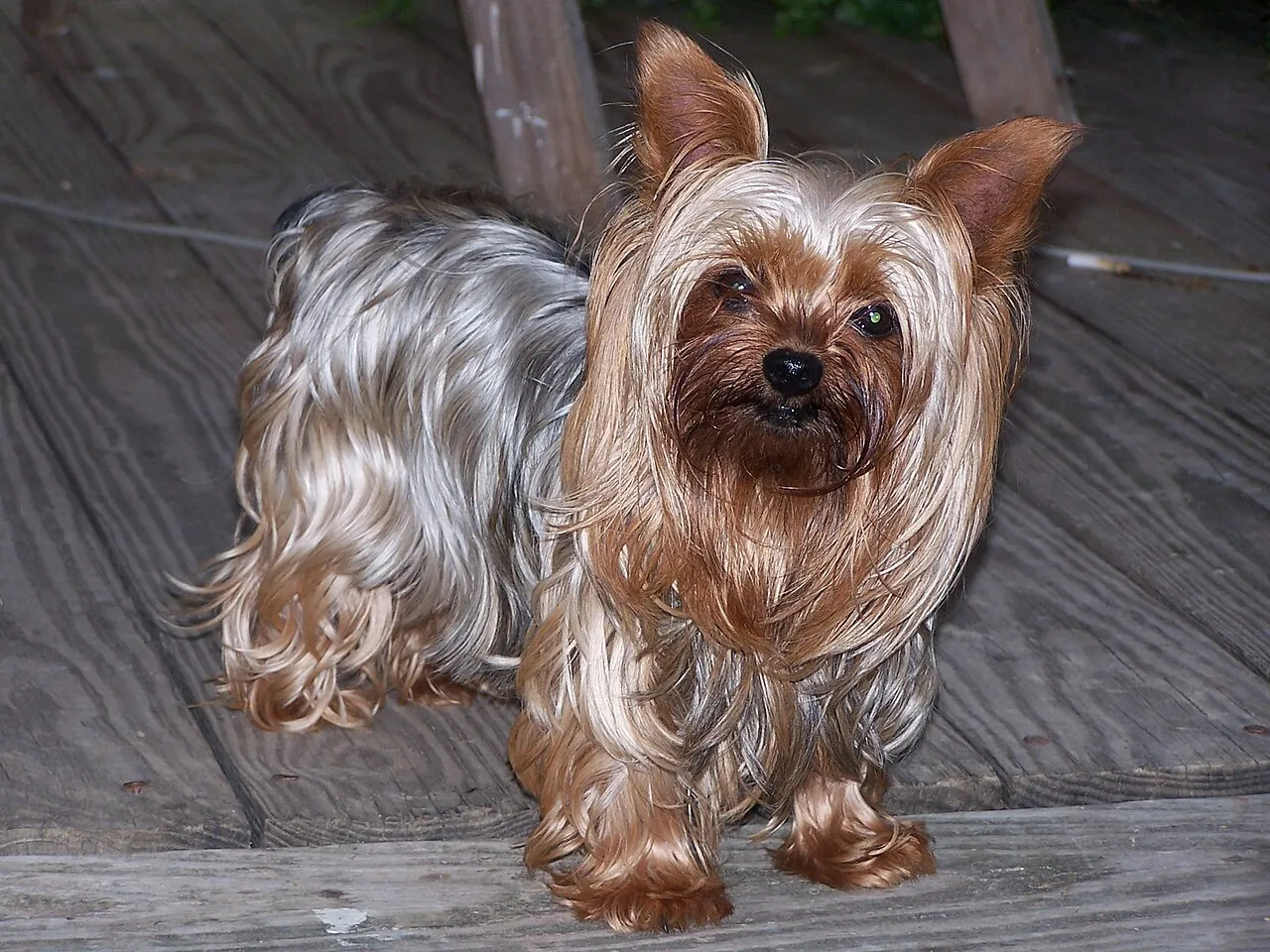
Portraitlady4306 · Public domain
A good match for:
- People in studios or small flats
- Anyone wanting a low-shedding dog
- Owners who will keep up with grooming and tooth brushing
- Older people and less active households
- People who like a small dog with a big personality
A poor match for:
- Families with toddlers
- Homes where barking would cause trouble with neighbours
- Anyone reluctant to pay for regular grooming
- People wanting a hiking or running partner
Yorkies are often suggested for allergy sufferers because they shed so little, but allergens are also found in saliva and dander, so nobody can promise a reaction-free experience.
7. Exercise and play
One or two walks of 20 to 30 minutes plus indoor play meet most Yorkies' exercise needs. They are lively terriers and can walk further than their size suggests. Walks also provide sniffing and socialisation, so do not keep a Yorkie indoors all the time.
- 'Hunting' games with a squeaky toy to shake and chase
- Scent games searching for hidden treats
- Short trick sessions such as sit, paw and spin
- Indoor fetch with a small ball
In dog parks, use the small-dog area; rough play with big dogs can cause serious injury. Yorkies feel the cold, so a coat helps on winter walks, and in summer their bodies are close to the hot pavement, so walk in the cooler hours. Use a harness rather than a collar to avoid pressure on the windpipe.
8. Coat care and hygiene
Yorkie hair is much like human hair: it keeps growing, and while there is no undercoat to shed, loose hairs tangle into the long coat. A full-length coat needs daily brushing, and most pet owners choose a short, easy 'puppy cut' every four to eight weeks.
- Brushing: daily for a long coat, two or three times a week for a short cut; pin brush first, then a fine comb
- Bathing: every two to four weeks, with conditioner to prevent tangles
- Eyes: wipe away tears and discharge daily with damp gauze; trim or tie up the hair around the eyes
- Ears: hair growing inside the ear canal reduces airflow and encourages infection, so keep it tidy
- Hygiene trim: keep the hair short around the rear and between the paw pads
Tooth care matters most of all. A full set of 42 teeth crammed into a tiny jaw means tartar builds up very quickly. Start daily brushing in puppyhood and book a dental check at least once a year.
9. Feeding and weight
Adult Yorkies usually eat two or three meals a day, roughly 200–250 kcal for a 3 kg dog. With such small energy needs, just a few treats can make up a large share of the day's calories.
- Small-bite kibble is easier to chew and better for the teeth
- Very small puppies, under about four months or 1.5 kg, are prone to hypoglycaemia; feed at least four times a day, and if a puppy turns weak or shaky, rub honey or glucose on the gums and go straight to a vet
- Many Yorkies are picky eaters, and a taste of human food can lead to refusing kibble
- Fatty food can trigger pancreatitis
Extra weight worsens both kneecap and windpipe problems, so weigh your dog regularly. Conversely, a Yorkie that stays very thin may have an underlying problem such as a liver shunt, so discuss it with your vet.
10. Inherited disease and health
Yorkies are long-lived for their size, but several conditions common in toy breeds are worth knowing about.
10.1. Luxating patella
The kneecap slips out of its groove, a very common problem in toy breeds. The classic sign is a skip: the dog suddenly holds up a hind leg for a few steps, then walks normally again. Cases are graded 1 to 4; mild ones are managed with weight control and non-slip floors, while severe ones may need surgery.
10.2. Collapsing trachea
The cartilage rings of the windpipe weaken, so the trachea flattens during breathing. The hallmark is a goose-like honking cough, often triggered by excitement, lead pressure or drinking. It is diagnosed with X-rays or fluoroscopy and managed with weight control, a harness, cough suppressants and anti-inflammatories; severe cases may need a tracheal stent.
10.3. Portosystemic shunt
Blood from the intestines bypasses the liver through an abnormal vessel, so toxins are not filtered out. Signs include poor growth, drooling or disorientation after meals and even seizures. Diagnosis involves bile acid blood tests, ultrasound or CT, and surgery is often used to close the shunt. Yorkies are among the breeds in which it is reported more often.
10.4. Teeth, bones and more
- Retained puppy teeth: baby teeth often fail to fall out when adult teeth arrive, crowding the mouth and trapping tartar; they are checked at six to seven months and often removed during neutering.
- Legg-Calvé-Perthes disease: reduced blood supply makes the head of the thigh bone collapse, usually showing as lameness in one hind leg between four and twelve months of age.
- Hypoglycaemia: especially in very small individuals.
- Dry eye and progressive retinal atrophy have also been reported.
- Some Yorkies keep an open fontanelle (soft spot) on the skull and need protection from head knocks.
11. Life stages and lifespan
Average lifespan is roughly 13 to 16 years, and well-cared-for Yorkies reaching 17 or more are not unusual.
| Stage | Age | Key points |
|---|---|---|
| Puppy | 0–6 months | Watch for low blood sugar; socialisation and house-training; coat black and tan |
| Adolescent | 6–12 months | Check for retained teeth and kneecap problems; get used to grooming |
| Adult | 1–8 years | Weight and dental care; coat settles into blue and gold |
| Senior | 9 years and up | Gum disease, tracheal collapse, heart valve disease, kidney checks |
In old age, mitral valve disease may cause a heart murmur or a worsening cough, and advanced gum disease can lead to tooth loss. Check-ups every six months are sensible, and dental cleaning under anaesthesia is best done before a dog becomes very old.
12. Costs
These are rough 2026 South Korean figures. Food is cheap for a Yorkie, but grooming and dental care add up steadily.
| Item | Approximate cost | Notes |
|---|---|---|
| Purchase price | Hundreds of thousands to several million won | Be wary of premium 'teacup' pricing |
| Initial supplies, vaccines, registration | 500,000–1,200,000 won | Harness, carrier, coat, grooming tools |
| Food and treats | 30,000–70,000 won per month | Low for a toy breed |
| Grooming | 40,000–80,000 won per visit every 4–8 weeks | Varies with style and area |
| Consumables, toothpaste, pads | 20,000–40,000 won per month | Depends on use |
| Insurance | 20,000–50,000 won per month | Varies with age and cover |
| Dental scaling | Several hundred thousand won | More with pre-anaesthetic tests |
| Kneecap surgery | About 1–3 million won per leg | Varies by clinic and grade |
| Liver shunt surgery | Several million won | CT often billed separately |
Learning to trim at home saves money, but leave the delicate areas around the eyes and ears to a professional unless you are confident with scissors. Costs elsewhere follow the same pattern, with grooming usually the biggest recurring expense.
13. Before you get one
- Avoid sellers advertising 'teacup' or 'micro' Yorkies at premium prices; dogs bred far below standard size face higher risks of hypoglycaemia, fractures, liver shunts and hydrocephalus
- Ask about the parents' weights and health, including kneecap checks
- Puppies separated from their mother before eight weeks are at a disadvantage in socialisation and immunity
- Look for a lively puppy with a good appetite, clean eyes and nose and no limping
- Check the seller's licence and the puppy's vaccination and microchip records
- A black-and-tan puppy coat is normal; ignore sales talk that prices puppies up or down for 'unusual' colour
Because Yorkies live so long, shelters often have dogs aged seven and over whose owners could no longer keep them. A senior Yorkie usually has a settled personality and is already house-trained, though you should budget for dental work and heart checks.
14. Yorkshire Terriers in culture
The most famous Yorkie of all is Smoky, a tiny dog found in the jungle of New Guinea during the Second World War and adopted by an American soldier. Smoky is credited with pulling a communications cable through a narrow pipe beneath an airfield, saving days of dangerous digging, and after the war she visited wounded soldiers in hospital, earning a place in many histories of therapy dogs.
A Yorkie also appears in records as one of the smallest dogs ever documented: a dog in England in the 1940s is said to have been small enough to sit in the palm of a hand as an adult. Such extremes are, of course, far from healthy.
Yorkies have long been favourites of actors and celebrities, which gave them a 'handbag dog' image, and in Korea they were familiar faces in television dramas, adverts and variety shows during their peak years.
15. Trivia
- Show Yorkies have their coats divided and wrapped in paper or cloth so the floor-length hair does not break.
- The classic topknot with a bow started as a practical way to keep long hair out of the eyes.
- The coat is often compared to human hair, but dog-specific shampoos and conditioners are still the safer choice because canine skin has a different pH.
- The ratter heritage lives on in the vigorous head-shake Yorkies give their toys.
- Tails were traditionally docked to medium length, but cosmetic docking is now banned or discouraged in many countries.
- The Biewer Terrier, developed in Germany from the 1980s, grew out of the parti-colour gene in Yorkshire Terriers.
- Yorkies often live well into their teens, which means many owners share a large part of their own life story with a single dog.
Health notes are general information. If something seems wrong, contact a vet who treats this species.
🍽️ Can my dog or cat eat this? →
FAQ
Is it true Yorkies don't shed?
They have no undercoat, so very little hair ends up on the floor. Loose hairs get caught in the coat instead and form mats if you do not brush. They are not truly hypoallergenic, so spend time with one before committing if anyone has allergies.
Why did my black puppy's coat change colour?
Yorkies are born black and tan. As they mature, the body coat gradually clears to steel blue and the head and legs to gold, a process that can take a couple of years and varies between dogs.
My Yorkie makes a honking cough. Is that normal?
A goose-like honk is a classic sign of tracheal collapse. If it worsens with excitement or lead pressure, see your vet, switch to a harness and keep your dog slim.
Photo credits
Photos are freely licensed images from Wikimedia Commons. Authors and licenses are listed below.
- 4 year old Yorkie, Leo.jpg — No machine-readable author provided. Quixoticvalue~commonswiki assumed (based on copyright claims). · Public domain
- 4 year old Yorkshire Terrier.jpg — Jerryacutedoggy · CC0
- Henri the yorki from alabama .jpg — BigApplePictures · CC BY-SA 4.0
- Little tootie.JPG — Portraitlady4306 · Public domain