TailVille
At a glance
Rough ranges for supplies, food and electricity in Korea (USD is approximate). Purchase or adoption fees are not included.
Anyone adding a bottom-dwelling group to a peaceful community tank, and families who enjoy watching quirky behaviour.
People who want one fish just to clean the tank, or who cannot keep up with substrate cleaning and water changes.
1. Overview
Corydoras are small catfish, three to seven centimetres long, from rivers and streams across South America. Bony plates cover the body instead of scales, and barbels around the mouth sift through sand for food. There are dozens of species in the trade, from bronze and peppered corys to pandas and Sterba's corys, and some keepers collect them the way others collect stamps. Hobbyists everywhere simply call them corys.
For decades they were sold as clean-up fish, yet corys need their own food and a clean substrate. Because of the leftovers myth, many still go hungry or wear their barbels down on sharp gravel. Given soft sand and a proper group, though, they are hardy and long-lived.
This article covers classification and naming, history, anatomy including their unusual gut breathing, a comparison of popular species, behaviour, housing, diet, common diseases, breeding, costs and what to check before buying.
2. Name and classification
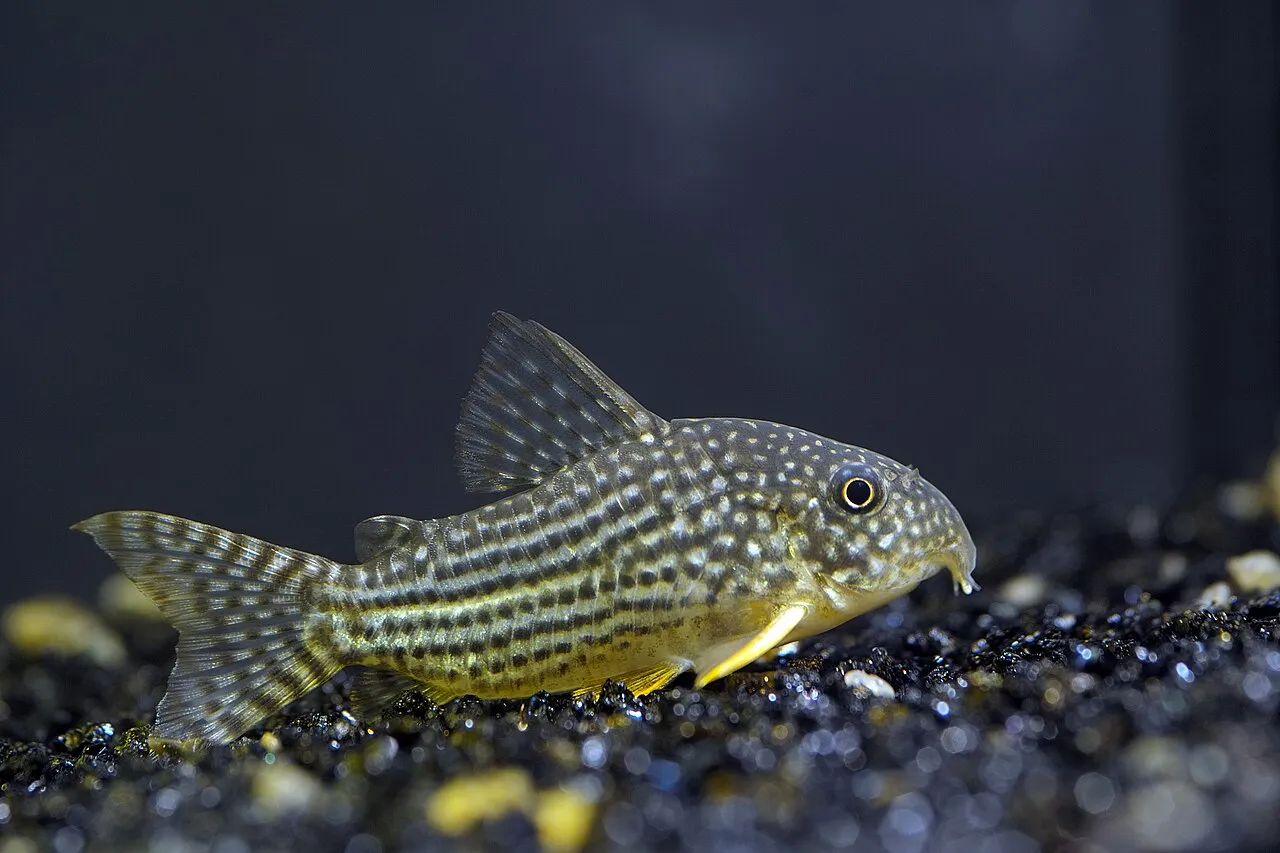
Matthew Mannell · Public domain
2.1. Scientific classification
Corydoras belong to the armoured catfish family Callichthyidae in the order Siluriformes. For many years more than 150 species were lumped into the single genus Corydoras, and many more undescribed fish are traded under provisional C-numbers and CW-numbers.
A recent genetic revision proposed splitting this huge genus into several, and some sources now place species such as the bronze cory in Hoplisoma or other genera. How widely the new names will be adopted is still settling, so shops and hobbyists continue to say Corydoras. This article uses the familiar name throughout.
2.2. Where the name comes from
The genus name combines the Greek korys, helmet, with doras, skin or hide, describing the plated armour over the head and body. In English they are corys, cory cats or armoured catfish. Individual species are usually known by descriptive names such as panda, bronze and peppered, or by their species name, as with Sterba's or adolfoi.
2.3. Related fish
Other members of the family include the larger hoplo catfish (Megalechis), Callichthys, and the small Aspidoras. Plecos belong to a different family, Loricariidae, within the same order. Shops often lump them all together as bottom cleaners, but their size, diet and needs differ greatly.
3. History
European naturalists described the first corys in the early nineteenth century, and they entered aquariums as the tropical fish hobby began in the early twentieth century. The peppered cory, tolerant of cooler water and easy to spawn, was among the first catfish to become widely popular. The bronze cory followed and, once mass-farmed, became common worldwide.
In the late twentieth century, new species kept arriving from all over South America. German importers began assigning C-numbers to fish that had not yet been formally described, allowing collectors to keep track of unnamed corys and trade them reliably. The panda cory, discovered in Peru in the 1970s, became a hit thanks to its markings and is now mostly farm-bred.
In Korea, farmed bronze and albino corys arrived first as the hobby spread in the 1980s and 1990s. When planted tanks became fashionable in the 2000s, corys on sand gained a following of their own, and today specialist shops and clubs handle dozens of species, with a growing number bred locally by hobbyists.
4. Body
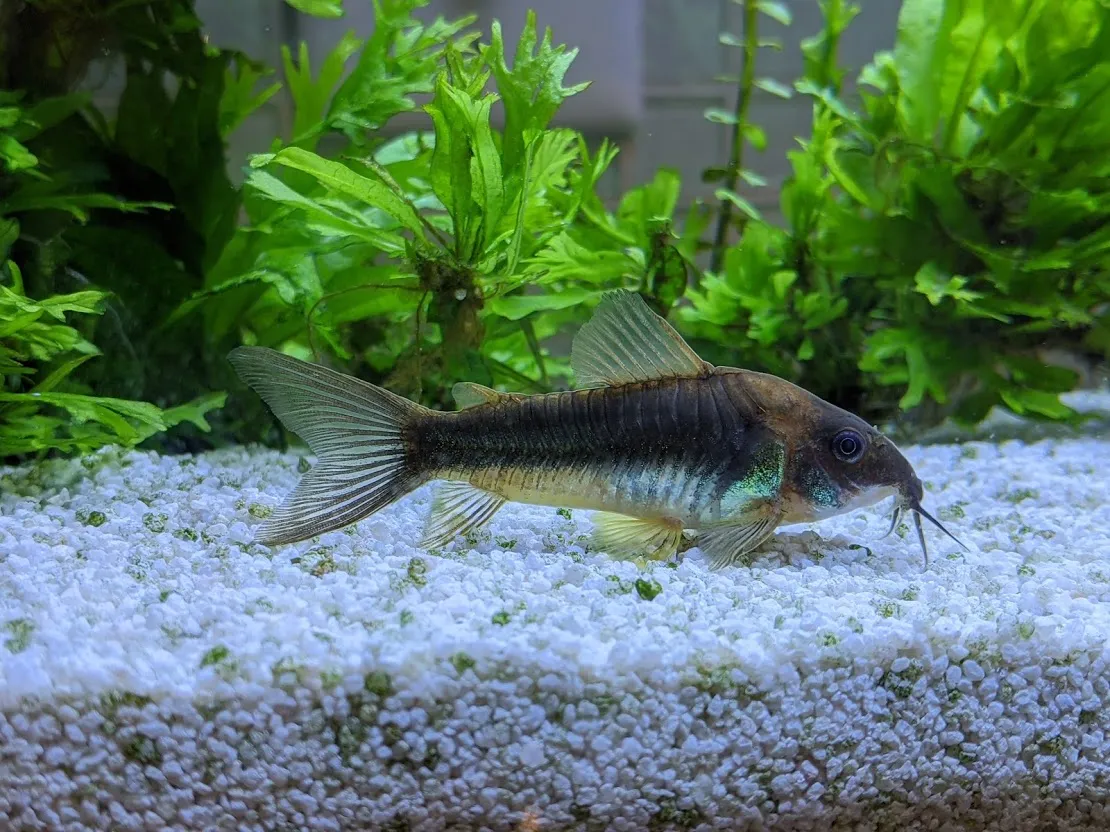
Andrew Keller · CC0
4.1. Armour and spines
The flanks are covered by two rows of overlapping bony plates that feel hard and smooth. This armour makes corys difficult for predators to swallow. The first rays of the dorsal and pectoral fins are thick spines that can be locked upright when the fish feels threatened.
Tissue around these spines is reported to contain a mild toxin, so a jab from a cory can sting like a bee for a while. The spines also snag easily in nets, which is why scooping corys with a cup or small container is safer for both fish and keeper.
4.2. Barbels and gut breathing
Three pairs of short barbels surround the mouth, packed with taste and touch receptors that let corys feel through sand for worms and food. Barbels are surprisingly delicate: sharp gravel or a dirty, bacteria-laden substrate wears them down or infects them until they shorten or disappear.
As well as using their gills, corys breathe through the gut. They dart to the surface, swallow air, absorb oxygen through the blood-rich intestinal wall and expel what is left through the vent. This lets them survive in oxygen-poor pools during the dry season. An occasional trip to the surface is normal; constant dashes by the whole group signal low oxygen.
4.3. Eyes and sexing
Corys can rotate their eyes downward, which looks like a wink and is a favourite subject for photos and videos.
Adults are easiest to sex from above: females are larger with broad, rounded bellies, males smaller and slimmer. From the side, females usually have larger, rounder pelvic fins, and in some species males have longer or more pointed fins.
5. Popular species
Species differ in size, temperature range and temperament. You can mix species, but choose ones with overlapping temperature needs and keep at least four to six of each.
| Species | Traditional name | Size | Temperature | Notes |
|---|---|---|---|---|
| Bronze cory | C. aeneus | 6–7 cm | 22–26°C | Metallic sheen, hardiest and most common |
| Albino cory | Albino C. aeneus and others | 6–7 cm | 22–26°C | White with red eyes, farmed |
| Peppered cory | C. paleatus | 6–7 cm | 20–25°C | Mottled grey, copes with cooler water |
| Panda cory | C. panda | 4–5 cm | 20–25°C | White with black eye patch and tail spot |
| Sterba's cory | C. sterbai | 6–7 cm | 24–28°C | White spots, orange pectoral fins, likes warmth |
| Julii or three-line cory | C. julii / C. trilineatus | 5–6 cm | 23–26°C | Reticulated pattern; the two are often confused |
| Pygmy cory | C. pygmaeus | 2–3 cm | 22–26°C | Tiny, schools in mid-water |
| Salt-and-pepper cory | C. habrosus | 2.5–3.5 cm | 22–26°C | Tiny bottom-dweller |
| Adolfo's cory | C. adolfoi | 5–6 cm | 22–26°C | Black back stripe and orange head, likes soft water |
Fish sold under one name are not always that species. Many corys sold as julii are reportedly trilineatus, so buy from a specialist if exact identity matters to you.
6. Behaviour
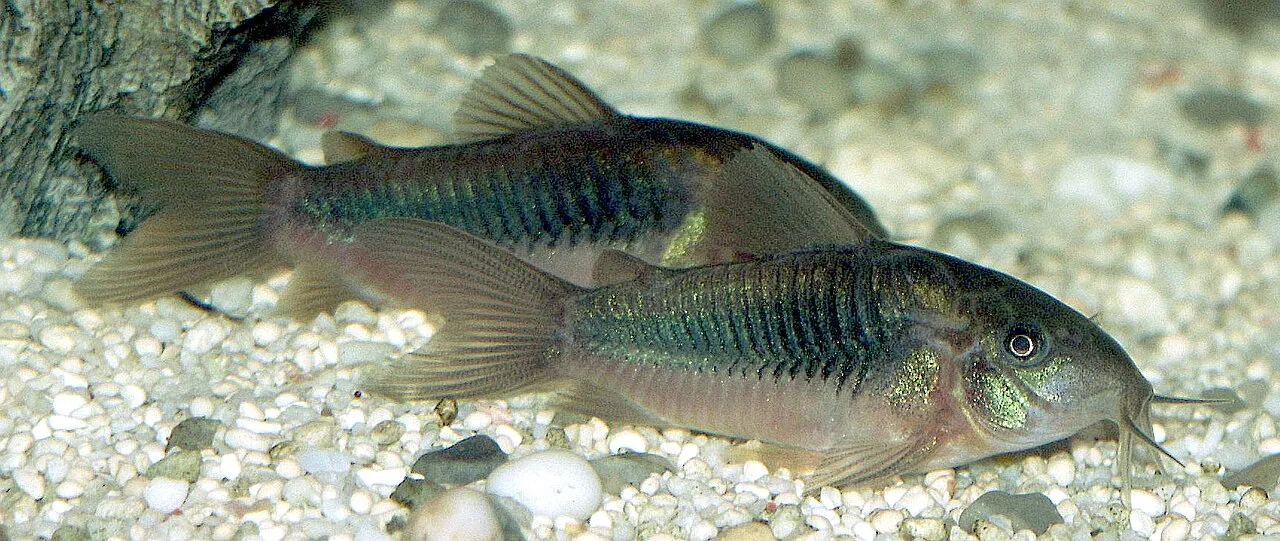
6.1. In the wild
Wild corys live in groups of dozens to hundreds in shallow streams, riverbanks and seasonal floodplains with sand or mud bottoms. They root through the substrate for small worms, insect larvae, crustaceans and organic debris. In the dry season they may be trapped in shrinking, oxygen-poor pools, where gut breathing keeps them alive. Some species are known to school with look-alike species, which may confuse predators.
6.2. Tank behaviour and signals
| Behaviour | Meaning |
|---|---|
| Group foraging along the bottom | Healthy and settled |
| Occasional dash to the surface | Normal gut breathing |
| Frequent surface trips by many fish | Low oxygen or poor water |
| Swimming up and down the glass | Pre-spawning excitement, temperature change or stress |
| Short, red or eroded barbels | Substrate problems or infection |
| Lying still for long periods | Can be rest, but laboured breathing is a warning |
| Flashing against the bottom | Parasites or water issues |
Corys are active day and night but especially busy around lights-off. When one goes up for air, others often follow.
7. Life stages
Corys are long-lived for small fish: five to ten years in good conditions, and bronze or peppered corys have been reported to pass ten.
| Stage | Age | Notes |
|---|---|---|
| Egg | 0–5 days | Sticky eggs on glass or plants, hatch in 3–5 days |
| Fry | 1 week–1 month | Feed on the bottom after yolk is used, very sensitive to water quality |
| Juvenile | 1–4 months | Patterns often differ from adults, rapid growth |
| Adult | 6 months–1 year | Able to breed, pattern complete |
| Old age | After 5–6 years | Less active, may thin and fade |
Older corys lose out in feeding competition, so dropping extra food after lights out helps.
8. Housing
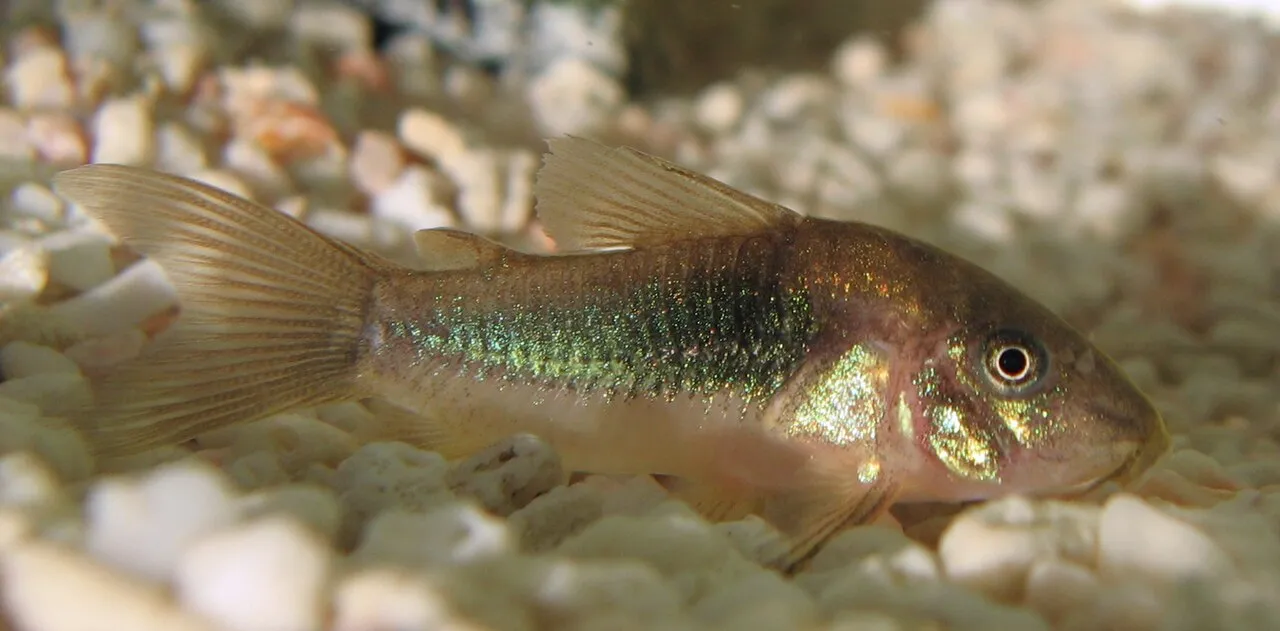
Pharaoh Hound · CC BY 2.5
8.1. Tank and substrate
Because corys live on the bottom, floor area matters more than height. Six standard-sized corys need a 60 cm tank with a 60 × 30 cm footprint; tiny species like pygmies and habrosus can start in a 45 cm tank.
Fine, rounded sand is the best substrate. Corys take mouthfuls of sand and sift it out through their gills, a natural behaviour you only see on sand. Sharp gravel, lava rock and coarse aquasoil injure barbels. In a planted tank that needs soil, a sandy strip at the front is a good compromise.
8.2. Water and filtration
| Parameter | Target |
|---|---|
| Temperature | 22–26°C (20–28°C by species) |
| pH | 6.0–7.5 |
| Hardness | Soft to moderate |
| Ammonia and nitrite | 0 |
| Nitrate | Below 20 mg/L |
Living at the bottom, corys are the first to suffer from waste and bacteria building up in the substrate. Use a filter sized for the tank and lightly siphon the sand surface during water changes. Aeration or surface movement keeps oxygen high and reduces trips to the surface. In midsummer, when water tops 30°C, a cooling fan helps.
8.3. Layout and tankmates
Combine open sand with driftwood, broad-leaved plants and caves for cover. If the lights are bright, add floating plants for shade. A lid stops fish leaping out during surface dashes.
Good companions are peaceful mid- and upper-water fish such as neon tetras, rasboras, guppies, platies, small gouramis and otocinclus. Avoid territorial bottom-dwelling cichlids, fin-nipping barbs and fish big enough to swallow a cory. Adult corys often live peacefully with angelfish, though a spawning pair may chase them along the bottom.
- Equipment: tank and lid, heater, thermometer, filter, air pump, fine sand, hiding places, dechlorinator, test kits, siphon, sinking food
9. Diet
Corys are omnivores that eat small animals and organic matter from the bottom. They do tidy up a few leftovers, but that is never enough; daily sinking food is essential.
| Food | How often | Notes |
|---|---|---|
| Sinking tablets or pellets | Once a day | Cory-specific, sized to fit |
| Frozen bloodworms | 1–2 times a week | A favourite but rich |
| Frozen brine shrimp or daphnia | 1–2 times a week | Let it sink to the bottom |
| Blanched vegetables (courgette, cucumber) | Occasionally | Some species nibble |
| Live grindal or microworms | Before breeding | Conditioning |
Fast mid-water fish can steal everything, leaving corys hungry. Feed just before lights out, or feed the upper fish first and then drop cory food to the bottom. Remove anything uneaten after a few hours. A hollow belly is a sign of underfeeding.
10. Health
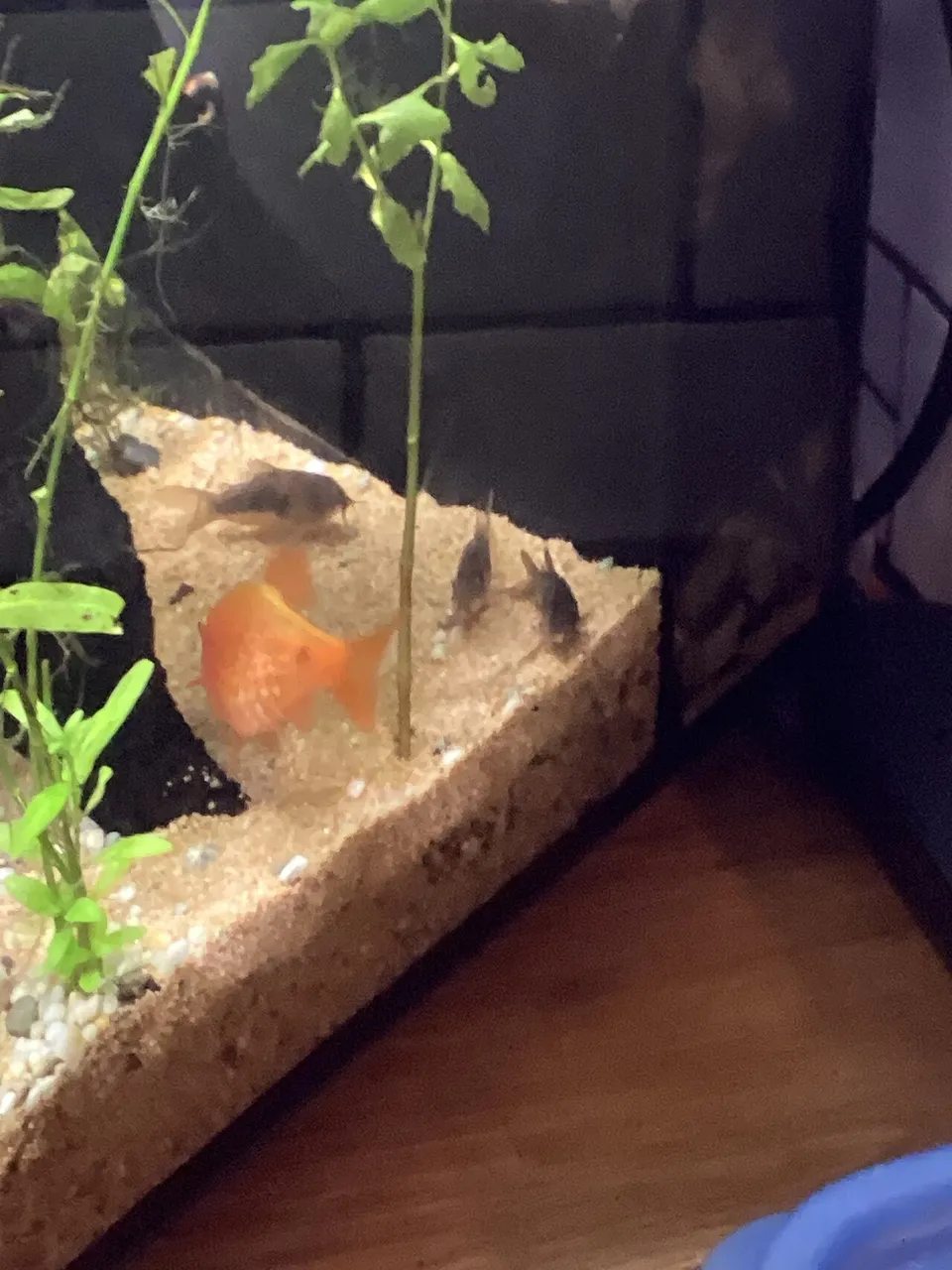
Corys are fairly hardy but sensitive to substrate conditions and medications. Common problems include:
| Problem | Cause | Signs | Response |
|---|---|---|---|
| Barbel erosion | Sharp substrate, dirty bottom, bacteria | Short, red, eroded barbels | Switch to sand, clean the substrate, antibacterials if severe |
| Ich | Ciliate parasite | White spots, flashing | Raise temperature slowly, consider half-dose treatment |
| Fin rot | Bacteria, poor water | Fraying fins | Water changes, antibacterials |
| Bacterial infection | Poor water, stress | Red patches, lethargy | Isolate, improve water |
| Low oxygen | Heat, overcrowding, weak filtration | Constant surface breathing | Aerate, lower temperature |
Corys are reputed to be more sensitive to salt and copper than many fish, and experienced keepers often start whole-tank treatments at half dose. Check medication labels for warnings about catfish.
Stressed corys are also said to release a toxic secretion, so packing several into a small bag for a long trip can harm them and their bagmates. Transport them in plenty of water and keep journeys short. If unexplained deaths continue, consult a vet who treats fish.
11. Breeding
Common species such as bronze, peppered and panda corys spawn fairly readily in home aquariums. Set up a group with about two males per female, condition them with rich foods like frozen bloodworms, then do a large water change with water two or three degrees cooler to mimic the rainy season.
Their spawning is distinctive. The male turns sideways against the female, who places her mouth near his vent, forming what keepers call the T-position. The female collects a few eggs in a pouch formed by her pelvic fins, cleans a spot on the glass or a leaf, and sticks the eggs there. She repeats this many times, laying dozens to over a hundred eggs in a day.
Adults and tankmates will eat the eggs, so if you want to raise them, roll them gently off with a fingertip into a separate container. Add gentle aeration and remove any egg that turns white and fuzzy before fungus spreads. Eggs hatch in three to five days; once the yolk is used, fry eat powdered food, microworms and newly hatched brine shrimp. Fry are sensitive to water quality, so make small, frequent water changes.
Think about where the young will go before you start, and never release surplus fish into the wild.
12. Costs
Prices vary widely by species. Bronze and albino corys are cheap, while rare species and C-numbered fish can cost tens of thousands of won each. The table below is a rough example for six to eight common corys in a 60 cm tank.
| Item | Estimated cost (KRW) | Notes |
|---|---|---|
| 6–8 corydoras | 20,000–80,000 | Common species; rare ones cost far more |
| 60 cm tank and lid | 30,000–100,000 | |
| Heater and thermometer | 15,000–40,000 | |
| Filter and air pump | 20,000–60,000 | |
| Fine sand, hides, plants | 15,000–50,000 | |
| Dechlorinator, test kits, siphon | 15,000–30,000 | |
| Total setup | About 100,000–250,000 | |
| Monthly food (sinking, frozen) | 5,000–10,000 | |
| Monthly electricity | 5,000–10,000 | |
| Monthly total | About 10,000–20,000 | |
| Yearly | About 120,000–250,000 | Equipment replacement extra |
If you already have a tank, you only need the fish, sand and sinking food. Breeding adds a hatching container, an air pump and fry food.
13. Before you get one
- Is your substrate fine sand? If it is gravel, plan to replace it.
- Can you keep at least four to six of one species?
- Will you feed sinking food every day, separately from the upper-level fish?
- Have you checked whether your usual medications and salt treatments are safe for corys?
In the shop, look for long, intact barbels, rounded bellies and active groups foraging on the bottom. Avoid tanks where many fish have worn barbels or keep dashing to the surface. Wild-caught fish need longer to adjust, so beginners do best starting with farmed bronze, peppered or panda corys.
Acclimatise slowly and keep the lights dim on the first day. It is common for new corys to huddle in a corner for a few days; if they are eating, be patient.
14. Laws
Corydoras are generally not listed under CITES, and keeping them requires no permit in Korea or most other countries. Some exporting countries restrict collection or export of particular species, so when buying rare corys, ask the seller whether they were imported legally.
Never release any aquarium fish into local waters. If you plan to import or sell fish commercially, check current rules with the relevant authorities.
15. Corydoras in culture
With round faces, whiskers and that rolling wink, corys are an online favourite among cute fish. Videos of corys rocketing to the surface and back, or travelling in single file across the sand, regularly collect huge view counts. The panda cory's black eye patches have made it a popular motif for stickers, plush toys and merchandise.
Among hobbyists there is a real collecting culture, with enthusiasts hunting down rare C-numbered species. Children's books and aquarium education materials often use corys as the example of a bottom-dwelling fish.
16. Trivia
- The cory wink, rolling the eyes downward, is thought to help clean the eyes or scan the surroundings.
- One much-discussed study suggested that female corys may drink sperm, pass it through the gut and release it onto the eggs in their fin pouch, a theory tied to the unusual T-position.
- Corys lock their spines when threatened, and predators that try to swallow one can end up with it stuck in their throat.
- Unlike most corys, pygmy corys spend much of their time schooling in mid-water rather than on the bottom.
- Mixed species often travel together in one line, but spawning only happens within a species.
- Bronze corys have been mass-farmed for decades, and some farm strains now differ slightly in shape and colour from wild fish.
Health notes are general information. If something seems wrong, contact a vet who treats this species.
FAQ
My cory keeps swimming to the surface. Is it short of oxygen?
Occasional trips for air are normal intestinal breathing. If the whole group does it constantly, check oxygen levels and water quality.
There are lots of tiny eggs stuck to the glass.
Your corys have spawned. Other fish will eat the eggs, so gently roll them off into a separate container and remove any that turn fuzzy.
Will different cory species school together?
They mix loosely, but behave most naturally with their own kind. Aim for at least four to six of each species.
Photo credits
Photos are freely licensed images from Wikimedia Commons. Authors and licenses are listed below.
- Corydoras melanotaenia.JPG — Karsten Schönherr · CC BY-SA 4.0
- Corydoras Sterbai.jpg — Matthew Mannell · Public domain
- Female Bronze Corydoras (Corydoras aeneus).jpg — Andrew Keller · CC0
- Corydoras aeneus 2.jpg — Unknown · Public domain
- Corydoras aeneus2.jpg — Pharaoh Hound · CC BY 2.5
- 1 Rosy barb (Pethia conchonius) near 3 bronze corydoras (Corydoras aeneus) in a fish tank.jpg — 235x · CC BY 4.0