TailVille
At a glance
Rough ranges for supplies, food and electricity in Korea (USD is approximate). Purchase or adoption fees are not included.
People who are home during the day and enjoy watching an energetic animal go about its business.
Anyone wanting a pet to cuddle, or families expecting a young child to handle it alone.
1. Overview
The Siberian chipmunk is a small, striped rodent and one of the easiest wild mammals to spot in Korean forests and parks. It ranges across the Korean Peninsula, Siberia, Mongolia, northern China, Sakhalin and Hokkaido. Five dark stripes run down its back, and the image of a chipmunk dashing across a rock with cheeks stuffed full of acorns has made it a favourite subject for children's books, cartoons and mascots throughout East Asia.
As a pet, the chipmunk is bigger than a hamster, active during daylight and almost constantly on the move, climbing up and down whatever it can reach. Very few enjoy being held or stroked, so it is best thought of as an animal you watch and interact with on its own terms. A well-socialised chipmunk will take treats from your hand and learn to recognise your footsteps, but it rarely becomes a lap pet.
Because it is a native wild animal in Korea and much of East Asia, keeping a chipmunk raises questions that do not apply to a hamster or gerbil. Taking one from the wild can be illegal, and wild-caught animals often never settle in captivity. This article covers the chipmunk's natural history, housing, diet, winter torpor, health problems and the legal issues you should check before buying one.
2. Name and classification
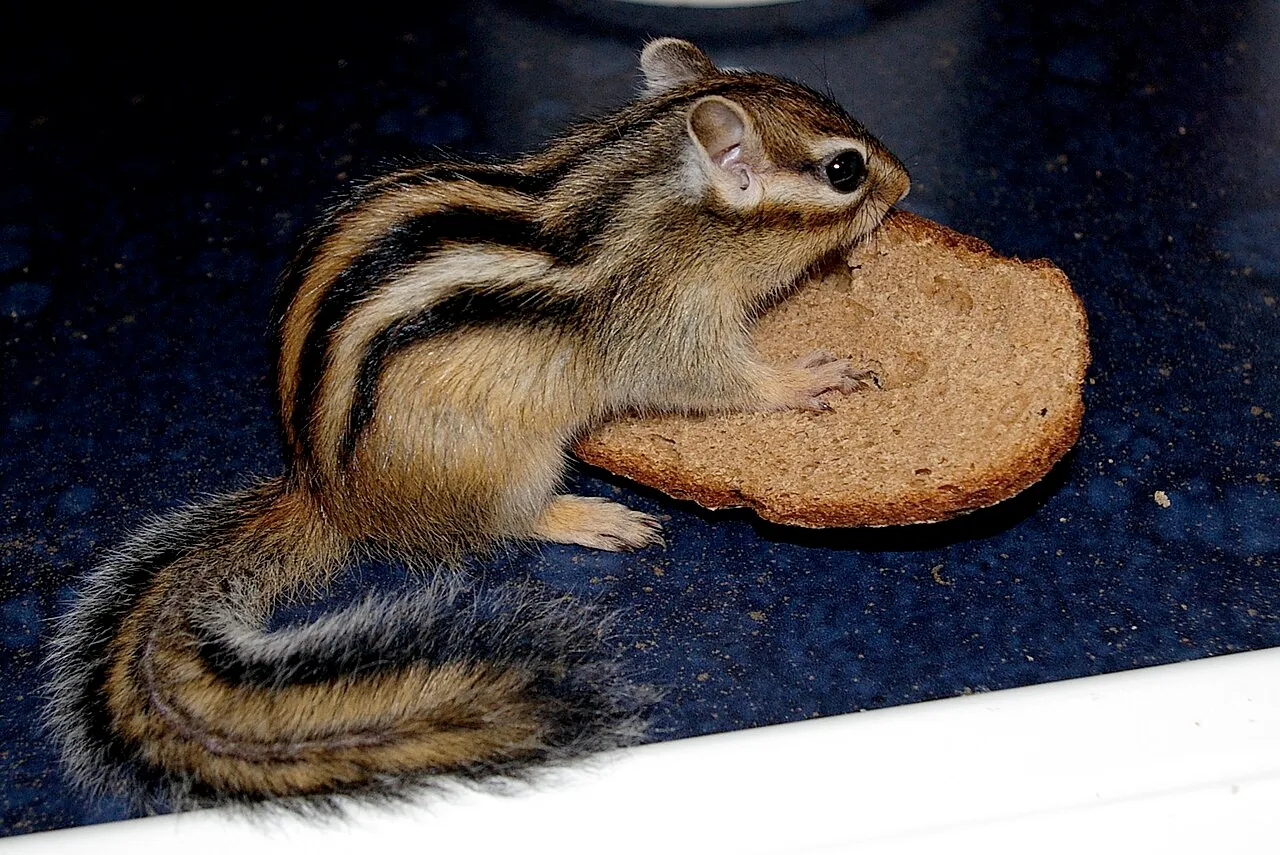
Joergbieszczak · CC BY-SA 3.0
2.1. Scientific name and placement
The scientific name is Tamias sibiricus. Some taxonomists place the Asian chipmunk in its own genus, Eutamias, separate from the North American chipmunks, and both names appear in the literature. Either way it belongs to the squirrel family, Sciuridae, alongside tree squirrels and flying squirrels. Sibiricus simply means 'of Siberia', while Tamias comes from a Greek word usually translated as 'storer' or 'steward', a fitting description of an animal that spends autumn filling its larder.
Across such a vast range several subspecies have been described, and some researchers treat the Korean population as a distinct subspecies, though there is no settled consensus.
2.2. The Korean name
In English it goes by Siberian chipmunk, common chipmunk and, especially in the pet trade, Korean chipmunk, a reminder that many of the animals exported to Europe and Japan in the twentieth century came from Korea. The Korean name daramjwi is of uncertain origin; a popular explanation links it to an old word for darting or running combined with jwi, meaning mouse or rat, but this is not settled.
In Korea people often confuse the chipmunk with the Eurasian red squirrel, known locally as cheongseolmo. The squirrel is much larger, greyish brown, lacks back stripes and has long ear tufts in winter.
2.3. Relatives
Most chipmunks live in North America: the eastern chipmunk (Tamias striatus) plus a couple of dozen western species. Asia has only the Siberian chipmunk. Cartoon chipmunks such as Chip 'n' Dale and Alvin are based on North American species. The animals look alike, but care advice is not always interchangeable, so check which species any guide is written about.
3. History
3.1. From forest animal to pet
Chipmunks lived alongside people for millennia as wild neighbours and only became pets in significant numbers in the mid-twentieth century. From roughly the 1960s to the 1980s, chipmunks trapped in Korean forests were exported to Japan and Europe as a source of foreign currency, reportedly in the hundreds of thousands in some years, although figures vary between sources. As concern for wild populations grew, the export trade was eventually halted.
3.2. An invasive species in Europe
Some exported chipmunks escaped or were released and established wild colonies in parks and woods in France, Belgium, the Netherlands, Germany and Italy. Populations near Paris drew particular attention after studies found they could host ticks that carry Lyme disease bacteria. In 2016 the European Union added the species to its list of invasive alien species of Union concern, which in principle bans sale, breeding and keeping in member states, generally with provisions for existing pets to live out their lives.
3.3. Pet chipmunks in Korea today
Chipmunks sold in Korean pet shops today are described as captive-bred or imported animals. They are less common than hamsters or guinea pigs, but their daytime activity and familiar looks keep demand steady. Provenance is not always clear, so ask the seller where and how the animal was bred.
4. Physical characteristics
4.1. Size and build
| Measure | Typical range | Notes |
|---|---|---|
| Body length | 12–17 cm | Nose to rump |
| Tail | 8–12 cm | About two-thirds of body length |
| Weight | 70–120 g | Heavier in autumn |
| Hind foot | about 3–4 cm | Built for leaping and digging |
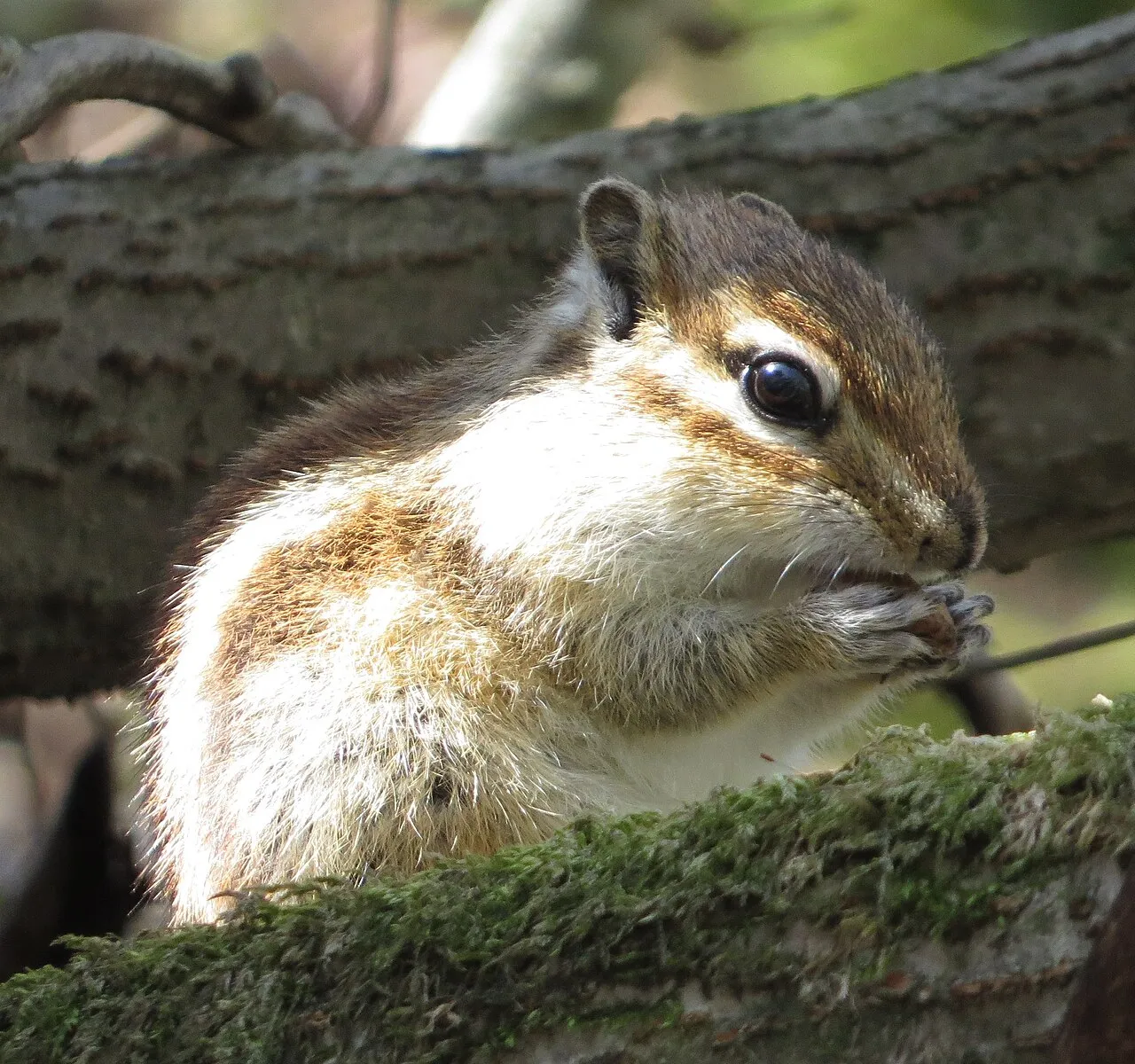
Chipmunks have slim, supple bodies and long hind legs for explosive sprints and jumps. The tail is bushy but much less full than a tree squirrel's and is used for balance and signalling. Weight rises in autumn as the animal prepares for winter and falls again in spring.
4.2. Coat and markings
Five black stripes run down the back, separated by pale grey and buff bands, with thinner stripes above and below the eye and a white or pale grey belly. Pale or white chipmunks, sometimes sold as 'white chipmunks', also appear in the pet trade and are thought to be pigment mutations. Moults happen in spring and autumn, when shedding increases noticeably.
4.3. Senses and cheek pouches
Eyes set on the sides of the head give a wide field of view, and chipmunks are extremely sensitive to movement, sound and smell, bolting for cover or chirping an alarm at the first sign of danger. Stretchy cheek pouches let them carry several nuts or a mouthful of seeds at once. Like all rodents, their incisors grow continuously and are kept in check by gnawing.
4.4. Telling the sexes apart
Males and females look alike. Sexing relies on the distance between the genital opening and the anus, which is longer in males, and on the enlarged testes of males in the breeding season. Young animals are tricky to sex, so ask an experienced seller or vet.
5. Colours and types
Chipmunks have not been selectively bred into breeds the way dogs and cats have, so most pets look just like their wild relatives. The types you are likely to see are:
| Type | Appearance | Notes |
|---|---|---|
| Wild type | Buff background with five black stripes | By far the commonest |
| White or pale | White coat with faint or no stripes | Pigment mutation; eye colour varies |
| Light variants | Paler background, brownish stripes | Names differ between sellers |
There is no good evidence that colour changes temperament or health, though animals with little pigment may be more sensitive to bright light. Rare colours sometimes command high prices; choose for health and tameness rather than looks.
6. Behaviour
Obakeneko · CC BY 3.0
6.1. Life in the wild
In the wild, chipmunks live in mixed forest, rocky slopes and woodland edges, digging burrows with separate sleeping chambers and food stores. Burrows may run tens of centimetres to over a metre deep, and an autumn larder of acorns, chestnuts, pine nuts and seeds can reportedly weigh from a few hundred grams to several kilograms. Adults are largely solitary and defend the area around their burrow.
In winter they enter torpor underground. Unlike a continuously sleeping bear, a chipmunk alternates between bouts of deep torpor lasting days and short arousals in which it eats from its store before sleeping again. Mating follows emergence in spring.
6.2. Behaviour at home
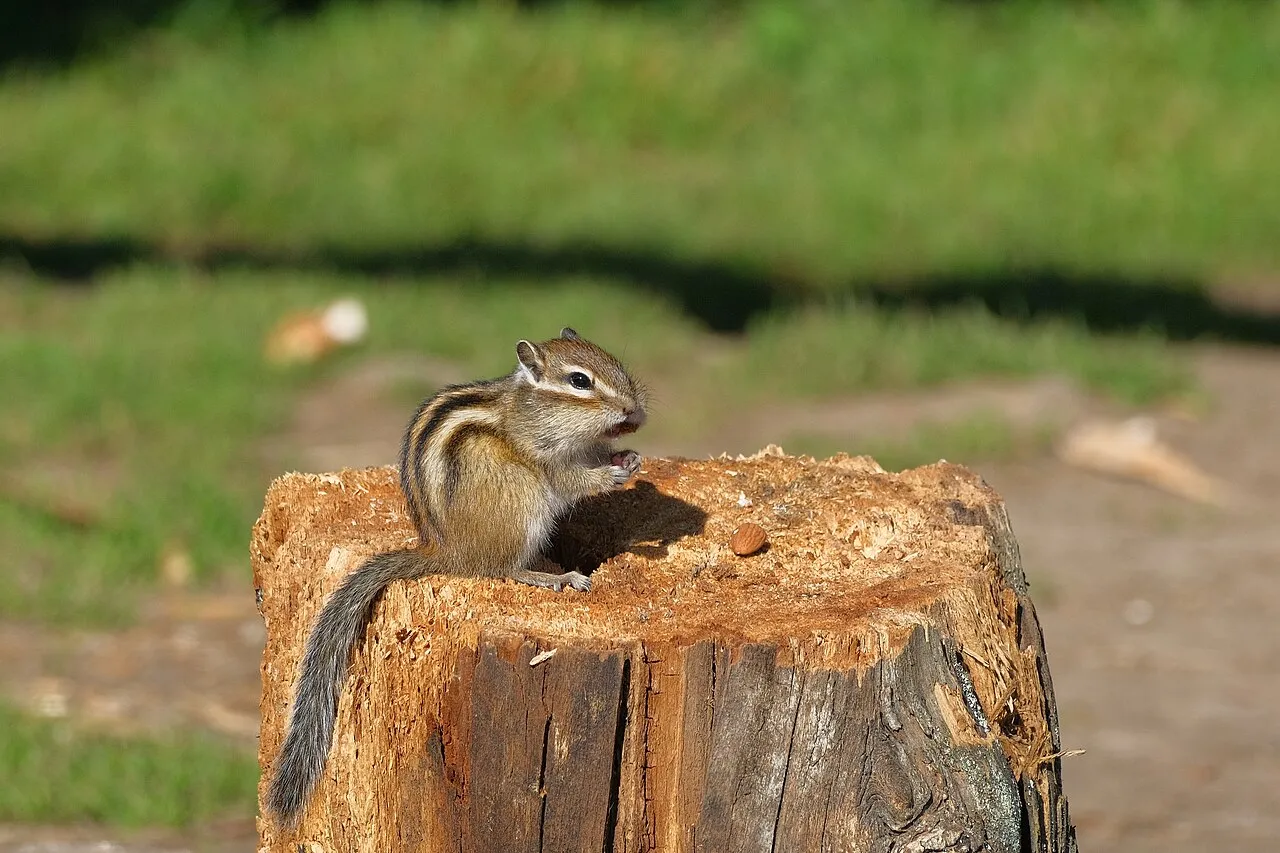
At home a chipmunk wakes with the light, scales every surface and ferries food in its cheeks to hide in the nest box or bedding. An empty bowl does not necessarily mean the food was eaten; much of it may be stashed. In autumn hoarding intensifies and many chipmunks turn touchy, and even a tame animal may bite.
They run hard on wheels, gnaw branches and dig through bedding. Constant bar-chewing or pacing the same route over and over usually means the enclosure is too small or too bare.
6.3. Reading the signals
- Repeated sharp chips or clucks with tail flicking: alarm or warning
- Tail fluffed up: startled or excited
- Flattened and frozen: frightened; give it space
- Washing the face with the forepaws: relaxed
- Sniffing your hand and taking a treat: trust is building
- Backing off with teeth chattering: annoyed; a hand pushed further will probably be bitten
A hand coming from above looks like a bird of prey, so approach from the side or below, slowly.
7. Life stages
| Stage | Age | What happens |
|---|---|---|
| Newborn | 0–3 weeks | Hairless, eyes closed, fully dependent on milk |
| Eyes open | about 3–5 weeks | Fur grows, eyes open, starts moving in the nest |
| Weaning | about 6–8 weeks | Begins eating solid food and exploring |
| Independence | about 2–3 months | Leaves the mother; the best time to start taming |
| Adult | around 1 year | Sexually mature, increasingly territorial |
| Senior | from about 5 years | Slows down, loses weight, more dental and tumour problems |
Captive chipmunks usually live five to eight years, and some reportedly approach ten with excellent care. Wild chipmunks live far shorter lives because of predators and harsh winters.
Signs of ageing include slower movement, reluctance to climb, a rougher coat and leaving hard food uneaten. Lower the shelves, mix in softer food and weigh your chipmunk weekly to catch sudden changes.
8. Housing
Stanislav Sergeevich · CC BY-SA 4.0
8.1. Choosing an enclosure
Hamster cages are far too small. Treat 60 × 45 cm of floor and 90 cm of height as the minimum, and consider a large ferret, chinchilla or flight cage if you can. Bars must be no more than 1.5 cm apart, and because chipmunks shred plastic in minutes, choose a metal frame with metal or wooden fittings. A deep base tray lets you use deep bedding.
Fit two or three shelves at different heights, natural branches and hanging ropes so the chipmunk can move in three dimensions. The wheel should be at least 25–30 cm across with a solid running surface so feet and tails cannot get caught.
8.2. Temperature, humidity and light
Aim for 18–24°C and 40–60% humidity. Chipmunks overheat easily, and temperatures above about 28°C risk heatstroke, so use air-conditioning in summer without a draught blowing straight onto the cage. If the room drops to around 10°C the chipmunk may enter torpor; many indoor keepers prefer to keep temperatures stable to avoid unplanned torpor bouts. As a daytime animal it needs a natural rhythm of bright days and dark nights.
8.3. Equipment checklist
- Tall wire cage with bars 1.5 cm apart or less
- Paper or aspen bedding 10 cm deep, or a dig box with soil mixed in
- Wooden nest box, at least 15 cm wide with a 4–5 cm entrance
- Nesting material: dry hay, unbleached paper
- Solid wheel, 25 cm or larger
- Shelves, natural branches and ropes
- Ceramic or steel bowl and a water bottle
- Untreated wood chews and pine cones
- Sand bath dish with dust-free sand
- Carrier for vet visits
- Digital scale reading to 1 g
9. Diet
9.1. Staple food
Chipmunks adore nuts, but a nut-based diet is far too fatty and low in calcium. Use a rodent pellet or a squirrel and chipmunk mix as the staple and treat seeds and nuts as only part of the menu. Chipmunks on mixes often pick out the seeds and leave the rest, so increase the pellet share gradually.
9.2. Vegetables, fruit and treats
Carrot, broccoli, bok choy, kabocha squash and cucumber can be offered in small amounts daily. Fruit such as apple, pear and blueberries is sugary, so give a fingernail-sized piece a few times a week. Wild chipmunks eat insects too, so a mealworm, cricket or bit of boiled egg white once or twice a week is a good protein boost. Acorns should be clean, unsprayed and given sparingly.
9.3. How much and how often
| Item | Amount for a 100 g chipmunk | Frequency |
|---|---|---|
| Pellets or mix | 10–15 g | Every morning |
| Vegetables | 2–3 thumbnail-sized pieces | Daily |
| Fruit | 1 fingernail-sized piece | 2–3 times a week |
| Nuts and seeds | 2–4 pieces | Daily, as treats |
| Insects or protein | 1–2 mealworms | 1–2 times a week |
Because chipmunks hoard, refilling the bowl every time it looks empty leads to overeating. Weigh regularly and adjust.
9.4. Foods to avoid
- Chocolate, sweets, biscuits and bread
- Onion, garlic, leeks and chives
- Avocado
- Salted, sugared or seasoned nuts
- Raw beans, apple seeds and stone-fruit pits
- Mouldy or stale nuts, which can carry mycotoxins
- Nuts or berries gathered from roadsides or sprayed parks
10. Health and disease
10.1. Common problems
| Condition | Cause | Signs | Prevention |
|---|---|---|---|
| Overgrown or misaligned teeth | Too little to gnaw, genetics, injury | Dropping food, weight loss, drooling | Untreated wood and hard foods |
| Obesity | Nut-heavy diet, too little exercise | Saggy belly, less activity | Pellet-based diet, big wheel |
| Metabolic bone disease | Calcium deficiency | Bowed legs, fractures, tremors | Balanced diet |
| Tail degloving | Grabbed by the tail, caught in a door | Skin stripped from the tail | Never hold the tail |
| Heatstroke | Above about 28°C or direct sun | Limpness, rapid breathing | Temperature control |
| Skin disease and parasites | Mites, fungal infection | Hair loss, itching, flaking | Clean housing, fresh bedding |
| Tumours | Ageing | Lumps, weight loss | Regular checks, early vet visits |
Chipmunks hide illness well. Eating less, staying in the nest or a scruffy coat may be the first and only clues.
10.2. Torpor or illness?
A chipmunk in torpor curls into a ball, feels cool and breathes so slowly that it can look dead. That alone is not a sign of illness, but it is also easy to mistake a collapsed, sick animal for one that is simply sleeping. If the room is warm and the chipmunk still will not rouse, if it does not eat during waking periods and loses weight fast, or if its breathing is laboured or irregular, call an exotic vet. Avoid shaking a torpid chipmunk awake or moving it suddenly into heat; raise the room temperature gradually instead.
10.3. When to see a vet
- Not eating or passing droppings for a day or more
- Overgrown, curled or broken incisors
- Nasal discharge, crusty eyes, sneezing or noisy breathing
- Diarrhoea or a soiled rear
- Limping or a head tilt
- Lumps, wounds or bald patches
- Losing more than 10% of body weight in a week
Find an exotic-animal vet before you need one; many general clinics do not see chipmunks.
11. Breeding
Chipmunks usually mature at around one year and mate after emerging from winter torpor in spring. Gestation is roughly 30 days, and litters typically contain three to six young. In the wild they breed once a year, occasionally twice in good conditions.
Breeding at home is difficult. Adults often fight, so breeders introduce pairs briefly during the breeding season and separate them again, and serious injuries can still happen. Females become extremely sensitive around birth and may abandon or harm young if the nest is disturbed.
Every baby needs a home for years to come, and casual breeding of a native wild species is hard to justify. If you are not planning to breed, keep one chipmunk per enclosure. Never release offspring outdoors; captive chipmunks rarely survive, and released animals can harm local wildlife or carry disease.
12. Costs
The figures below are rough 2026 ranges for Korea and vary widely by seller, region and clinic.
| Item | Estimated cost (KRW) | Notes |
|---|---|---|
| Animal | tens of thousands to over 100,000 | Colour variants can cost more |
| Tall cage | 100,000–250,000 | Large wire cage |
| Wheel, nest box, shelves | 50,000–100,000 | Wood and metal |
| Bedding, sand, bowls | 30,000–50,000 | First purchase |
| First vet check | 30,000–100,000 | Exotic clinic |
| Start-up total (excluding animal) | about 250,000–500,000 | |
| Monthly food and treats | 10,000–20,000 | Pellets, nuts, vegetables |
| Monthly bedding and chews | 10,000–20,000 | |
| Emergency care or surgery | hundreds of thousands | Dental work, fractures |
A small body does not mean small vet bills. Setting aside a little each month for health care makes emergencies much less stressful.
13. Before you get one
- Origin: confirm the animal is captive-bred or legally imported. Wild-caught chipmunks adapt poorly and may be illegal to own.
- Health: look for clear eyes, no nasal discharge, straight incisors and a clean rear. Avoid thin animals or those with patchy fur.
- Age: chipmunks of about two to three months tend to adapt to people most easily.
- Space: make sure you have room for a 90 cm tall cage and a chipmunk-proof room for exercise.
- Routine: as a daytime animal it suits people who are home during the day.
- Vet: locate an exotic vet who treats chipmunks before you buy.
- Family: explain to children that chipmunks rarely like being held and can bite.
- Other pets: cats, dogs and ferrets can keep a chipmunk in a constant state of fear.
For the first week or two, partly cover the cage to give a sense of shelter and let the chipmunk settle without handling.
14. Laws and regulations
Because the chipmunk is a native wild animal in much of its range, its legal status needs care. The points below are general and laws change, so check with the relevant wildlife authority before buying, selling or moving a chipmunk.
- Taking from the wild: many countries in the native range protect wild mammals or require a permit to capture them. In Korea the wildlife protection act lists species whose capture is banned or licensed, and it is safest to assume that catching a wild chipmunk without permission may be illegal. Capturing any animal in national parks and protected areas is separately prohibited.
- Pet-trade animals: buy only captive-bred or legally imported chipmunks, and be wary of sellers who cannot explain where their animals come from.
- Registration: chipmunks are not subject to the compulsory registration that applies to dogs in Korea.
- Release: never release a pet chipmunk. It risks spreading disease and mixing captive genetics into wild populations, and may itself be unlawful.
- European Union: Tamias sibiricus is on the EU list of invasive alien species of Union concern, so sale, breeding and keeping are restricted in member states, typically with transitional allowances for existing pets.
- Elsewhere: some other countries and states restrict squirrels or non-native rodents. If you plan to move abroad with a chipmunk, research the destination's rules well in advance.
15. Chipmunks in culture
In Korea the chipmunk is one of the most familiar forest animals, appearing in children's songs, picture books and school textbooks. A common Korean idiom compares a pointless routine to a chipmunk running in its wheel, the equivalent of the English 'hamster wheel'.
Worldwide, the best-known cartoon chipmunks are North American: Disney's mischievous Chip 'n' Dale and the singing trio Alvin and the Chipmunks. Across Korea and Japan, a chipmunk clutching an acorn is a staple of autumn-themed stationery and mascots.
Chipmunks that beg from hikers near temples and trailheads often go viral, but park authorities increasingly ask visitors not to feed them, since human snacks harm wild animals and teach them to approach people.
16. Trivia
- A chipmunk's cheek pouches hold a surprising load, several small acorns or a whole mouthful of sunflower seeds in one trip.
- Some of the nuts chipmunks bury and forget sprout into trees, so they play a quiet role in spreading forests.
- During torpor body temperature falls dramatically and heartbeat and breathing slow to a crawl, punctuated by periodic arousals to eat.
- Squirrels and chipmunks are cousins with different lifestyles: tree squirrels live mostly aloft, chipmunks mostly on the ground among rocks and logs.
- The chipmunk's alarm call is high and bird-like, and newcomers often mistake it for birdsong.
- Genetic studies have suggested that some invasive European chipmunk populations descend from animals exported from Korea.
- Keepers often joke about the autumn personality change: a sweet summer chipmunk can turn into a prickly, bitey hoarder once the days shorten.
Health notes are general information. If something seems wrong, contact a vet who treats this species.
FAQ
Will a chipmunk sit on my hand?
With patient treat training from a young age, many will climb onto a hand to take food. Very few enjoy being held or stroked, though.
My chipmunk sleeps for days in winter. Is that normal?
Torpor in cold weather is natural. Many keepers hold the room above about 18°C to avoid deep torpor, and a chipmunk that feels cold, breathes very faintly or loses weight fast should see a vet.
Can I keep two together?
Even siblings often fight seriously once mature. If you want two, give each its own enclosure.
Photo credits
Photos are freely licensed images from Wikimedia Commons. Authors and licenses are listed below.
- Streifenhoernchen.jpg — AndiW 10:51:45, 2005-09-04 (UTC) · Public domain
- Chipmunk bread.jpg — Joergbieszczak · CC BY-SA 3.0
- Tamias sibiricus (eating a4).JPG — Alpsdake · CC BY-SA 3.0
- Tamias sibiricus near Lake Kuyguk.jpg — Obakeneko · CC BY 3.0
- Yazevoe ozero 3.jpg — Stanislav Sergeevich · CC BY-SA 4.0